If you are evaluating Eleos Health (often searched as Eleos AI) for your group practice or agency, here is the short version. Eleos is a capable, enterprise-grade behavioral health AI built for large organizations, community mental health, and substance use disorder programs. It does group documentation genuinely well. But it is sold through demos and […]
Therapy is not just about what you work on – it’s about when and how you work on it. One of the most common reasons treatment stalls or feels unfocused is not lack of skill or effort, but unclear goal sequencing in therapy. This is where understanding short term vs long term therapy goals becomes […]
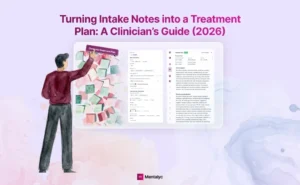
Intake notes form the foundation of a treatment plan. They capture a client’s history, current concerns, and initial goals during the early sessions–including presenting problems, mental and medical history, family background, risk factors, and functional impairment. A treatment plan translates that information into a clear clinical roadmap by defining the diagnosis, treatment goals, objectives, and […]
Writing treatment plans is a core clinical task but also one of the easiest places for clarity to break down. Therapists are expected to turn diagnostic assessments into measurable, insurance-ready plans that guide care and evolve with the client. In practice, plans often become generic, disconnected from sessions, or difficult to keep updated. This guide […]
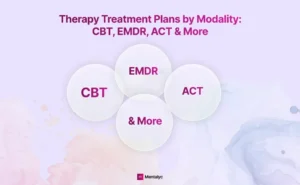
Therapy treatment plans by modality are structured care plans that change based on the therapeutic approach used to address a client’s needs. Different modalities focus on different mechanisms of change–CBT targets thought and behavior patterns, psychodynamic therapy explores past experiences and relational themes, humanistic approaches emphasize self-growth, and body-based modalities like EMDR and somatic therapy […]
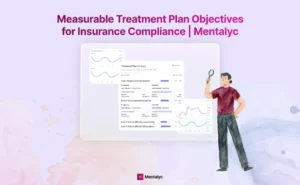
Measurable treatment plan objectives are essential for demonstrating medical necessity in insurance documentation. Insurers expect objectives to follow the SMART framework–Specific, Measurable, Achievable, Relevant, and Time-bound–and to link diagnosis-related symptoms directly to interventions using observable indicators such as frequency, duration, or intensity. When objectives are vague or subjective, payers cannot evaluate progress or continued need […]
Writing SMART goals in therapy is one of the most important and most misunderstood skills in clinical practice. Therapists are often trained to think in broad therapeutic aims (“reduce anxiety,” “improve relationships,” “increase insight”), yet documentation, treatment planning, and insurance review require something much more precise. SMART goals bridge that gap. They translate clinical insight […]
In 2026, choosing the best AI scribe for therapists is no longer about “saving time.” For therapists, psychiatrists, and medical clinicians, the real question: Can the AI medical scribe tool support clinical reasoning, preserve documentation integrity, and reduce compliance risk – without adding friction to care? This ranked list of the top 10 best AI […]
Clients rarely present to therapy saying, “I have a cognitive distortion.” Instead, they arrive describing chronic anxiety, low mood, shame, relational conflict, or a sense of being stuck; often driven by longstanding patterns of distorted thinking that operate outside of conscious awareness. For therapists, one of the most clinically powerful ways to intervene at this […]
Therapists exploring Heidi reviews are typically trying to understand: This article breaks down what Heidi Health does well, where clinicians report limitations, and what those trade-offs mean for everyday clinical work. We examine Heidi’s transcription and note-generation workflow, pricing structure, compliance posture, and real therapist experience, using publicly available feedback and documented features. We also […]
Therapists evaluating Upheal reviews are often trying to decide whether transcription-driven AI documentation can keep up with real therapy sessions–especially when accuracy, modality support (like couples or family therapy), and workflow reliability matter. This article breaks down how Upheal performs in day-to-day clinical use, where clinicians report strengths and limitations, and how Upheal compares with […]
Our verdict in brief: TherapyNotes AI (TherapyFuel) is a capable documentation assistant if you already live inside the TherapyNotes EHR, and since late 2025 it has improved meaningfully, adding draft treatment plans and earning an AI-focused HITRUST certification. But it remains an EHR add-on: SOAP-centric notes, capture locked to the TherapyNotes ecosystem, and no session-derived […]
Quick answer: SimplePractice’s AI Note Taker is a $35/month per-clinician add-on inside the SimplePractice EHR that drafts SOAP, DAP, or BIRP notes from session audio or dictation. It works fine for therapists who already use SimplePractice and want basic note drafting, but it doesn’t analyze sessions, track therapeutic progress, surface alliance insights, or work outside […]
Therapists researching a Blueprint review are usually trying to answer one simple question: is Blueprint the right tool for me? For clinicians who rely on routine assessments to monitor symptoms and meet reporting requirements, it’s a familiar option, but one that also raises important questions about insight between sessions, workflow fit, and long-term clinical value. […]
If you’re searching for “Mentalyc reviews”, “Is Mentalyc worth it?” or “Is Mentalyc legit?”, here is the short answer up front: as of June 2026, clinicians rate Mentalyc 4.5/5 “Excellent” on Trustpilot (70 reviews), 4.5/5 on Capterra (59 reviews) and 4.8/5 on G2: more than 130 reviews across three independent platforms, written by mental health […]
The best progress tracking tool for therapists in 2026 is Mentalyc’s AI Progress Tracker, because clients don’t have to do anything. It reads the session documentation you already write and surfaces symptom trends and goal movement automatically. No forms. No questionnaires. No client homework. For practices that need standardized scale reporting for insurance, Blueprint is […]
Therapists know progress doesn’t happen by chance. It’s planned, measured, and refined. A strong TX plan connects the client’s needs, goals, and outcomes, giving structure to intuition and clarity to the therapeutic process. Whether you’re a new clinician learning how to write a TX plan for therapy or an experienced professional looking to streamline documentation, […]
Z codes are part of the ICD-10 system used by doctors and therapists to describe social or life situations that affect an individual’s health. They are not about a mental disorder, but they give helpful background information about what is happening in a person’s life. Mental health is closely connected to a person’s everyday life. […]
Mentalyc vs Upheal – Features, Price, and Key Comparison Many therapists are turning to AI – and it’s a total game-changer. These smart tools take the weight off writing detailed session notes, freeing up your time so you can focus on what matters most: your clients. We’ve taken a close look at two leading platforms […]
Feedback Informed Treatment (FIT) is a working model for integrating client feedback into treatment from therapist session to session. It uses brief, standardized assessments of client wellbeing and the therapeutic working relationship to enable therapists to guide midcourse. We therapists try to form rich, healing relationships with our clients, but we labor in the dark […]
Mental health professionals use DARP notes to record what happens during a client’s session. These notes keep track of key details that support the client’s care. DARP stands for Data, Assessment, Response, and Plan. This DARP format helps mental health practitioners organize their notes in a clear way. It is also useful for legal records […]
Ethics in counseling refers to the standards and principles that govern the professional conduct of therapists. Ethics refers to the system of moral principles which guide human behaviour. It outlines what is right, what is fair, what is just, and what is good. Ethics in counseling are not mere rules, as a therapeutic space is […]
Therapeutic alliance in group therapy is a complex web of relationships between the therapist and the clients, and the relationship amongst the group members themselves. It is more layered, more relational, and sometimes more fragile. The therapeutic alliance, is the collaborative interaction & connection between the mental health professional and their clients. The bed of […]
Starting your counseling private practice is a career move that is a step into professional independence. It’s where clinical work meets entrepreneurship, where values begin shaping the practice environment, and where your presence can directly support your community’s mental health needs. Counseling Private Practice in Texas When it comes to private practice in Texas, they […]