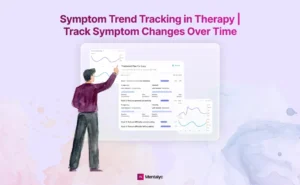
In day-to-day practice, therapists are constantly assessing whether therapy is helping – often through clinical intuition, memory, and scattered documentation. Yet as cases extend over months or years, it becomes increasingly difficult to hold the full trajectory of change in mind. Symptom trend tracking in therapy brings those impressions into focus by showing how symptoms […]
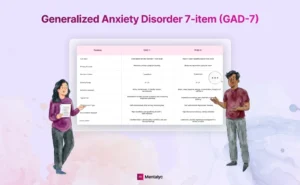
Standardized screening tools like the PHQ-9 and GAD-7 have become routine in mental health care. They are familiar, easy to score, and widely accepted by insurers and healthcare systems. But many therapists are now asking a deeper question: Are self-report questionnaires the best or is it the only way to understand client progress? This article […]
Therapy is not just about what you work on – it’s about when and how you work on it. One of the most common reasons treatment stalls or feels unfocused is not lack of skill or effort, but unclear goal sequencing in therapy. This is where understanding short term vs long term therapy goals becomes […]
Intake notes form the foundation of a treatment plan. They capture a client’s history, current concerns, and initial goals during the early sessions–including presenting problems, mental and medical history, family background, risk factors, and functional impairment. A treatment plan translates that information into a clear clinical roadmap by defining the diagnosis, treatment goals, objectives, and […]
Writing treatment plans is a core clinical task but also one of the easiest places for clarity to break down. Therapists are expected to turn diagnostic assessments into measurable, insurance-ready plans that guide care and evolve with the client. In practice, plans often become generic, disconnected from sessions, or difficult to keep updated. This guide […]
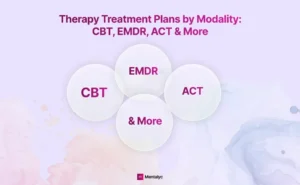
Therapy treatment plans by modality are structured care plans that change based on the therapeutic approach used to address a client’s needs. Different modalities focus on different mechanisms of change–CBT targets thought and behavior patterns, psychodynamic therapy explores past experiences and relational themes, humanistic approaches emphasize self-growth, and body-based modalities like EMDR and somatic therapy […]
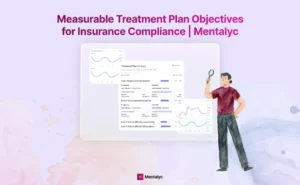
Measurable treatment plan objectives are essential for demonstrating medical necessity in insurance documentation. Insurers expect objectives to follow the SMART framework–Specific, Measurable, Achievable, Relevant, and Time-bound–and to link diagnosis-related symptoms directly to interventions using observable indicators such as frequency, duration, or intensity. When objectives are vague or subjective, payers cannot evaluate progress or continued need […]
As therapists, we talk about goals constantly: at intake, during treatment planning, in progress notes, and in discharge summaries. Yet goal attainment in therapy often remains one of the most misunderstood and inconsistently documented aspects of clinical work. We may feel that a client is improving, but struggle to articulate how, toward what, and to […]
Writing SMART goals in therapy is one of the most important and most misunderstood skills in clinical practice. Therapists are often trained to think in broad therapeutic aims (“reduce anxiety,” “improve relationships,” “increase insight”), yet documentation, treatment planning, and insurance review require something much more precise. SMART goals bridge that gap. They translate clinical insight […]
Therapy progress tracking is about noticing how a client is changing over time, not just how a single session went. It helps you see whether symptoms, functioning, or engagement are slowly improving, staying stuck, or shifting in unexpected ways across sessions. Some therapists use questionnaires or rating scales for this (often called progress monitoring or […]
Therapy outcome tracking is the process of evaluating whether therapy led to meaningful, lasting change over time. Rather than focusing on what happened in individual sessions, it looks at the overall results of treatment such as symptom reduction, improved functioning, or sustained stability, across the full course of care. Therapy outcome tracking is often discussed […]
The therapeutic alliance is one of the strongest predictors of engagement and effectiveness in therapy. Research consistently shows that how therapists and clients work together plays a major role in treatment outcomes. Traditionally, the alliance has been measured using tools like the Working Alliance Inventory (WAI) and other alliance questionnaires. While these measures are useful […]
In 2026, choosing the best AI scribe for therapists is no longer about “saving time.” For therapists, psychiatrists, and medical clinicians, the real question: Can the AI medical scribe tool support clinical reasoning, preserve documentation integrity, and reduce compliance risk – without adding friction to care? This ranked list of the top 10 best AI […]
Clients rarely present to therapy saying, “I have a cognitive distortion.” Instead, they arrive describing chronic anxiety, low mood, shame, relational conflict, or a sense of being stuck; often driven by longstanding patterns of distorted thinking that operate outside of conscious awareness. For therapists, one of the most clinically powerful ways to intervene at this […]
Cognitive Behavioral Therapy (CBT) and Dialectical Behavior Therapy (DBT) are two of the most widely used evidence-based modalities in mental health practice. While both are structured and skills-oriented, they serve different clinical purposes and require distinct documentation approaches. For therapists, the real challenge is not defining CBT or DBT–but deciding when to use each modality, […]
Persistent Depressive Disorder (PDD), formerly known as dysthymia, is a chronic depressive condition characterized by long-standing low mood, reduced motivation, and impaired functioning. Diagnostic criteria require symptoms to be present for at least two years in adults and one year in children or adolescents, making PDD distinct from episodic depressive presentations. Unlike Major Depressive Disorder […]
Therapists exploring Heidi reviews are typically trying to understand: This article breaks down what Heidi Health does well, where clinicians report limitations, and what those trade-offs mean for everyday clinical work. We examine Heidi’s transcription and note-generation workflow, pricing structure, compliance posture, and real therapist experience–using publicly available feedback and documented features. We also compare […]
Therapists evaluating Upheal reviews are often trying to decide whether transcription-driven AI documentation can keep up with real therapy sessions–especially when accuracy, modality support (like couples or family therapy), and workflow reliability matter. This article breaks down how Upheal performs in day-to-day clinical use, where clinicians report strengths and limitations, and how Upheal compares with […]
Therapists searching for an art therapy note taker in 2026 are looking for one thing: a way to document symbolic expression, creative process documentation, and intervention outcomes clearly without flattening the clinical meaning of art-based work or risking insurance denials. Art therapy documentation is uniquely complex. Many sessions include quiet stretches, movement, play, imagery, symbolic […]
Wellness coaches looking for note-taking tools want one thing: a reliable way to capture session insights, goals, and progress without spending hours documenting after each call. Coaching sessions often cover habits, mindset shifts, accountability, and long-term goals all at once. When notes are scattered or incomplete, it becomes harder to track progress and maintain continuity […]
Therapists exploring a TherapyNotes AI review are often trying to understand whether an AI notetaker inside a traditional EHR can reduce documentation time or simply shift work around existing templates. In this guide based on real clinicians’ reviews, we examine how well this platform performs in real clinical workflows, where its limitations appear, and when […]
Quick answer: SimplePractice’s AI Note Taker is a $35/month per-clinician add-on inside the SimplePractice EHR that drafts SOAP, DAP, or BIRP notes from session audio or dictation. It works fine for therapists who already use SimplePractice and want basic note drafting, but it doesn’t analyze sessions, track therapeutic progress, surface alliance insights, or work outside […]
Therapists researching a Blueprint review are usually trying to answer one simple question: Blueprint the right tool for me? For clinicians who rely on routine assessments to monitor symptoms and meet reporting requirements, it’s a familiar option; but one that also raises important questions about insight between sessions, workflow fit, and long-term clinical value. In this review, […]
If you’re searching for “Is Mentalyc worth it?” or “Is Mentalyc legit?”, you’re likely already familiar with AI note-taking tools for therapists – and you’re probably cautious. AI note-taking software has exploded in the past few years, but much of it has been built around speed – not around therapy itself. Mentalyc stands out because […]