














I already use PHQ-9 or GAD-7 regularly, does Mentalyc add anything?
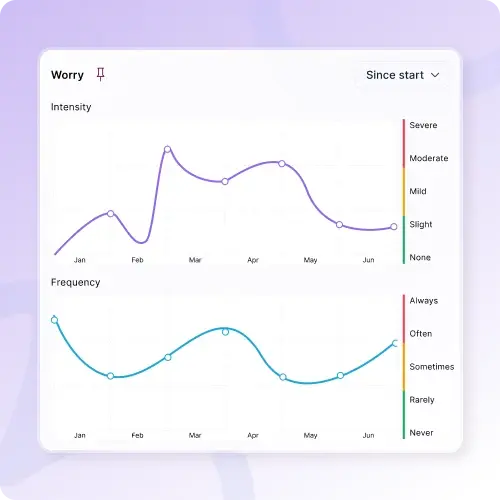
Mentalyc tracks progress continuously from every session, so you have a richer longitudinal picture running alongside your formal assessments. When your next PHQ-9 comes back lower, you’ll already know why, because you’ve been watching the trend session by session.
How does Mentalyc support measurement-based care?
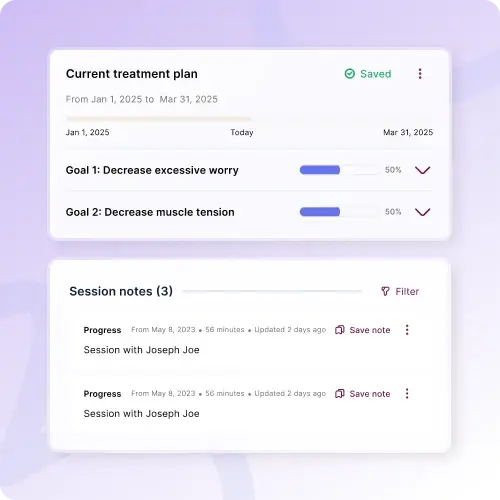
Instead of relying on client self-report scales, AI extracts structured progress data from every therapy session, symptom severity changes, treatment goal attainment, and alliance dynamics. You get the evidence-based outcome tracking that MBC requires, integrated into your clinical documentation workflow, with zero extra steps for you or your clients.
For the background on the measures themselves, our guide to outcome measures and rating scales in mental health covers which tools are used, when, and how to choose one.
How is this different from PHQ-9, GAD-7, PCL-5, or ORS questionnaires?
Mentalyc takes a different approach: it extracts progress signals directly from your session content. You get richer, session-specific outcome data that captures what standardized assessments miss, shifts in therapeutic alliance, emerging themes, and contextual symptom changes. No forms for clients, no scoring for you.
Can an AI progress tracker help with insurance reviews and medical necessity documentation?
An AI progress tracker supports insurance reviews by maintaining clear continuity between sessions, goals, and outcomes. By showing outcome measurement, symptom improvement, and goal attainment, it provides evidence of clinical change. Mentalyc’s AI progress tracker helps generate audit-ready documentation that supports medical necessity requirements.
Is Mentalyc’s AI progress tracker HIPAA compliant and secure for clinical data?
Yes. Mentalyc's AI progress tracker is built for HIPAA-compliant progress tracking and protects protected health information at every step. It uses encrypted processing, deletes audio after use, and ensures secure clinical data remains clinician-controlled. This supports compliant clinical workflows and safe client progress tracking.
What is an AI progress tracker for therapists and how does it work?
An AI progress tracker for therapists helps clinicians track therapy progress over time by analyzing therapy sessions instead of relying on memory or forms. It works by extracting clinical signals from session content, identifying symptom trends, measuring changes over time, and surfacing patterns across weeks or months. This turns session data into measurable insights while maintaining HIPAA-compliant, clinician-controlled data.
Mentalyc tracks progress from every session, alongside your PHQ-9 or GAD-7 or without them. It supports therapy outcome tracking by revealing meaningful clinical shifts across sessions, making it a practical clinical progress tracking tool for both solo practitioners and group practices.
How accurate is the AI symptom tracking tool for complex cases?
Mentalyc’s AI symptom tracking tool provides automated clinical insights that reveal therapy symptom trends over time, acting as a reliable mental health progress tracker even for complex or long-term cases.