All the note formats you need - for every client type

Mentalyc AI notes for all session types: couples, family, group, child, and individual therapy

Client and Therapy Type

From Individuals, Children, Couples, EMDR, Play to varied Family sizes.

Mentalyc supports SOAP, DAP, BIRP, GIRP, SIRP, PIE, PIRP, intake note formats

Formats

Whether it's Intake, a myriad of Progress notes (SOAP, DAP, PIRP, SIRP, GIRP, BIRP, PIE), or service interactions.

Mentalyc input methods include recording, dictation, and typed therapy notes

Input Methods

Convert session recordings, dictations, or direct text descriptions into structured notes.

Customizable therapist provider role names in Mentalyc therapy documentation

Customisation

Teach AI how to refer to you and your clients e.g. Client vs Patient, therapist vs Clinician, and many others.

Adaptable to Varied Therapy Types

Craft notes across multiple therapeutic modalities.
Please note that all sample notes here are fictional and are not derived from a real life session.

Progress Notes in Different Templates

Monitor therapeutic evolution, employing a host of templates to encapsulate the patient's therapeutic journey.
Explore examples for each note type.

Customise Your Session Notes Your Way

Adjust the templates to your needs.

Mentalyc EMDR therapy note template with trauma session tracking fields

EMDR & Brainspotting

Add EMDR and brainspotting specific sessions to reflect the nature of bilateral stimulation.
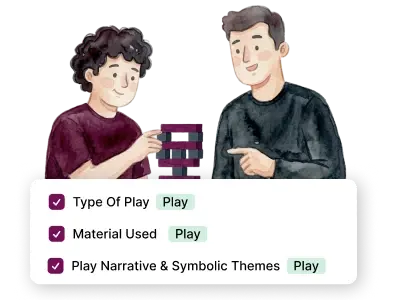
Mentalyc play therapy note template with child session documentation

Formats

Make your notes capture an abstract, interactive and expressive nature of Play Therapy.
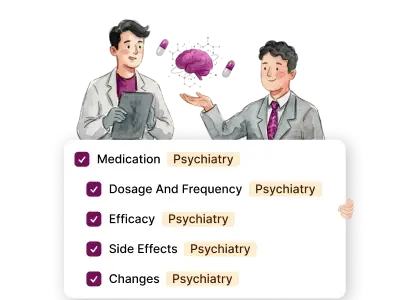
Mentalyc psychiatry note template with medication and symptom tracking

Input Methods

Add medication management and psychiatric assessments to reflect the nature of prescriber work.

FAQs

Does Mentalyc generate SOAP notes automatically?

Yes. SOAP notes are one of the primary formats Mentalyc generates automatically. After a session, recorded live, uploaded as audio, or entered as a summary, Mentalyc produces a complete SOAP note with Subjective, Objective, Assessment, and Plan sections filled in. You review and edit before saving.

Is Mentalyc HIPAA-compliant for AI note taking?

Yes. Mentalyc is fully HIPAA-compliant. All session data is encrypted in transit and at rest, stored securely, and never used to train AI models. Mentalyc is also SOC 2 certified. You remain in full control of your data and can delete it at any time.

Can I use Mentalyc as an AI progress note generator?

Yes. Mentalyc is an AI progress note generator that creates SOAP, DAP, BIRP, GIRP, PIE, SIRP, and other progress note formats automatically from your sessions. Each note is generated in your clinical voice and preferred template, insurance-ready and editable before finalising.

Does Mentalyc work as an AI scribe for therapists?

Yes. Mentalyc acts as an AI scribe for therapists — it listens to or reads session content and produces a complete clinical note without manual dictation or typing. It supports live recording, audio file uploads, and typed or dictated summaries, then generates a structured note in your preferred format ready for review.

What is an AI note taker for therapists?

An AI note taker for therapists is software that automatically generates structured clinical notes from therapy sessions, either by recording live audio, processing uploaded recordings, or working from dictation or typed summaries. Mentalyc generates SOAP, DAP, BIRP, GIRP, PIE, SIRP, and custom notes in minutes, so therapists spend less time documenting and more time with clients.

How does Mentalyc serve as a generative AI platform for clinical conversations?

Mentalyc turns therapy sessions into AI therapy notes based on actual session content, following standard clinical formats and remaining clear and consistent from session to session. It works seamlessly from recordings or summaries, and goes beyond notes to support treatment planning and progress tracking.

Why is Mentalyc considered advanced AI for therapists?

Mentalyc is built specifically for mental health care and understands real therapy workflows — not just generic clinical documentation. It supports structured notes, treatment planning, progress tracking, and therapeutic alliance reflection, while prioritizing ethical AI, data privacy, and clinician control at every step.

What are automated progress notes in Mentalyc?

Automated progress notes are AI clinical notes that Mentalyc creates for you after each therapy session. They reduce repetitive writing by converting session content into clear, structured documentation — while keeping you in control of the final review and approval before anything is saved to the client record.

How does Mentalyc support an AI assistant for mental health therapists?

Mentalyc functions as an AI assistant for mental health therapists by supporting more than just documentation. It surfaces session insights, reduces administrative workload, improves clinical efficiency, and provides data supporting evidence-based care — all while keeping the therapist in control of every clinical decision.

Can Mentalyc act as AI that writes progress notes accurately?

Yes. Mentalyc writes progress notes based on what actually happens in your therapy sessions — not generic templates. It reduces paperwork while maintaining clinical judgment, producing audit-ready documentation that accurately reflects real clinical work. You always review and approve the final note.

How does Mentalyc generate AI clinical notes?

Mentalyc creates AI clinical notes by organizing what happens in your therapy session into the note formats you already use — SOAP, DAP, BIRP, and more. Beyond note generation, it supports treatment planning and progress tracking, and provides therapeutic alliance insights to strengthen your clinical practice.

How is Mentalyc the best AI for therapists?

Mentalyc supports clinicians before, during, and after sessions by organizing clinically important information and turning session content into clear, structured notes — while keeping clinical sense-making fully under the therapist's control. It's purpose-built for mental health, not a generic AI tool adapted for clinical use.

What role does Mentalyc play as an AI clinician assistant?

Mentalyc supports documentation, treatment planning, and progress tracking across sessions. As an AI clinician assistant, it reduces cognitive load after sessions by organizing clinical information clearly and consistently, while also surfacing therapeutic alliance insights to support reflection and better care.

How does Mentalyc function as an AI medical scribe for therapy practices?

Built specifically for therapy, Mentalyc captures the clinical meaning of your sessions and turns them into clear, structured progress notes and treatment plans. It supports therapeutic language and clinical formats while significantly reducing post-session documentation time.

Why do clinicians consider Mentalyc the best AI medical scribe for clinicians?

Clinicians rate Mentalyc as the best AI medical scribe because it's built for accuracy, compliance, and real clinical workflows. It generates documentation that reflects actual session content and delivers better documentation quality than all-in-one EHR AI notes, which are generic add-ons rather than purpose-built tools.

What does AI documentation and insights for therapists mean inside Mentalyc?

AI documentation and insights means using AI to turn therapy sessions into clear, structured clinical notes while highlighting meaningful patterns. These insights surface information about client progress and therapeutic alliance, supporting reflection across sessions while keeping clinical judgment central to every decision.

How does Mentalyc help automate AI progress notes for therapy sessions?

Mentalyc creates accurate documentation directly from each therapy session. When you automate progress notes, repetitive paperwork is reduced while clinical clarity and meaning are preserved. Notes are always generated as drafts for clinician review and approval — you stay in control.

How does Mentalyc support AI note taking for clinicians across practices?

Mentalyc is built for AI note taking for clinicians and designed to fit the way you already practice. It adapts to different therapy styles, helps complete notes faster, and stays practical, reliable, flexible, and secure — whether you're a solo practitioner or part of a group practice.

What makes Mentalyc an AI clinical documentation software for therapists?

Mentalyc is designed specifically for mental health — not adapted from general-purpose AI. It keeps notes, treatment plans, and progress connected across sessions, reflects real clinical work, and organizes information clearly while reducing paperwork and maintaining consistent, compliant documentation across client records.

Why do therapists choose Mentalyc as an AI note taker for therapist workflows?

Therapists choose Mentalyc because it supports how they actually work during and between sessions. It generates clinically meaningful progress notes that match various documentation styles and therapeutic approaches, maintains HIPAA compliance, reduces paperwork burden, and surfaces therapeutic alliance insights — all without disrupting clinical workflows.

How does Mentalyc create AI progress notes for therapists?

Mentalyc creates AI progress notes straight from your therapy sessions. It captures key details like challenges, interventions, and outcomes in clear, structured notes — automatically. This reduces documentation stress while maintaining audit readiness, and keeps notes consistent across sessions to support progress tracking and clinical planning.

If a patient revokes consent under Part 2, what happens?

Under Part 2, consent/authorization handling matters; generally, revocation affects future disclosures, not actions already taken based on valid consent.

Our agency treats SUD clients. What do we need to do?

Confirm whether you handle Part 2-protected records, and if yes, use a Part 2-compliant consent/authorization process (with the required elements).

Do you provide a form/certificate that “confirms Part 2 compliance”?

No. Part 2 compliance depends on whether Part 2 applies to the provider and whether the provider has obtained Part 2-compliant consent/authorization and follows Part 2 disclosure rules. Part 2 consent has required elements set by regulation.

Is Mentalyc compliant with 42 CFR Part 2?

Mentalyc provides HIPAA-aligned safeguards under a BAA. If a provider is subject to Part 2, the provider is responsible for obtaining any Part 2-required patient consent/authorization before using Mentalyc to process Part 2-protected SUD records. Part 2 governs when/how SUD records may be disclosed. You can download a template here.

Can I take intake notes using Mentalyc?
Yes. Mentalyc supports intake note documentation fully — it captures the session content and generates a structured intake note automatically. You can use any of Mentalyc’s built-in intake templates or build your own with the Template Builder to include exactly the sections you need (presenting problem, history, risk assessment, treatment goals, etc.).
Does Mentalyc work for Play therapy?
Yes. Mentalyc works for play therapy by capturing session content and generating notes through the Template Builder, where you can create a structure that matches your play therapy documentation style — including sections for play themes, symbolic content, therapeutic interventions, and child developmental observations. Since play therapy sessions are often non-verbal or activity-based, you can use the dictate a summary or type a summary input modes to describe what happened, and Mentalyc will generate a structured note from that.
Will the notes and Treatment Plan fit my approach, clients, and therapy style?
Absolutely. Whether you’re working with individuals, couples, families, or groups, you can create personalized, customized notes and a Treatment Plan for each client.

Mentalyc supports a wide range of therapy styles and modalities—including CBT, EMDR, psychodynamic, humanistic, play therapy, ABA, social work, PMHNP, and more—so you can tailor your plans to match your unique clinical approach.

Mentalyc offers editable templates that you can modify, use as is, or build from scratch, so you have full control at every step of note creation. 
Can the Mental Status Exam (MSE) be included in my notes?
Yes. Mentalyc supports Mental Status Exam (MSE) documentation as a standard section you can include in any note template. The MSE covers key psychiatric and clinical observations — appearance, behavior, mood, affect, thought process, cognition, insight, and judgment — and Mentalyc will populate it based on what was discussed or observed during the session. This is particularly useful for psychiatrists, PMHNPs, and any clinician whose documentation standards require a formal MSE.
How does Mentalyc capture session content?
Mentalyc offers four ways to get your session content in:

Live listening – The app listens in real time during in-person or telehealth sessions. No integrations needed — it works alongside any video platform (Zoom, Google Meet, Doxy.me, SimplePractice Telehealth, etc.) or phone call.

Upload a recording – Record your session separately and upload the audio file after. Works for phone call sessions too — see our guides for iPhone and Android. Supports iPad as well.

Dictate a summary – Speak your session summary by phone or computer and let Mentalyc turn it into a structured note.

Type a summary – Write a brief summary manually; Mentalyc generates the full note from it.

Mentalyc runs on desktop, mobile browser, and iPad. Note editing and signing is best done from a computer.
Does Mentalyc support Psychiatrists and Psychiatric Nurse Practitioners (PMHNPs)
Absolutely. Mentalyc is designed to support the unique workflows of both psychiatrists and PMHNPs . You’ll find dedicated templates for medication management, psychiatric evaluations, and more. Plus, with the flexible template builder, you can easily customize your notes to include any sections you need.
Can I upload one recording that includes two back-to-back sessions?
No — Mentalyc processes one session per recording. If you run back-to-back sessions and record them together, uploading as a single file will produce one note covering both, with no way to split them afterward. This is important to know if you schedule consecutive 50-minute sessions: you’ll need to start a new recording for each client. We recommend using the live listening mode, which lets you start and stop a new session for each client individually.
Can Mentalyc be used for in-person sessions?
Yes. You can use Mentalyc's built-in recorder during in-person sessions, or just use your phone, tablet, or any other device that records audio. Whatever feels easiest and fits your workflow. 
Does Mentalyc do Psychiatry notes?
Yes! Mentalyc is built to support psychiatric workflows, including those of Psychiatric Nurse Practitioners (PMHNPs). You can customize your note layout with sections specifically recommended for psychiatrists — covering psychiatric evaluations, medication management, and more.

Mentalyc also captures medication details, dosages, and any changes discussed during sessions, so your prescribing documentation is handled automatically alongside your clinical notes. With the flexible template builder, you can include or exclude any sections to fit your exact workflow.
Do Mentalyc notes comply with insurance?
Yes. Mentalyc helps you create thorough, insurance-ready notes by focusing on medical necessity. It guides you in documenting your client’s current symptoms, diagnosis, and how these impact daily functioning—all essential for demonstrating the need for treatment.

Your notes automatically reference prior sessions to maintain continuity and support the “golden thread” of treatment, helping you build a clear, connected story over time, especially important for audits.

Mentalyc also recommends evidence-based techniques when listing interventions. This not only enhances the clinical strength of your notes but also helps improve therapeutic outcomes, which naturally show up in your documentation over time.

In addition, Mentalyc lets you track progress against specific goals, monitor client engagement, and build customizable Treatment Plans with measurable objectives, making it easier to demonstrate clinical effectiveness and meet the documentation standards required by insurers.
Does Mentalyc have a mobile app?
Not yet, but you can use Mentalyc right on your phone’s browser, no app needed! To make it even easier, you can add a shortcut to your home screen—just like an app. Check out our simple step-by-step guides for Android and iPhone/iPad to get set up. This way, Mentalyc is always just a tap away, anytime and anywhere.
How can I add a new client?
You can easily add a client by clicking [+Add New Client] while creating your note [Configure and Generate] or from the Client section.
What note formats are available in Mentalyc?
Mentalyc offers a wide variety of note templates to suit your needs— including SOAP, DAP, PIRP, SIRP, GIRP, BIRP, PIE, EMDR, Play Therapy, Psychiatry notes, and more. You can create intake notes, progress notes, and treatment plans.

It supports all client types — individuals, children, couples, and families. Notes can be created from recordings, transcripts, dictation, or written summaries — whatever works best for you. Everything is easy to customize to fit your workflow and style.
Is it possible to use Mentalyc on an iPad?

Certainly! You can easily utilize Mentalyc on your iPad by following our guidelines and recording the phone conversation. Simply upload the recorded conversation to the Mentalyc tool from your iPad. However, please note that the editing and signing of notes can only be done from your computer.

Does Mentalyc offer group therapy notes?

Yes. Mentalyc generates group therapy notes both for the session as a whole and individual progress notes for every participant — automatically, without manual splitting or copy-paste between records. Group notes are included in the SUPER plan and in every seat of the Team plan, so every clinician in your group practice gets full access at no extra cost.

Does Mentalyc ensure a “golden thread” in therapy documentation?
Yes. The golden thread in therapy documentation means every note connects back to the client’s treatment goals — from the initial assessment through each session note to discharge. Insurers and licensing bodies increasingly require this continuity as evidence of clinical necessity and treatment effectiveness.

Mentalyc supports the golden thread by keeping your full session history in one place, so each note is contextualized against prior sessions, presenting problems, and stated goals. We recommend saving every note in Mentalyc — even if you also copy it into your EHR — so your longitudinal record stays intact and coherent over time.
Do you support telehealth & in-person sessions?
Yes — Mentalyc works seamlessly with both telehealth platforms and in-person sessions—no extra integrations needed. While Mentalyc doesn’t have built-in telehealth, you can easily use it alongside your preferred video platform or phone.
Can I record phone call sessions?
Certainly! We have easy guides for both iPhone and Android to help you record your phone calls.
Can I use Mentalyc with my current video call platform (telehealth)?
Yes! You can easily capture audio directly from your browser while using your preferred telehealth platform. Check out our tutorial to learn how.
Does Mentalyc integrate with Simple Practice?

Yes! With the Mentalyc Chrome Extension, you can autofill your notes directly into SimplePractice (and any other EHR) with one click — no copy-pasting.

Does Mentalyc capture medication details during sessions?
Yes! Mentalyc records medication details, dosages, and any changes.
Can I use Mentalyc for couple, child, or family therapy sessions?
Yes. With the PRO plan and above, you gain access to features for different client types — including couples, children, and families. These client types are available across all note formats, including treatment plans, intake notes, and more. Just a heads-up: the BASIC and MINI plans support individual adult clients only.
What is the typical length of notes?
It depends on the type and format you choose. With the template builder, you can customize your notes to be as brief or detailed as you need, so the length is totally up to you.
Is Mentalyc using human scribes?
No, it is not. All transcripts and notes are generated using advanced technology like Machine Learning Algorithms, Language Models, and Statistical models.
Can I use Mentalyc with my EHR?
Yes. Mentalyc integrates with your EHR via a Chrome Extension that pushes your completed notes directly into the right sections of your EHR — no copy-pasting required. It works with the most widely used platforms including SimplePractice, TherapyNotes, Jane App, and others. You write the note in Mentalyc; the extension places each section where it belongs in your EHR.
How does Mentalyc create my therapy notes?
It’s a simple process:
1. Add your session – Record in-person or telehealth session, upload a session recording, dictate or type a session summary.
2. Mentalyc organizes it – Your input is structured into a note using your chosen template.
3. Get your draft – Receive a clear, ready-to-edit note with summary, insights, and next steps.
4. Review – You stay in control by checking and editing the draft.
5.  Save Note - store it securely in Mentalyc and/or copy it to your EHR. Saving notes builds therapy context and unlocks helpful analytics