Author: Angela M. Doel, Psychotherapist
Angela M. Doel holds a Master’s degree in Counseling Psychology from the University of Pennsylvania and has worked as a psychotherapist primarily with families and couples. She is a PESI-approved continuing education speaker and trainer, and serves as Director of Publishing at Between Sessions Resources, a provider of therapeutic homework assignments and clinical worksheets. Angela is the author of 11 published mental health workbooks, including The Couples Communication Workbook: Therapeutic Homework Assignments to Foster Supportive Relationships (2020). She is a verified expert on http://Rehab.com and has contributed articles to Karuna Healing, Unbound By Merit, Mind Remake Project, and http://AllBusiness.com. Her Amazon author page hosts her full catalog of clinical workbooks for adults, teens, and couples. At Mentalyc, Angela contributes clinical content drawing on her decades of therapeutic writing and direct practice experience.

-
Perfect notes are just the beginning. Mentalyc turns them into meaningful insights – tracking client progress, strengthening the therapeutic alliance, and helping you capture real change over time. Track missed opportunities and alliance patterns – and grow with every note.June 22, 2026·1 min read
-
Running a group therapy practice means managing more than your own caseload. Every clinician on your team generates notes, and when documentation is eating 30-40% of their working hours, that burden compounds with every hire. AI therapy note software has improved significantly over the past two years. The problem: most of it was built for […]June 22, 2026·7 min read
-
Most roundups of AI therapy note tools are written with a solo therapist in mind. They compare entry-level pricing, check whether the note quality is acceptable, and move on. That works if you’re a single practitioner. It does not work if you’re managing a team. Group therapy practices have different requirements: centralized billing, admin visibility, […]June 22, 2026·7 min read
-
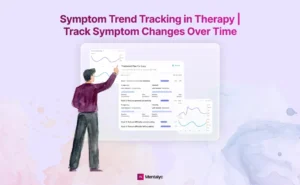
In day-to-day practice, therapists are constantly assessing whether therapy is helping — often through clinical intuition, memory, and scattered documentation. Yet as cases extend over months or years, it becomes increasingly difficult to hold the full trajectory of change in mind. Symptom trend tracking in therapy brings those impressions into focus by showing how symptoms […]June 22, 2026·10 min read
-
In day-to-day practice, therapists are constantly assessing whether therapy is helping – often through clinical intuition, memory, and scattered documentation. Yet as cases extend over months or years, it becomes increasingly difficult to hold the full trajectory of change in mind. Symptom trend tracking in therapy brings those impressions into focus by showing how symptoms […]June 22, 2026·8 min read
-
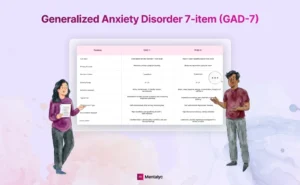
Standardized screening tools like the PHQ-9 and GAD-7 have become routine in mental health care. They are familiar, easy to score, and widely accepted by insurers and healthcare systems. But many therapists are now asking a deeper question: Are self-report questionnaires the best or is it the only way to understand client progress? This article […]June 22, 2026·10 min read
-
Therapy is not just about what you work on – it’s about when and how you work on it. One of the most common reasons treatment stalls or feels unfocused is not lack of skill or effort, but unclear goal sequencing in therapy. This is where understanding short term vs long term therapy goals becomes […]June 22, 2026·15 min read
-
Intake notes form the foundation of a treatment plan. They capture a client’s history, current concerns, and initial goals during the early sessions–including presenting problems, mental and medical history, family background, risk factors, and functional impairment. A treatment plan translates that information into a clear clinical roadmap by defining the diagnosis, treatment goals, objectives, and […]June 22, 2026·13 min read
-
Writing treatment plans is a core clinical task but also one of the easiest places for clarity to break down. Therapists are expected to turn diagnostic assessments into measurable, insurance-ready plans that guide care and evolve with the client. In practice, plans often become generic, disconnected from sessions, or difficult to keep updated. This guide […]June 22, 2026·9 min read
-
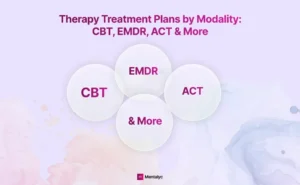
Therapy treatment plans by modality are structured care plans that change based on the therapeutic approach used to address a client’s needs. Different modalities focus on different mechanisms of change–CBT targets thought and behavior patterns, psychodynamic therapy explores past experiences and relational themes, humanistic approaches emphasize self-growth, and body-based modalities like EMDR and somatic therapy […]June 22, 2026·11 min read
-
Measurable treatment plan objectives are essential for demonstrating medical necessity in insurance documentation. Insurers expect objectives to follow the SMART framework–Specific, Measurable, Achievable, Relevant, and Time-bound–and to link diagnosis-related symptoms directly to interventions using observable indicators such as frequency, duration, or intensity. When objectives are vague or subjective, payers cannot evaluate progress or continued need […]June 22, 2026·9 min read
-
AI documentation tools are starting to deliver on their promise to reduce charting time. A clinical trial at UCLA Health found that clinicians using AI scribes spent less time writing notes and reported modest improvements in burnout and work-related stress. In a system where health professionals often spend two hours on paperwork for every hour […]June 22, 2026·9 min read
-
As therapists, we talk about goals constantly: at intake, during treatment planning, in progress notes, and in discharge summaries. Yet goal attainment in therapy often remains one of the most misunderstood and inconsistently documented aspects of clinical work. We may feel that a client is improving, but struggle to articulate how, toward what, and to […]June 22, 2026·9 min read
-
Writing SMART goals in therapy is one of the most important and most misunderstood skills in clinical practice. Therapists are often trained to think in broad therapeutic aims (“reduce anxiety,” “improve relationships,” “increase insight”), yet documentation, treatment planning, and insurance review require something much more precise. SMART goals bridge that gap. They translate clinical insight […]June 22, 2026·13 min read
-
Therapy progress tracking is about noticing how a client is changing over time, not just how a single session went. It helps you see whether symptoms, functioning, or engagement are slowly improving, staying stuck, or shifting in unexpected ways across sessions. Some therapists use questionnaires or rating scales for this (often called progress monitoring or […]June 22, 2026·9 min read
-
Therapy outcome tracking is the process of evaluating whether therapy led to meaningful, lasting change over time. Rather than focusing on what happened in individual sessions, it looks at the overall results of treatment such as symptom reduction, improved functioning, or sustained stability, across the full course of care. Therapy outcome tracking is often discussed […]June 22, 2026·9 min read
-
The therapeutic alliance is one of the strongest predictors of engagement and effectiveness in therapy. Research consistently shows that how therapists and clients work together plays a major role in treatment outcomes. Traditionally, the alliance has been measured using tools like the Working Alliance Inventory (WAI) and other alliance questionnaires. While these measures are useful […]June 22, 2026·8 min read
-
In 2026, choosing the best AI scribe for therapists is no longer about “saving time.” For therapists, psychiatrists, and medical clinicians, the real question: Can the AI medical scribe tool support clinical reasoning, preserve documentation integrity, and reduce compliance risk – without adding friction to care? This ranked list of the top 10 best AI […]June 22, 2026·21 min read
-
Therapists are entering 2026 facing a familiar challenge: clinical documentation is taking too long. Many clinicians still spend hours each week completing progress notes, rewriting session summaries, and ensuring their documentation meets medical-necessity standards, payer requirements, and ethical expectations. The burden is exhausting, and it directly contributes to burnout, reduced work–life balance, and increased administrative stress. This is why AI […]June 22, 2026·13 min read
-
Cognitive Restructuring Techniques for Therapists: How to Apply, Document, and Track Client Progress
Clients rarely present to therapy saying, “I have a cognitive distortion.” Instead, they arrive describing chronic anxiety, low mood, shame, relational conflict, or a sense of being stuck; often driven by longstanding patterns of distorted thinking that operate outside of conscious awareness. For therapists, one of the most clinically powerful ways to intervene at this […]June 22, 2026·13 min read -
Cognitive Behavioral Therapy (CBT) and Dialectical Behavior Therapy (DBT) are two of the most widely used evidence-based modalities in mental health practice. While both are structured and skills-oriented, they serve different clinical purposes and require distinct documentation approaches. For therapists, the real challenge is not defining CBT or DBT–but deciding when to use each modality, […]June 22, 2026·9 min read
-
Persistent Depressive Disorder (PDD), formerly known as dysthymia, is a chronic depressive condition characterized by long-standing low mood, reduced motivation, and impaired functioning. Diagnostic criteria require symptoms to be present for at least two years in adults and one year in children or adolescents, making PDD distinct from episodic depressive presentations. Unlike Major Depressive Disorder […]June 22, 2026·6 min read
-
Therapists exploring Heidi reviews are typically trying to understand: This article breaks down what Heidi Health does well, where clinicians report limitations, and what those trade-offs mean for everyday clinical work. We examine Heidi’s transcription and note-generation workflow, pricing structure, compliance posture, and real therapist experience–using publicly available feedback and documented features. We also compare […]June 22, 2026·10 min read