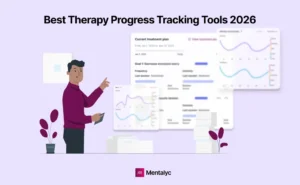
Therapists choosing a progress-tracking tool in 2026 want one thing: a clear view of whether clients are actually improving without creating more paperwork. But tools vary widely. Some only track symptoms through questionnaires, while others miss what matters most in real clinical work: changes in symptoms, progress toward goals, and the quality of the therapeutic alliance. […]
Therapists know progress doesn’t happen by chance. It’s planned, measured, and refined. A strong TX plan connects the client’s needs, goals, and outcomes, giving structure to intuition and clarity to the therapeutic process. Whether you’re a new clinician learning how to write a TX plan for therapy or an experienced professional looking to streamline documentation, […]
Running a group practice comes with growing pains, from endless paperwork to burnout. The right group practice management software can change that. Learn how to scale efficiently while reducing stress.
From private practice to AI development, how to find a career that fits your life. Key Takeaways Jobs for therapists in the U.S. are changing fast. The days of choosing solely between “community mental health” and “private practice” are over. As we look toward 2026, the field is exploding with flexible telehealth roles, hybrid positions, […]
Some EHRs are trying to ride the AI wave by adding note-taking features, but are they getting it right? We took a closer look at TherapyFuel by TherapyNotes and compared it with Mentalyc, a platform built specifically for insurance-ready therapy documentation. Who nails it, and who’s just pretending? In this comparison of Mentalyc vs TherapyFuel, […]
Mentalyc vs Blueprint: Feature, Price, Key Comparison Helping others is your mission – your time is valuable, and your work deserves the right tools. We’ve broken down the strengths and weaknesses of two top AI platforms – Mentalyc vs Blueprint – to help you choose the one that aligns with your values and helps you […]
Mentalyc vs Heidi: Why Mentalyc is the better choice than Heidi Health Choosing the right AI platform for therapists can be overwhelming – especially with so many options claiming to do it all. Today, we’ll compare two popular tools: Mentalyc vs Heidi Health – Mentalyc, designed specifically with therapists in mind, and Heidi, a more […]
Z codes are part of the ICD-10 system used by doctors and therapists to describe social or life situations that affect an individual’s health. They are not about a mental disorder, but they give helpful background information about what is happening in a person’s life. Mental health is closely connected to a person’s everyday life. […]
Mentalyc vs Upheal – Features, Price, and Key Comparison Many therapists are turning to AI – and it’s a total game-changer. These smart tools take the weight off writing detailed session notes, freeing up your time so you can focus on what matters most: your clients. We’ve taken a close look at two leading platforms […]
Feedback Informed Treatment (FIT) is a working model for integrating client feedback into treatment from therapist session to session. It uses brief, standardized assessments of client wellbeing and the therapeutic working relationship to enable therapists to guide midcourse. We therapists try to form rich, healing relationships with our clients, but we labor in the dark […]
Counseling skills and tools make clients feel safe, supported, and in the long run, healed. In the therapeutic relationships, the interventions are important, but what is even more important is the human relationship formed through effective counseling skills. As a new therapist beginning your career or an established clinician wishing to return to basics, having […]
Mental health professionals use DARP notes to record what happens during a client’s session. These notes keep track of key details that support the client’s care. DARP stands for Data, Assessment, Response, and Plan. This DARP format helps mental health practitioners organize their notes in a clear way. It is also useful for legal records […]
Ethics in counseling refers to the standards and principles that govern the professional conduct of therapists. Ethics refers to the system of moral principles which guide human behaviour. It outlines what is right, what is fair, what is just, and what is good. Ethics in counseling are not mere rules, as a therapeutic space is […]
Therapeutic alliance in group therapy is a complex web of relationships between the therapist and the clients, and the relationship amongst the group members themselves. It is more layered, more relational, and sometimes more fragile. The therapeutic alliance, is the collaborative interaction & connection between the mental health professional and their clients. The bed of […]
Starting your counseling private practice is a career move that is a step into professional independence. It’s where clinical work meets entrepreneurship, where values begin shaping the practice environment, and where your presence can directly support your community’s mental health needs. Counseling Private Practice in Texas When it comes to private practice in Texas, they […]
Treatment plan for OCD (Obsessive-Compulsive Disorder) involves understanding the amount of impact the obsessions and compulsions have on a person’s life. It is often a debilitating mental health concern with a pervasive effect on many aspects of human life. It shows up in different ways and in different degrees. Therefore, there is no one-treatment-that-fits-all, there […]
The Cognitive Therapy Rating Scale (CTRS) is an evaluative tool used by mental health professionals to rate a therapist’s Cognitive Therapy (CT) skills during therapy sessions. Cognitive Therapy is a type of Cognitive Behavioral Therapy (CBT). It focuses on changing unhelpful thoughts, feelings, and behaviors that negatively affects an individual’s wellbeing. The CTRS is used […]
Building and maintaining a strong therapeutic alliance is a complex process shaped by multiple interrelated factors. The factors influencing therapeutic alliance include characteristics of the therapist, the client, and the broader context in which therapy takes place. This article offers a comprehensive overview of the primary factors that influence the therapeutic alliance, organized into therapist-related, […]
Formulated on the basis of research conducted by William R. Miller and Stephen Rollick, Motivational Interviewing is an evidence-based, goal-directed, client-directed approach to mobilizing a client’s internal motivation to change. Empathically driven, MI works through and beyond ambivalence without confronting or evading it. MI integrates synergistically with the vast majority of treatment modalities, Cognitive-Behavioral, Acceptance […]
Mental health risk assessment is one of the most essential – and nerve-wracking – parts of clinical work. It’s the systematic process of evaluating whether a client may harm themselves or others, and yet even seasoned therapists can feel unsteady when safety concerns arise. This guide walks you through the tools, questions, and best practices for […]
The Session Rating Scale (SRS) is a simple but efficient way to get immediate feedback about clients’ experiences in therapy. It shows the therapeutic relationship between the therapist and client during sessions. With the Session Rating Scale (SRS) therapists can find out how the client feels about a session. They can also check if their method […]
The online disinhibition effect is a psychological effect whereby people are more honest, frank, or passionate about themselves within online communities than they would be face-to-face. Therapeutically, this is expressed when clients are surprisingly relaxed sharing confidential, even intimate information within the first phases of the relationship, or when they email emotionally charged messages between […]
The Group Session Rating Scale (GSRS) is an ultra-brief, four-item visual analog scale designed specifically to measure therapeutic alliance in group therapy settings. Unlike traditional alliance measures that focus solely on the client-therapist relationship, the GSRS captures the multidimensional nature of group therapy by assessing both the client’s relationship with the group leader and their […]
Clinical notes are part of everyday practice in mental health settings. Each entry records what was observed, discussed, and addressed in session with the client. These notes support accurate documentation. They also guide the next steps in client care. As a therapist, clear writing ensures that nothing important is missed. This article explains how to […]