

For decades, the Wiley Treatment Planner defined how therapists structure goals, objectives, and interventions. But today’s clinical reality looks very different. Therapists now need automated treatment planning, tighter insurance alignment, and tools that work seamlessly across EHRs—without endless copy-paste or rigid templates.
If you’re actively searching for a Wiley treatment planner alternative, this guide breaks down why many clinicians are moving beyond Wiley and why Mentalyc’s AI Treatment Planner for therapists has emerged as the most trusted modern replacement.
Why Therapists Are Looking for Alternatives to Wiley Treatment Planner
The Wiley Treatment Planner remains trusted, but clinical practice has changed. Therapists today manage heavier caseloads, tighter insurance requirements, and fully digital workflows—revealing gaps in traditional, template-based planning. This shift is driving demand for a Wiley treatment planner alternative built for modern care.
1. Need for Personalization in Treatment Planning Software for Therapists
Wiley plans are diagnosis-based, but real therapy is client-specific. Therapists increasingly want treatment planning software that reflects session content, modality, and client language—without spending time rewriting generic goals and interventions.
Automated treatment plans that reflect your approach

New! Transfer your notes to EHR with a single click. No more copy-pasting.
2. Too Much Manual Editing in the Wiley Treatment Planner
Even with EHR add-ons, Wiley plans often require heavy copy-paste and customization. Clinicians are seeking automated treatment planning tools that reduce manual editing while preserving clinical control—especially in busy private and group practices.
3. Lack of Progress Continuity in Wiley Behavioral Health Treatment Planning Software
Traditional planners don’t naturally evolve with treatment. Goals may be written once and rarely updated, making it harder to demonstrate ongoing change. Modern clinicians want a behavioral health treatment planner that maintains continuity across sessions and clearly links progress notes to treatment goals.
H3: 4. Increased Insurance Scrutiny for Insurance-Ready Treatment Plans
Audits and payer reviews are more common. Therapists need insurance ready treatment plans that clearly demonstrate medical necessity, measurable goals, and logical progression of care—without spending extra time “writing for insurance.”
5. Limited Cross-EHR Flexibility Increases Demand for A Wiley Treatment Planner Alternative
Many practices use multiple systems or switch EHRs over time. Wiley-based tools are often tied to specific platforms. This has increased demand for a treatment planner that works with any EHR, supporting seamless workflows across SOAP and DAP documentation.
Taken together, these pressures explain why clinicians are actively searching for the best alternative to Wiley Treatment Planner—solutions that preserve insurance credibility while offering personalization, automation, progress visibility, and EHR flexibility suited to today’s therapy environment.
What a Modern Treatment Planner Needs to Do Today
| Modern Requirement | Why It Matters for Therapists |
|---|---|
| Session-based personalization | A modern AI treatment plan generator should generate goals, objectives, and interventions directly from real session notes—so plans reflect actual client work, not generic templates. |
| Automatic plan updates | Treatment plans must evolve as therapy progresses. Automated treatment planning ensures goals stay current without rebuilding or rewriting plans after every review period. |
| Insurance-ready language (Payer-compliant treatment planning) | A modern therapy treatment plan generator must produce insurance-ready treatment plans with measurable goals and medical necessity language that holds up during audits and payer reviews. |
| Built-in progress tracking | Effective behavioral health treatment planning software links goals to session data, making progress visible over time without extra forms or manual tracking. |
| Interoperability with any EHR | The best EHR treatment planning tool supports SOAP and DAP note integration and works across EHRs—eliminating copy-paste and duplicate documentation. |
Mentalyc AI Treatment Planner: A Smarter Alternative to Wiley
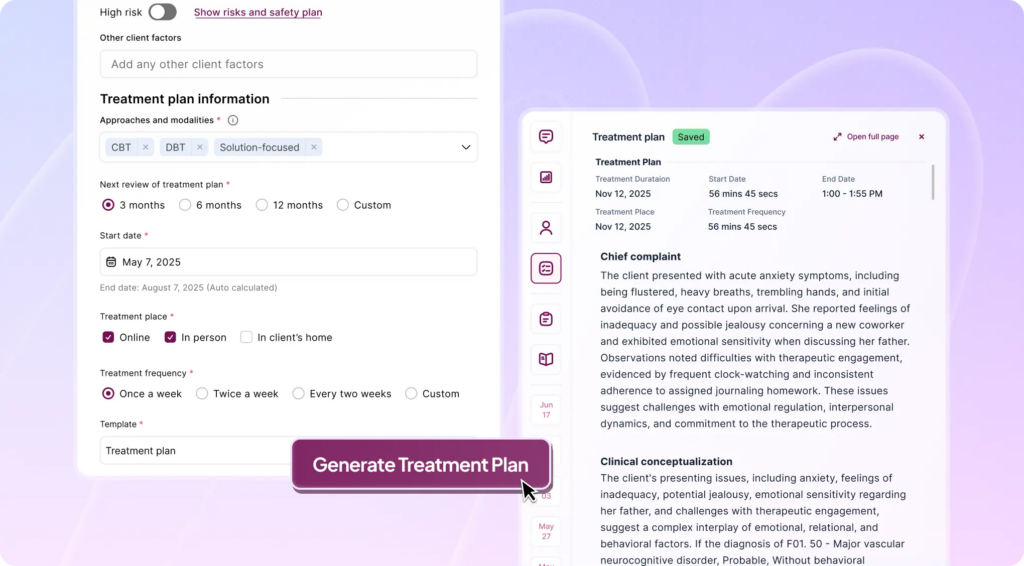
The Mentalyc AI Treatment Planner is built for how treatment planning actually works today—dynamic, session-driven, and closely reviewed by insurers. Unlike the Wiley Treatment Planner’s static templates, Mentalyc uses AI to turn real session notes into clear, goal-focused, and insurance-ready treatment plans in minutes.
Automate Treatment planning with Mentalyc’s AI Treatment Planner
Generate treatment plans that mirror your approach, satisfy payors, and evolve with your clients.
- SMART Goals
- Insurance-ready formatting
- Track goals & outcomes
- HIPAA & PHIPA compliant
New! Transfer your notes to EHR with a single click. No more copy-pasting.

Goal-Orientated Treatment Plans From Session Notes — Therapy Treatment Plan Automation
Mentalyc generates treatment plans directly from your saved intake or progress notes. Whether you record, dictate, or type a summary, the solution analyzes session content to create a goal-oriented treatment plan grounded in the client’s symptoms, diagnosis, and clinical context. This makes Mentalyc the best treatment planner for therapists, not a pre-filled content library.
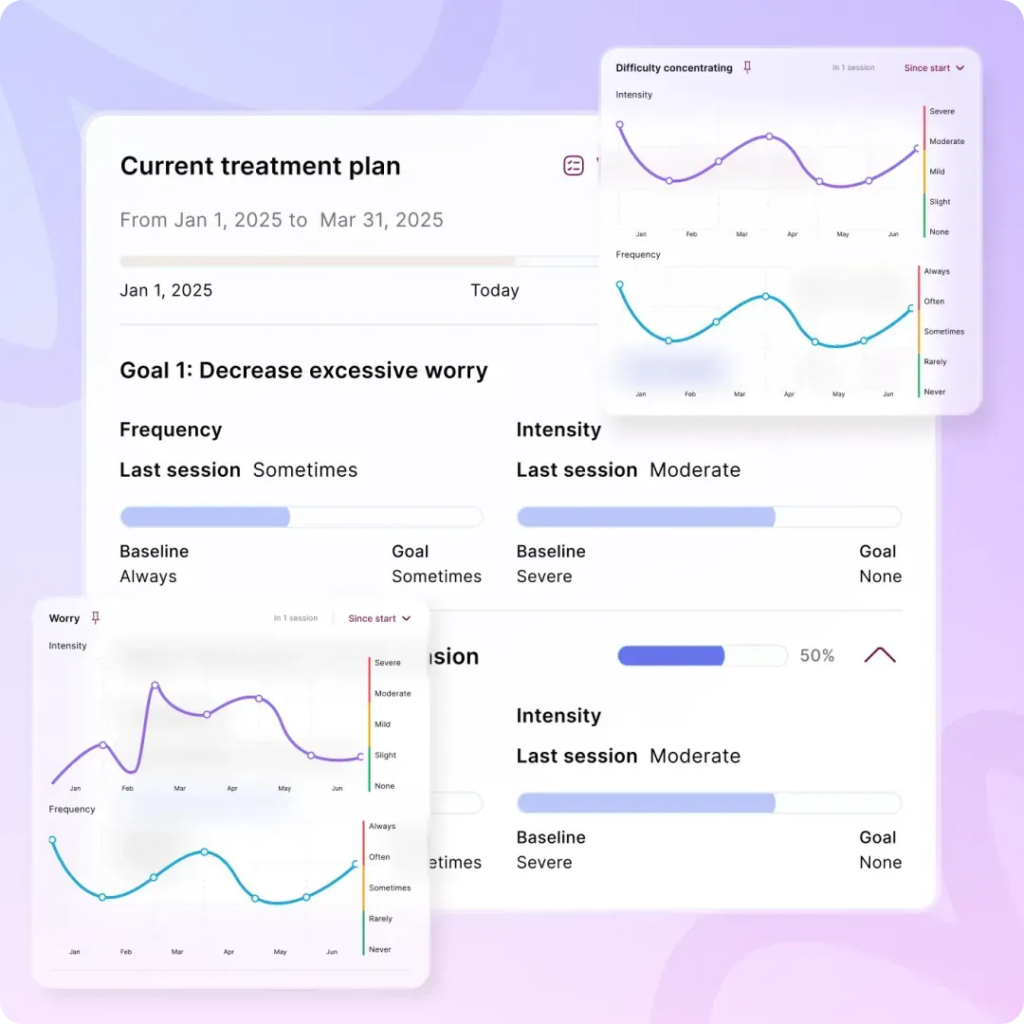
SMART Goals With Built-In Progress Tracking
Mentalyc is the only AI treatment planner that:
- Suggests SMART, measurable goals
- Automatically tracks progress toward those goals
- Updates plans as new sessions are added
By aligning goals directly with documented diagnoses, Mentalyc functions as a practical treatment plan generator grounded in real session data rather than static templates. It also allows therapists to clearly see goal attainment and whether client’s symptoms are getting better —without extra forms or questionnaires.
Diagnosis-Aligned and Clinically Coherent
Treatment plans are aligned with documented diagnoses and symptoms, maintaining a clear clinical rationale across notes, plans, and progress documentation. This supports medical necessity treatment plans and preserves the clinical Golden Thread across sessions.
Fully Editable, Clinician-Controlled Plans
Mentalyc keeps clinicians in control. Goals, objectives, interventions, and even plan structure are fully editable, allowing therapists to customize language, adapt to their modality, and ensure the plan reflects their clinical judgment—not generic phrasing.
Insurance-Ready by Design
Mentalyc treatment plans are naturally structured for payer review, with:
- Measurable goals
- Diagnosis-to-goal alignment
- Evidence-based approach
This reduces stress during audits and supports payer-compliant treatment planning without over-documentation.
Secure, Ethical, and Compliant

Mentalyc is fully HIPAA, PHIPA, and SOC 2 Type II compliant, with:

- No recordings stored
- No model training on client data
- Anonymized processing
- Custom BAAs available
For therapists seeking a modern alternative to Wiley Treatment Planner, Mentalyc delivers what Wiley cannot: AI-powered personalization, automatic progress tracking, insurance-ready structure, and clinician-first control—without sacrificing clinical accuracy or ethical standards.
Wiley Treatment Planner vs Mentalyc AI Treatment Planner
Both the Wiley Treatment Planner and Mentalyc aim to support structured, insurance-ready treatment planning. The key difference lies in how plans are created, maintained, and adapted over time. The comparison below highlights workflow, automation, and clinical adaptability—areas that matter most when choosing a wiley treatment planner alternative.
Mentalyc and Wiley Treatment Planner Comparison
| Feature | Wiley Treatment Planner | Mentalyc AI Treatment Planner |
|---|---|---|
| Planning approach | Static, diagnosis-based templates from books or EHR add-ons | Goal-oriented treatment planning generated from real session notes |
| Source of goals & objectives | Pre-written goal libraries selected and edited manually | SMART goals auto-suggested from intake and progress notes |
| Personalization level | Requires manual customization | High — plans reflect session content, diagnosis, and modality |
| Automation | Limited (template selection) | Automated treatment planning from notes to goals |
| Progress tracking | Manual review and updates | Automatic goal progress tracking across sessions |
| Golden Thread continuity | Therapist-maintained | Built-in alignment across notes, plans, and progress |
| Insurance readiness | Template-based, widely accepted | Insurance-ready treatment plans grounded in session data |
| Adaptability over time | Plans remain static unless manually revised | Plans auto-evolve as new sessions are added |
| EHR flexibility | Tied to specific EHR integrations | Works with any EHR |
| Workflow efficiency | Time-intensive editing and updating | One-click generation and updates |
| Clinician control | Full control, but manual | Full control with editable template |
| Best fit for | Therapists preferring traditional, manual planning | Therapists seeking a more time-saving alternative to Wiley Treatment Planner |
Works With Any EHR Using One-Click Autofill
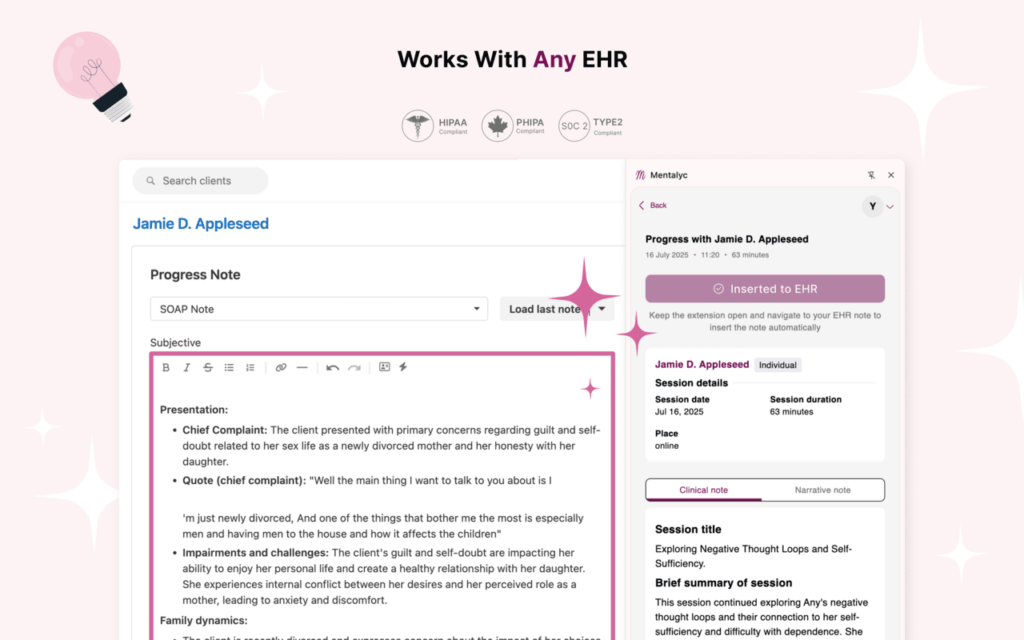
One of the biggest limitations of traditional treatment planners—including Wiley-based workflows—is that they often lock clinicians into specific EHRs or require repetitive copy-paste between systems. Mentalyc was designed to eliminate that friction.
Mentalyc includes a Chrome EHR extension that functions as a true EHR treatment planning tool, allowing therapists to send treatment plans and notes directly into their EHR with one-click autofill.
One-Click EHR Autofill Treatment Plans—No Copy-Paste
After creating a treatment plan in Mentalyc, clinicians can insert it directly into their EHR without reformatting or manual transfer. The extension preserves structure and clinical language, eliminating duplicate documentation and saving significant administrative time.
SOAP and DAP Note Treatment Plan Integration
Mentalyc supports seamless SOAP note treatment plan integration and DAP note treatment plan autofill. Treatment plans, goals, and objectives can be inserted into the appropriate sections of the note, ensuring consistency across documentation and maintaining the clinical Golden Thread from session to session.
Works Across EHR Systems
Unlike tools tied to a single platform, Mentalyc is a treatment planner that works with any EHR. The Chrome extension is compatible with major mental health EHRs, allowing clinicians to keep their existing systems while upgrading their documentation workflow.
Your EHR Remains the System of Record
Your EHR continues to serve as the official system of record, while Mentalyc handles therapy documentation automation and treatment planning intelligence behind the scenes. By removing copy-paste and formatting work, Mentalyc enables therapists to focus on clinical care while ensuring treatment plans remain accurate, consistent, and insurance-ready; making it a practical Wiley treatment planner alternative for modern practices.
Who Mentalyc AI Treatment Planner Is the Best Fit For
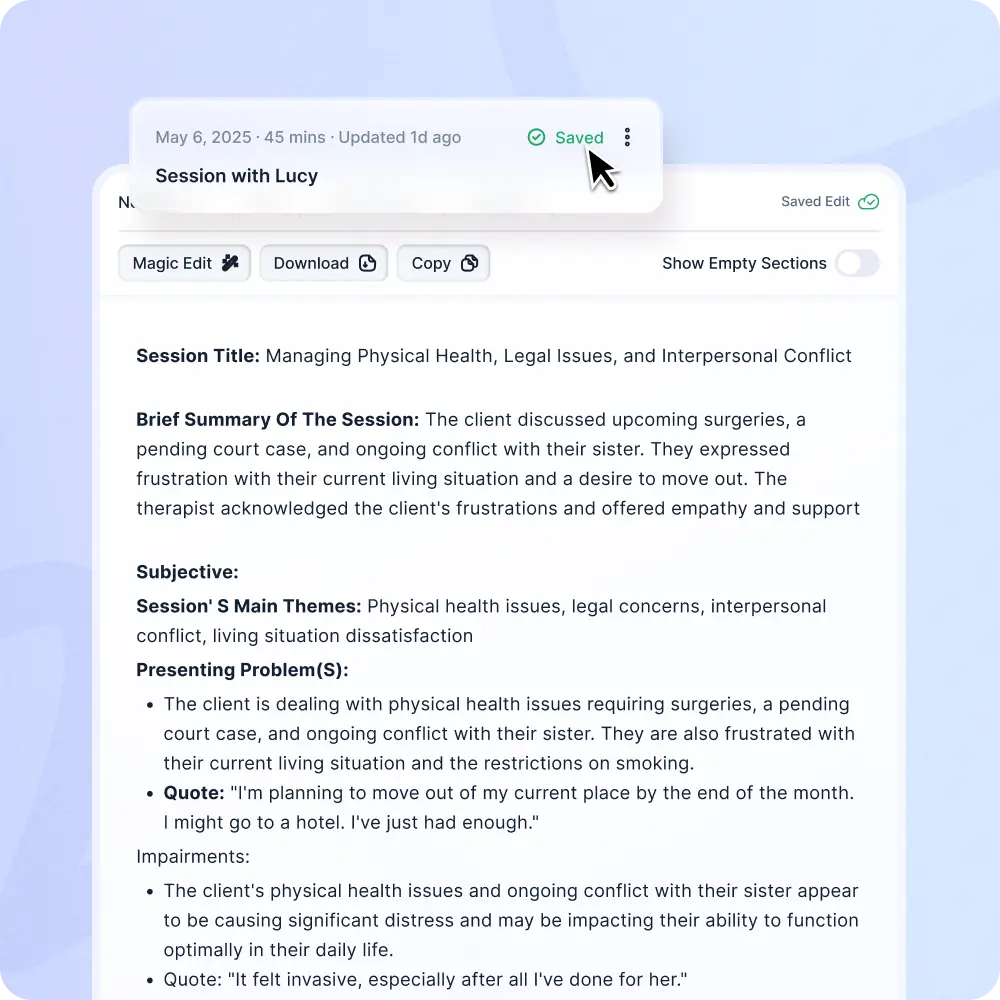
Mentalyc is a strong Wiley treatment planner replacement for clinicians who need efficient, insurance-ready, and adaptable treatment planning.
Mentalyc is best suited for:
- Private practice therapists
Clinicians who want a treatment planning tool for private practice that reduces documentation time while maintaining clinical quality and audit readiness.
- Insurance-heavy practices
Therapists and clinics that require insurance-ready treatment plans with clear medical necessity, measurable goals, and diagnosis alignment.
- Group practices and multi-clinician teams
Practices that need consistent documentation standards, shared quality benchmarks, and scalable automated treatment planning across providers.
- Therapists managing complex or long-term cases
Clinicians who benefit from built-in progress tracking and evolving treatment plans that stay aligned over time.
- EHR switchers or multi-EHR users
Practices looking for a treatment planner that works with any EHR, avoiding reconfiguration, copy-paste, or loss of documentation quality.
- Clinicians seeking an AI alternative to Wiley Treatment Planner
Therapists who value structure and compliance but want AI-driven personalization, efficiency, and workflow flexibility.
Conclusion: From Static Templates to Intelligent Care Planning
The Wiley Treatment Planner laid the groundwork for structured, diagnosis-based treatment planning and earned widespread trust from insurers. It gave therapists a reliable framework for documenting goals, objectives, and interventions in a way payers understood.
Mentalyc builds on that foundation and brings it into modern clinical practice. With AI-driven treatment planning, Mentalyc transforms real session notes into SMART, measurable goals, automatically tracks progress over time, and maintains insurance-ready documentation without manual effort. Its EHR-agnostic design and one-click autofill remove copy-paste friction while preserving the clinical Golden Thread across notes, plans, and progress.
For therapists looking for a Wiley treatment planner alternative that delivers the same clinical credibility with far greater efficiency and flexibility, Mentalyc represents the next evolution of treatment planning.
Why other mental health professionals love Mentalyc

“It immediately changed my quality of life, personally and professionally.”
Owner/Independently Licensed Marriage & Family Therapist (LMFT)

“For anyone hesitant: this is a lifesaver. It will change your life, and you have more time to be present with your patients.”
Licensed Clinical Social Worker

“If I were recommending this software to a colleague, I would tell them that it is the best thing that they could do for their practice.”
Licensed Professional Counselor

“Do yourself a favor, make your life easier. I found Mentalyc to be one of the best tools that I’ve ever used.”
Licensed Marriage and Family Therapist