
Therapists are entering 2026 facing a familiar challenge: clinical documentation is taking too long. Many clinicians still spend hours each week completing progress notes, rewriting session summaries, and ensuring their documentation meets medical-necessity standards, payer requirements, and ethical expectations. The burden is exhausting, and it directly contributes to burnout, reduced work–life balance, and increased administrative stress.
This is why AI therapy note-taking tools have become essential. Clinicians are no longer just looking for speed; they want therapy note automation that supports clinical accuracy, reduces after-hours work, protects privacy, and fits seamlessly into their compliance workflows. Among all available solutions, the comparison most therapists are searching for is Eleos vs Mentalyc, because the two tools approach documentation in fundamentally different ways.
Eleos Health offers AI support built for large organizations, providing session analysis and baseline notes. Meanwhile, Mentalyc focuses on fully automated progress notes, a simple workflow, and privacy-first ethical AI designed for private practice therapists. Many clinicians now ask: “Eleos vs Mentalyc: which one is better?” Understanding their differences is the first step in selecting the right AI therapy documentation tool for your practice.
Overview of Eleos vs Mentalyc
Before diving into features, note quality, and pricing, clinicians benefit from understanding what each platform is built to do, and who each one serves best – Mentalyc or Eleos.
Spend less time writing, more time with clients.

What Is Eleos Health?
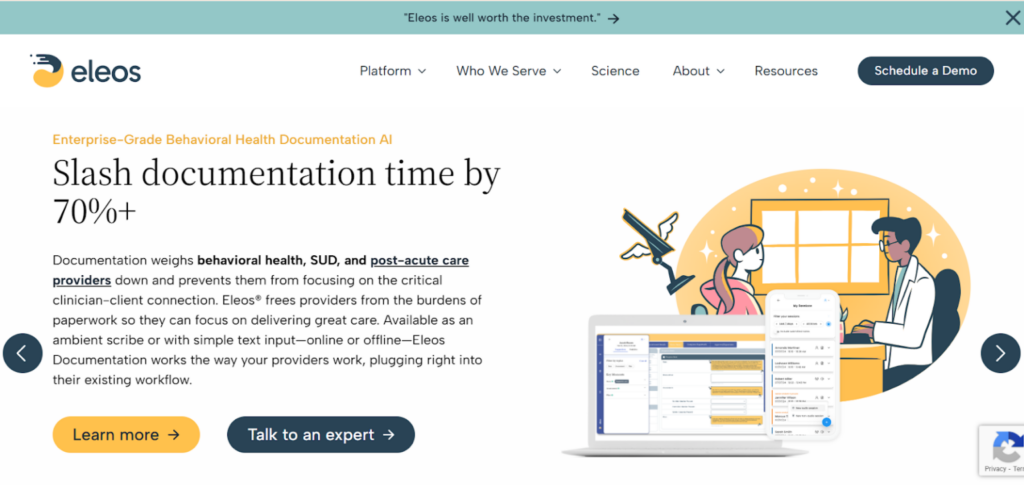
Eleos Health is an AI-enabled behavioral-health platform primarily designed for large organizations, hospitals, and multi-site agencies. Its core workflow relies on full-session audio capture, transcription, and analytics to generate baseline documentation and organizational insights. Eleos is typically implemented through enterprise contracts and is most often used in settings with supervisors, compliance teams, and centralized oversight. It is best known for:
- Transcription-based session analysis
- Baseline note drafts that require clinician completion
- Team-level analytics and supervision dashboards
- Deep enterprise EHR integrations
- Organization-wide standardization
For individual clinicians or smaller group practices, Eleos can feel heavy, transcription-dependent, and operationally complex.
Important note: While Eleos’ marketing language sometimes states that it “does not record or store full sessions,” the platform still requires therapists to capture session audio so the system can generate transcripts, insights, and draft notes. With this risk in mind, you should consider whether this approach aligns with your privacy standards when comparing it to tools that clearly state they do not retain recordings.
What Is Mentalyc?
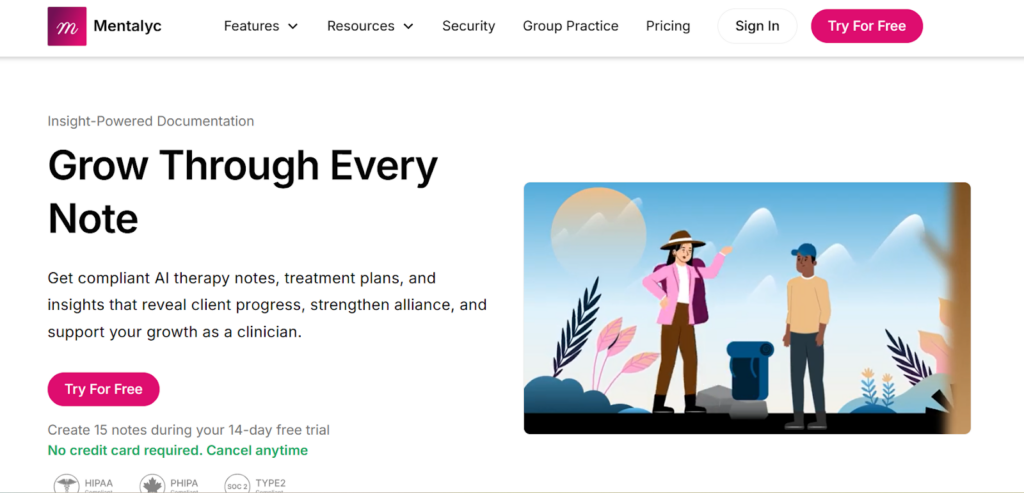
Mentalyc is a HIPAA-compliant AI notetaker built specifically for therapy documentation, not enterprise analytics. It focuses on producing fully written, clinically aligned notes with minimal effort–without requiring full-session recording or data storage. Mentalyc is used by solo clinicians, small practices, and growing group practices that want consistent, audit-ready documentation without enterprise contracts or transcription-heavy workflows.
Mentalyc is designed to:
- Generate complete therapy notes from dictation or text
- Maintain continuity across sessions, goals, and treatment plans
- Support insurance-ready documentation and clinical accuracy
- Scale cleanly from solo use to multi-clinician teams
Comparison between Eleos and Mentalyc 2026
| Feature | Eleos Health | Mentalyc |
|---|---|---|
| Note-taking approach | Baseline drafts from full-session transcription | Fully written notes from short audio, dictation, or text |
| Editing required | High | Minimal |
| Clinical accuracy | Structured but often incomplete | Clinically aligned, insurance-ready |
| Supported formats | SOAP / DAP / BIRP outlines | SOAP, DAP, BIRP, EMDR, couples, intake, Plus Custom Notes |
| Treatment planning | Limited | Built-in AI Treatment Planner |
| Progress tracking | Theme-level insights | Session-based progress tracking |
| Alliance insights | None structured | Alliance Genie™ |
| Recording storage | Audio required for transcription | No long-term audio storage |
| Compliance | HIPAA + BAA | HIPAA + BAA, PHIPA-aligned, SOC 2–compliant |
| Best fit | Large enterprises | Solo to mid-size group practices |
Choosing between Eleos Health vs Mentalyc requires understanding how each platform handles the core tasks therapists care about most: AI therapy note-taking, workflow efficiency, clinical accuracy, compliance, and everyday usability. Below is a direct, honest comparison with clear pros and cons, so you can decide which one to choose for your specific practice needs.
Note-Taking Method: Eleos Health vs Mentalyc
Eleos
Eleos Health focuses on real-time conversation analysis, generating baseline notes that highlight key themes, clinical interventions, and dialogue patterns. While helpful for insight-driven workflows, Eleos provides partial documentation, requiring clinicians to rewrite and complete the note manually.
Pros:
- Captures important clinical moments
- Useful for session analytics
- Supports standardized organizational documentation
Cons:
- Generates only baseline notes → requires heavy editing
- Less suitable for private practice workflows
- Not a fully automated solution
- Slower for therapists who want quick, complete notes
Mentalyc
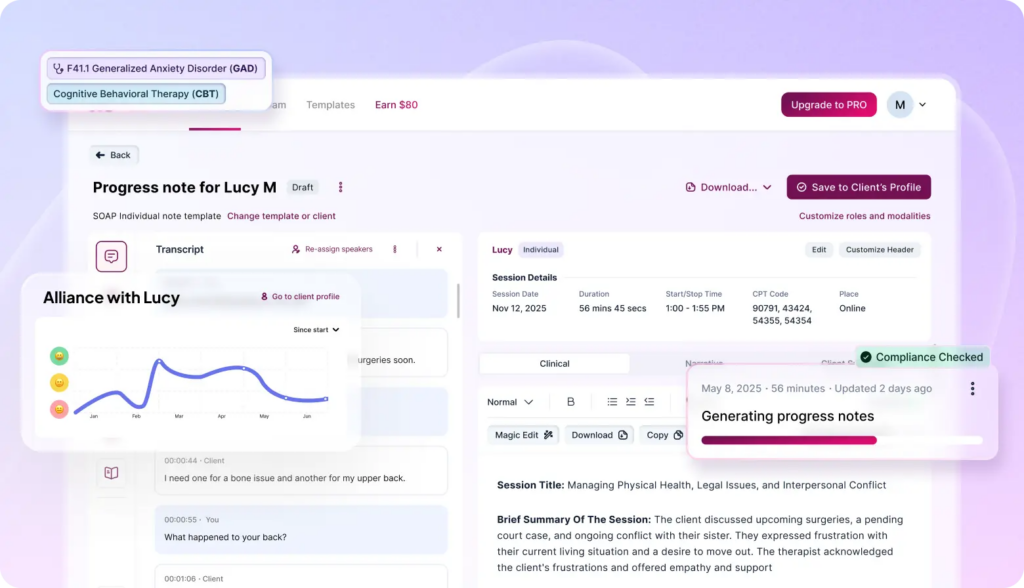
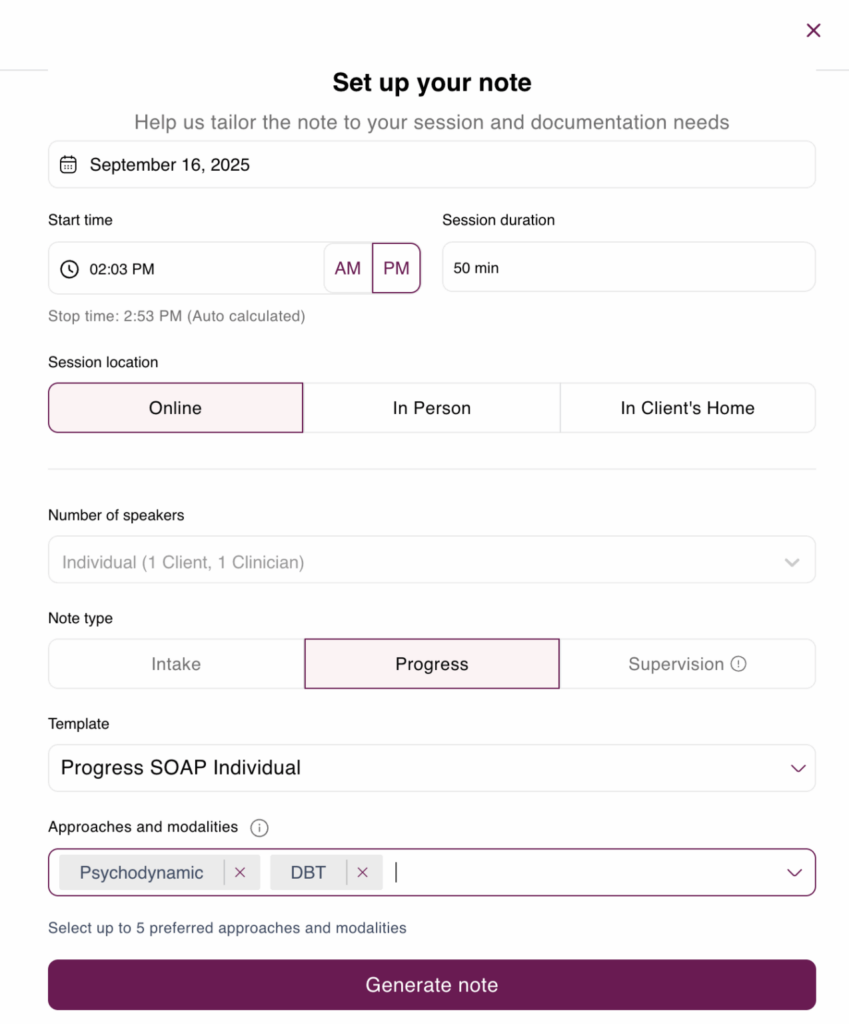
Mentalyc automates documentation by allowing therapists to upload audio and receive fully written notes in formats like SOAP notes, DAP notes, BIRP notes, EMDR documentation, couples notes, and general progress notes. The workflow is simple and designed for therapists who want minimal editing and consistent structure.
Pros:
- Produces complete, polished notes
- Supports multiple note formats
- Fastest workflow (record → upload → done)
- Ideal for private practice and high caseload clinicians
Cons:
- Requires an audio upload or written summary
- Complex sessions may need small adjustments
Clinical Accuracy & Documentation Quality
Eleos
Write less, focus more
- SOAP, DAP, BIRP, EMDR notes and more
- AI Treatment Planner
- AI Progress Tracker
- Alliance signals
- HIPAA & PHIPA compliant

Eleos Health provides reliable baseline documentation by identifying themes and clinical interventions, but the output often needs rewriting to meet medical-necessity standards and fully represent the session.
Pros:
- Strong detection of session themes and patterns
- Helpful for clinicians who prefer guideline-based rewriting
- Useful for organizations seeking standardized documentation
Cons:
- Notes are not fully written → require substantial editing
- Risk of missing nuance needed for EMDR, trauma, and CBT documentation
- Less suitable for insurance-heavy caseloads
Mentalyc
Mentalyc delivers highly structured, fully written notes aligned with common therapy formats, prioritizing clinical accuracy, modality-specific structure, and consistency across different types of sessions.
Pros:
- Produces detailed, structured, insurance-ready notes
- Strong alignment with treatment planning and session goals
- Supports multiple modalities: EMDR, CBT, couples therapy, and general behavioral health
Cons:
- Requires therapist review (standard for all ethical AI tools)
- Accuracy can be affected by poor audio quality
Supported Note Types
Eleos
Eleos Health supports standard clinical frameworks by generating baseline outlines for common note types, offering helpful structure but leaving the therapist responsible for completing the full documentation.
Pros:
- Supports SOAP notes, DAP notes, and BIRP notes
- Provides consistent structure across clinicians
- Good for organizations standardizing documentation
Cons:
- Does not produce fully written notes
- Limited support for specialized formats like EMDR documentation
- Not ideal for therapists needing detailed modality-specific notes
Mentalyc
Mentalyc offers one of the most comprehensive sets of fully automated note formats, covering general therapy as well as modality-specific documentation for various clinical approaches.
Pros:
- Supports SOAP notes, DAP notes, BIRP notes, EMDR documentation, couples therapy notes, and general progress notes
- Fully written outputs requiring minimal editing
- Strong fit for CBT, trauma therapy, and behavioral health
Cons:
Niche modalities (e.g., art therapy, play therapy) may need small manual adjustments
Workflow & Ease of Use
Eleos
Eleos integrates into enterprise systems and uses real-time analytics, which benefits large teams but requires more setup and workflow adjustments.
Pros:
- Integrated with organizational EHR/EMR systems
- Helpful for supervisors monitoring documentation quality
- Standardized workflow across large teams
Cons:
- Onboarding and setup required
- Not accessible for individual therapist sign-ups
- Produces outlines → adds editing time for clinicians
- Less intuitive for therapists seeking a fast, simple workflow
Mentalyc
Mentalyc focuses on simplicity, offering a frictionless workflow that makes AI therapy note-taking easy for private practice clinicians with no need for integrations or configuration.
Pros:
- Record → upload → instantly get fully written notes
- No technical setup or integrations required
- Ideal for solo practitioners and small practices
- Saves significant time for high-caseload therapists
Cons:

Does not provide enterprise-level dashboards (irrelevant for most private practices)
Compliance, Security & Data Privacy
Eleos
Eleos Health offers strong organizational compliance protections and integrates securely with enterprise systems, but may store or transmit session data depending on configuration.
Pros:
- Fully HIPAA compliant
- Secure for organization-wide use
- Supports centralized IT and compliance workflows
Cons:
- May involve data storage depending on implementation
- Not designed for clinicians who prefer immediate data deletion
- Less control for independent therapists over data-handling processes
Mentalyc
Mentalyc prioritizes privacy with one of the safest models available: encrypted audio processing, zero audio storage, and strict ethical AI that never trains on user data.
Pros:
- HIPAA, PHIPA, and SOC 2 compliant
- Deletes audio immediately after processing
- Strong stance on user privacy and ethical AI
- Ideal for trauma therapists, EMDR practitioners, and clinicians handling sensitive populations
Cons:
No on-premise deployment option (not needed for private practitioners)
Integrations
Eleos
Eleos Health is built for large organizations and offers deep EHR integration with enterprise EHR/EMR systems, making it a strong choice for clinics that need standardized documentation and centralized administrative oversight.
Pros:
- Robust integration with major EHR/EMR systems
- Syncs session insights and baseline notes directly into organizational workflows
- Smooth for multi-clinician environments where consistency matters
- Reduces manual data entry for large teams
Cons:
- Integrations require organizational approval and onboarding
- Not available for solo practitioners or individual subscriptions
- Complex setup not suitable for small independent practices
- Adds workflow friction for clinicians who want simple upload-based systems
Mentalyc
Mentalyc is designed to work independently of EHR integration, offering a universal workflow that any therapist can adopt without technical setup or IT support.
Pros:
- Works with every EHR because it doesn’t require direct integration
- Flexible upload/download workflow that fits any practice
- No compatibility issues or additional costs
- Ideal for clinicians using mixed tools or multiple systems
Cons:
Lacks real-time EHR syncing (usually unnecessary for private practice)
Mentalyc vs Eleos Pricing Comparison
Eleos
Eleos pricing follows an enterprise model and is typically available only through organizational contracts. This makes it cost-effective for large agencies but inaccessible for individual clinicians.
Pros:
- Priced for organizations with multiple users
- Can be economical at scale for agencies with large staff
- Includes enterprise features like analytics dashboards and team oversight
Cons:
- No plan for solo practitioners or small private practices
- Requires long-term contracts and administrative negotiation
- Pricing is not transparent and varies widely
- Not feasible for therapists seeking affordable month-to-month tools
Mentalyc
Mentalyc pricing is transparent, affordable, and built for individual clinicians who need AI therapy note-taking without enterprise-level commitment.
Pros:
- Designed for private practice and small teams
- Transparent monthly pricing
- No contracts or long onboarding process
- Free trial available for new therapists
- Easy to scale as caseload grows
Cons:
Not optimized for enterprise-level deployments (its focus is clinicians, not agencies)
Mentalyc Plans & Pricing
| Plan | Price | Key Features |
|---|---|---|
| 14-Day Free Trial | $0 | 14 days of full PRO access, including 15 notes – no credit card required |
| Mini | USD 14.99 / month | Record in-person sessions, upload audio files, use voice-to-text, or type notes directly |
| Basic | USD 29.99 / month | Everything in Mini, plus Alliance Genie™ (NEW – limited access) and Smart TP™ |
| Pro | USD 59.99 / month | EMDR, play and psychiatry modalities; 100+ custom templates including BIRP, PIRP, GIRP, PIE, and SIRP; auto-computed CPT codes |
| Super | USD 99.99 / month | Everything in Pro, plus group therapy notes for each group member, priority onboarding, and support |
For more information, visit the pricing page on our website.
Eleos vs Mentalyc: Real User Feedback
Eleos Review:
“It is an input/output system, which is better when you have the device taking notes from the session directly. However, it is not has comprehensive when you use the note feature. Also the device can only be used in clinic. If you are seeing a client in the home or at the school, you can not use the box/ device.”
Mentalyc Review:
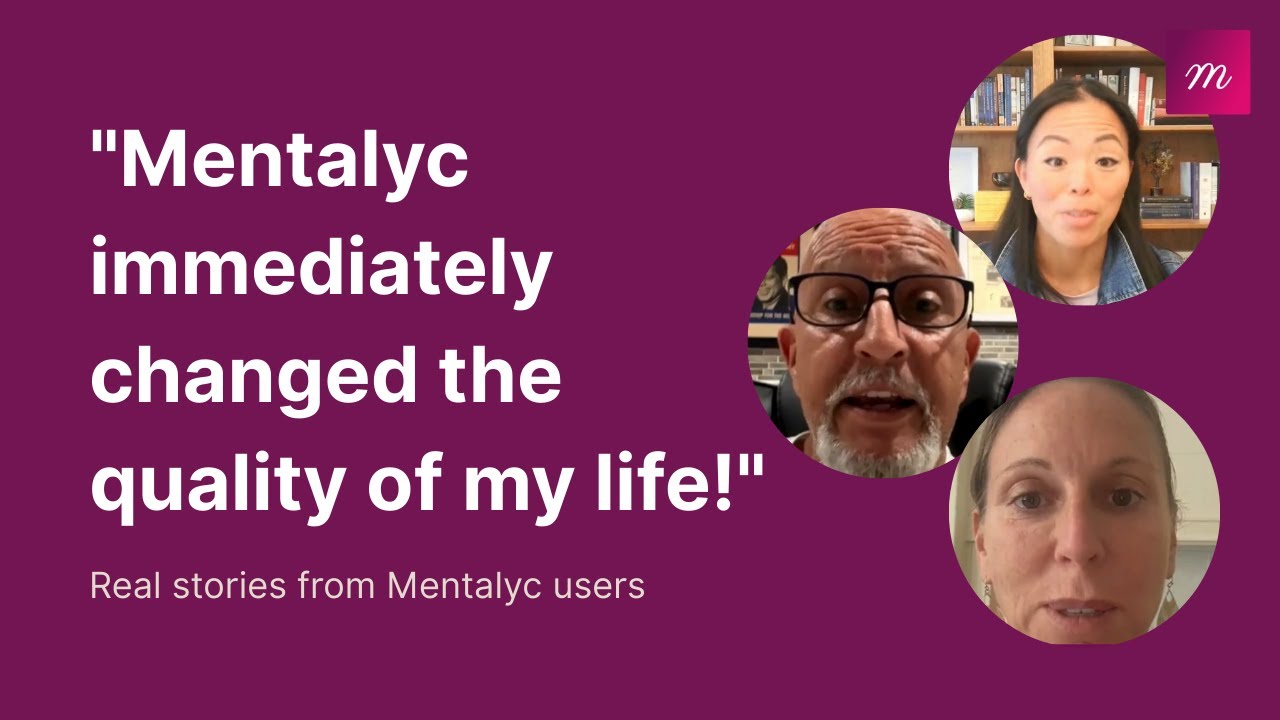
“It immediately changed my quality of life, personally and professionally. I went from 3-4 hours a week of notes to 1 hour at most…that alone is invaluable personally and professionally.”
- Mentalyc User
“If I were recommending this software to a colleague, I would tell them that it is the best thing that they could do for their practice.”
- Mentalyc User
Key Takeaways: Eleos vs Mentalyc – Which One Should You Choose?
Choosing between Eleos vs Mentalyc depends entirely on your practice size, workflow preferences, and documentation needs. Eleos Health is powerful for large organizations that want session analytics, standardized baselines, and deep EHR integration. It works best when a clinical director oversees multiple therapists and documentation consistency is the priority.
Mentalyc, however, is the stronger choice for the majority of clinicians, especially solo practitioners, small private practices, and therapists who need fully written notes, fast turnaround, strong privacy, and minimal editing. With its simple workflow, modality-specific structure, and privacy-first ethical AI, Mentalyc stands out as the best Eleos alternative for everyday therapy documentation.
In short:
- Choose Eleos if you work in a large organization that values analytics.
- Choose Mentalyc if you want complete notes, simplicity, affordability, and speed.
For most independent therapists, Mentalyc is the clear best choice.
Frequently Asked Questions (FAQs) – Eleos vs Mentalyc
Is Mentalyc better than Eleos?
For individual clinicians and small practices, yes. Mentalyc offers fully written notes, faster workflows, simpler use, and stronger privacy protections. Eleos Health provides excellent analytics but requires significant editing, making it less efficient for solo practitioners.
Should I choose Eleos or Mentalyc?
Choose Mentalyc if you want quick, complete notes with minimal editing. Choose Eleos if you’re part of a large organization that needs team-level dashboards and integrated analytics. For anyone in private practice, Mentalyc is generally the better fit.
Which is better for therapy notes, Mentalyc or Eleos?
For everyday clinical documentation, Mentalyc is better. It produces ready-to-sign SOAP, DAP, BIRP, EMDR, couples, and general progress notes, making it ideal for workload reduction and insurance-ready documentation. Eleos generates baselines that still require therapists to rewrite the note.
Eleos or Mentalyc for therapy documentation?
For clinicians who want automated progress notes, Mentalyc offers a more complete solution. Eleos is better suited for analytics-driven organizations, not private-practice documentation workflows.
Which AI notetaker is best for therapists – Mentalyc vs Eleos?
For private practice therapists, Mentalyc is currently the best balance of accuracy, speed, privacy, and affordability. Eleos is excellent for enterprise use but lacks the accessibility and full automation needed by solo clinicians.
Eleos vs Mentalyc for solo practitioners?
Mentalyc is the preferred choice. It requires no setup, works without EHR integration, provides fully written notes, and offers affordable monthly pricing, ideal for solo clinicians who need fast, consistent documentation.
Eleos or Mentalyc for group practices?
Smaller group practices will benefit more from Mentalyc’s simplicity and consistency. Larger, multi-site organizations may prefer Eleos for its analytics and performance monitoring.
Is Mentalyc a good Eleos Health alternative?
Yes. Mentalyc is one of the strongest Eleos Health alternative options available today, offering full automation, a privacy-first workflow, and structured notes across multiple therapeutic modalities.
What are the Top alternatives to Eleos Health?
The top alternatives to Eleos Health include Mentalyc, Upheal, and other AI notetakers. Among these, Mentalyc stands out because it offers fully written notes, SOC 2–grade compliance, and is accessible for solo clinicians, something Eleos does not currently provide.
What is the Best Eleos Alternative for Private Practice?
One of the best Eleos alternatives for private practice is Mentalyc, because it is built for individual clinicians, requires minimal editing, supports multiple note types, and maintains strict privacy standards with zero audio storage.
Why other mental health professionals love Mentalyc

“It takes me less than 5 minutes to complete notes … it’s a huge time saver, a huge stress reliever.”
Licensed Marriage and Family Therapist
“Having Mentalyc take away some of the work from me has allowed me to be more present when I’m in session with clients … it took a lot of pressure off.”
LPC

“A lot of my clients love the functionality where I can send them a summary of what we addressed during the session, and they find it very helpful and enlightening.”
Therapist

“It’s so quick and easy to do notes now … I used to stay late two hours to finish my notes. Now it’s a breeze.”
Licensed Professional Counselor