Author: Dr. Salwa Zeineddine
Dr. Salwa Zeineddine, MD, is a physician in Internal Medicine and researcher at the American University of Beirut Medical Center (AUBMC). She holds a Doctor of Medicine degree and a BS in Biology with High Distinction from AUB, where she was the recipient of a full scholarship from the Faculty of Medicine after ranking among the top students on the Lebanese baccalaureate. Her achievements over the years made her realize that real success is one in which she can genuinely affect people’s lives, the reason why she became passionate about helping people better understand and manage their mental health. Salwa is an advocate for mental health, is committed to providing the best possible care for her patients, and works to ensure that everyone has access to the resources they need. At Mentalyc, Dr. Zeineddine writes clinical content on DSM-5 diagnostic criteria, clinical documentation standards, mental health outcome measures, and therapy note formats for mental health practitioners.

-
Therapists lose hours every week to SOAP notes, and most of that time goes to reformatting what they already know into Subjective, Objective, Assessment, and Plan. An AI SOAP note generator removes that step. Mentalyc turns a session recording, a quick dictation, or a typed summary into a structured, insurance-ready SOAP note in under two […]July 14, 2026·14 min read
-
A DAP note generator is software that turns a therapy session into a structured Data, Assessment, and Plan note in minutes, so you are reviewing a finished draft instead of facing a blank page after a full caseload. The best ones are built for behavioral health, stay HIPAA-compliant, and write in clinical, insurance-ready language while […]July 21, 2026·10 min read
-
The best note-taking app for therapists in 2026 is Mentalyc. It is an AI note-taker built specifically for mental health professionals that turns each session into structured, insurance-ready documentation while keeping client data private (HIPAA + PHIPA + SOC 2 Type II, with zero recording storage). General tools like OneNote or Evernote can hold a […]July 21, 2026·17 min read
-
Working through your struggles with the support of people facing similar issues can be a real game-changer. The whole give-and-take of help can really bring out the best in us. After all, humans have been tackling life’s challenges together in squads since the dawn of walking on two legs. Want to see it? See a […]February 26, 2026·13 min read
-
ABA session notes are the written record of what happened during an Applied Behavior Analysis therapy session: the behaviors observed, interventions applied, the client’s response, and progress toward goals. Whether you are a Registered Behavior Technician (RBT) or a Board Certified Behavior Analyst (BCBA), this guide covers what to include, the formats to use, worked […]July 21, 2026·17 min read
-
Therapy Shelf and Note Designer are both browser-based note-writing tools for mental health professionals, and both cost $15 per month. The short verdict: both tools reformat how you write notes, they do not reduce the time you spend writing them. You still construct or dictate a session summary yourself, then copy the result into your […]June 25, 2026·11 min read
-
Can you use ChatGPT for therapy notes? Yes for templates, training, and brainstorming, and no for real client data. The concern isn’t abstract, clients notice. On r/therapy, one client posted: My therapist is sending me session summaries that are written by chat gpt and it makes me uncomfortable but Im unsure if that’s me being […]July 21, 2026·22 min read
-
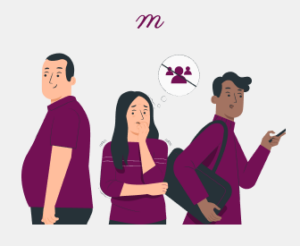
We’ve all felt nervous meeting new people or putting ourselves out there socially. Making that first move to interact with others requires a degree of vulnerability that can stir up anxious feelings inside. This is normal human experience, at least for me! I recall how avoidance and distance were once my automatic reactions in relationships due to […]March 2, 2026·10 min read
-
Measurement-based care is the systematic use of standardized outcome measures at every stage of treatment to guide clinical decisions, not just to document them. The same measurement runs through three jobs in your work: assessment (understanding what a client presents with), screening (detecting a condition early), and progress tracking (watching it change over time). You […]June 24, 2026·19 min read
-
Simple and quick to complete, GAD-7 is famous for giving both clinicians and clients a clearer picture of how anxiety shows up day-to-day. In this article, we’ll walk through how to score the GAD-7, interpret the results, and use it to guide treatment and track progress over time. Because using the GAD-7 effectively requires periodic […]November 19, 2025·7 min read
-
We’ve all been there. Your heart starts racing as you think about having to give a presentation in front of the class. Or maybe the idea of making small talk at a party makes you break out in a cold sweat! Social anxiety is something most people can relate to on some level. But for […]February 18, 2026·9 min read
-
The Mental Status Examination (MSE) is a structured assessment of a client’s current mental state across ten domains: appearance, behavior, speech, mood, affect, thoughts, perception, cognition, insight, and judgment. There are many respectful ways to learn about a client’s world: sometimes it’s through quick check-ins, and other times through deeper conversations that uncover how they […]July 30, 2026·31 min read
-
Have you ever found yourself in a hospital awaiting surgery or sitting in a therapist’s office, only to be handed a consent form before your treatment commenced? In healthcare, it is commonplace for doctors and mental health professionals, including counselors and therapists, to ask clients to provide their informed consent. This crucial step ensures that individuals have been adequately […]September 17, 2025·11 min read
-
A SOAP note is a standardized method of clinical documentation used by healthcare and therapy professionals to record a patient interaction in an organized, easily digestible format. The acronym stands for Subjective, Objective, Assessment, and Plan. This guide gives you ready-to-use SOAP note templates for mental health roles, complete examples for anxiety and depression, a […]July 21, 2026·27 min read
-
As occupational therapists and healthcare professionals, we know how important thorough documentation is. Not only does it protect us legally, but it allows us to monitor our clients’ progress over time and collaborate with other providers. Among the various notes we write, occupational notes seem to get the least love 🙁 They’re often an afterthought we scribble down between sessions rather than an opportunity to […]February 20, 2026·12 min read
-
Therapy notes are a working therapist’s bookkeeping, the running record of clinical decisions made about a client across treatment. Done well, they protect the client, the practice, and the clinician, and they make insurance reimbursement possible. Done poorly, they are the single most common path to licensing complaints, payer clawbacks, and avoidable malpractice exposure. Want […]June 29, 2026·42 min read
-
Yes, That’s Me! In the wacky world of bipolar disorder, life’s a rollercoaster, and I’m the enthusiastic (and occasionally terrified) rider! One day, I’m soaring through the skies, convinced I can conquer the world with my brilliant ideas – I even tried to launch a business selling glow-in-the-dark socks for fish (don’t ask). But then, faster […]September 17, 2025·6 min read
-
Understanding Autism Spectrum Disorder Autism, often referred to as autism spectrum disorder (ASD), is a complex developmental condition characterized by a diverse range of challenges related to communication, social interaction, and behavior. This condition is a lifelong companion, and its manifestation varies significantly from one individual to another. In this blog post, we will explore the world […]September 17, 2025·10 min read
-
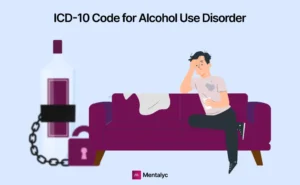
Whether you’re documenting a client’s symptoms or preparing a treatment plan, knowing the correct ICD-10 code for Alcohol Use Disorder (AUD) is essential for accurate diagnosis, billing, and continuity of care. This guide walks you through the 2025 ICD-10 codes for Alcohol Use Disorder, explains key diagnostic criteria, and offers practical tips for clear, defensible documentation – especially […]June 4, 2026·12 min read
-
The ADHD Journey Attention Deficit Hyperactivity Disorder (ADHD) is a prevalent neurological condition that weaves its presence into countless lives, manifesting as behavioral challenges related to attention, impulsivity, and/or hyperactivity, oftentimes casting shadows upon daily lives and personal growth. Also recognized as Attention Deficit Disorder (ADD), this condition can potentially lead to substantial adverse outcomes if left untreated. Understandably, […]September 17, 2025·8 min read
-
Adjustment disorder is a maladaptive emotional or behavioral response to an identifiable stressor that appears within three months of the stressor and usually resolves within six months after it ends. In the DSM-5-TR it is classified under trauma- and stressor-related disorders, and in the ICD-10-CM it is coded F43.20 through F43.29, with F43.23 (adjustment disorder […]July 7, 2026·11 min read
-
In the embrace of a cozy therapy chamber, a poignant tale unfolds, interweaving threads of resilience and transformation in the battle against depression. Allow me to introduce you to John, a courageous spirit navigating the shadowy realms of depression, seeking solace within the tender care of their empathetic therapist. Who doesn’t fear it? Depression, speaking […]September 17, 2025·9 min read
-
Mastering SIRP Notes: Your Ultimate Guide to Crafting The Perfect Note (With Examples!) In the labyrinth of the mental health field, where our passion lies in healing minds, we often find ourselves entangled in the thorny embrace of administrative duties. Progress notes and documentation loom before us, demanding attention, and siphoning a significant portion of our professional […]September 17, 2025·8 min read
-
Clinical words for progress notes are the precise terms therapists use to document a client’s affect, mood, behavior, cognition, orientation, and speech in a way that reads clearly to any clinician who opens the chart. The right word turns a vague impression into defensible clinical documentation: “flat affect” and “labile mood” say something specific that […]July 21, 2026·16 min read