
Are you tired of drowning in paperwork as a mental health professional? Do you wish there was an easy solution to make documentation a breeze? Look no further! We have compiled a quick reference guide to help you master clinical documentation like a pro. With our practical tips, you can document faster, more accurately, and easily without staying late to finish your notes.
For many clinicians, the biggest challenge isn’t knowing what to document–it’s finding the time to do it thoroughly and consistently. That’s why tools like Mentalyc AI Note Taker are becoming essential in modern practices, helping therapists capture session details accurately without sacrificing client connection. Its AI Treatment Planner helps translate assessments into structured, goal-oriented care that aligns with medical necessity and evidence-based practice.
This guide will empower you to create higher-quality documentation, leading to better patient care. Keep this resource handy, and never get stuck or frustrated with clinical paperwork again. Get ready to revolutionize how you document, and your future self will thank you for taking these steps toward efficient, high-quality documentation.
Importance of Clinical Documentation for Mental Health Clinicians
Maintaining comprehensive and detailed clinical documentation is a foundation for ethical and high-quality mental healthcare, as it provides a clear record of the treatment provided to the client. It also helps ensure continuity of care, allowing other mental health professionals involved in the client’s treatment to understand their history and progress.
Spend less time writing, more time with clients.

Additionally, it provides legal protection for mental health professionals in case there are any disputes or legal proceedings related to the treatment provided. Effective clinical documentation serves multiple additional purposes:
- Allows for quality assurance and compliance. Your notes may be reviewed to ensure you provide ethical and effective treatment.
- Supports billing and revenue. Your notes justify the services billed to insurance companies and substantiate medical necessity.
Tracking client progress consistently is equally important. Tools like the AI Progress Tracker by Mentalyc can help clinicians monitor symptom changes, goal attainment, and relapse patterns over time, making documentation not just descriptive, but measurable.
Essential Components of Clinical Documentation
Ensuring solid clinical documentation is crucial in providing the best care for your clients. Your clients will appreciate your diligence, and you can rest easy knowing you have covered all the bases.
Here are the essential components that you need to include:
Client information:
Name, age, gender, contact details. Be sure to note any specific pronouns or identity preferences.
Presenting problem:
Why is the client seeking services? Describe their symptoms, concerns, or reasons for referral in the client’s own words.
Medical history:
Note any physical health conditions, medications, hospitalizations, substance use history, or other relevant medical information.
Mental health history:
Previous diagnoses, medications or hospitalizations, family history of mental illness, trauma, or abuse.
Assessment:
Your professional analysis of the client’s symptoms, challenges, and diagnosis. Explain how you reached your conclusions.
Treatment plan:
The goals you set together, therapeutic approaches, frequency of sessions. Be specific about interventions and modalities.
Progress notes:
Briefly summarize each session, the client’s progress, challenges, breakthroughs, and next steps. Note any changes to the treatment plan.
Discharge or transition plan:
If ending services, explain why and any recommendations for continued progress.
Tips and Examples of Effective Clinical Documentation
Clinical documentation should be objective and specific, avoiding personal opinions or judgments. It would be best to document both positive and negative outcomes to give a balanced view of treatment. Keep your writing clear and concise, focusing on facts rather than filler words.
To make sure your clinical documentation is practical, accurate, and valuable, follow these tips:
Note the duration.
Record the start and end times of the session. This provides context for what was covered and ensures proper billing.
Use quotes when relevant.
Quote the client directly when their statements are meaningful or represent a change. Use quotes sparingly and paraphrase whenever possible.
Describe interventions.
Note specific interventions, strategies, or techniques you used and the client’s response.
Discuss safety and risk factors.
Document risk factors, safety concerns, or any incidents that occurred. Note steps taken to ensure safety.
Include a mental status exam.
Describe the client’s appearance, attitude, mood, affect, speech, thought process, thought content, perception, cognition, insight, and judgment.
Detail all medications.
Be sure to include dosage, route, and client response. Note any side effects.
Plan for the next session.
Briefly summarize the plan for the next session, including specific issues to follow up on or interventions to continue.
Proofread.
Carefully proofread all documentation for any errors before signing and finalizing the clinical record. Double-check that all information is relevant, accurate, objective, and helpful for continuity of care.
Bonus tip: Accurate clinical documentation is essential for delivering quality care, maintaining compliance, and ensuring legal protection. Platforms like Mentalyc, simplify the documentation process by automating essential components such as patient history, treatment goals, progress notes, and assessments. This HIPAA-compliant platform helps you stay organized, save time, and improve patient outcomes.
Examples of Proper Clinical Documentation
Subjective complaints: “Client reports feeling depressed for the past two weeks. States she has been crying daily, having trouble sleeping and concentrating, and feeling hopeless.”
Observations: “Client appeared disheveled and made little eye contact. Speech was slow, and tone was flat. Client cried for a prolonged period when discussing trauma history.”
Assessments and diagnosis: “Based on client report and clinician observations, the client meets criteria for Major Depressive Disorder, Recurrent Episode, Moderate.”
Write less, focus more
- SOAP, DAP, BIRP, EMDR notes and more
- AI Treatment Planner
- AI Progress Tracker
- Alliance signals
- HIPAA & PHIPA compliant

Treatment plans: “Treatment will focus on managing symptoms of depression using CBT techniques, including behavioral activation, cognitive restructuring, and improving sleep hygiene. Client will also explore the underlying causes of the current depressive episode. The goal is for the client to report at least a 50% reduction in depressive symptoms in 3 months.”
Progress: “Client attended all sessions this month and reported improved mood. Stated she is no longer crying daily, is sleeping 7-8 hours per night, and is engaging in pleasurable activities 3-4 times per week. Will continue current treatment plan to stabilize mood further and address ongoing stressors.”
Session Note Example:
- Client: John Doe, 35-year-old Caucasian male
- Dx: Major depressive disorder, recurrent, moderate
- Presenting Problem: Depressed mood, hopelessness, difficulty concentrating at work.
- Intervention: Discussed cognitive distortions and suggested behavioral activation strategies.
- Response: The client was receptive to interventions. Reports improved mood and outlook. Will continue to monitor and provide support.
- Follow-up: Weekly therapy sessions to continue skills practice.
You can significantly improve your clinical documentation skills by following this cheat sheet’s tips and essential components. Your notes will serve as a valuable record of your clients’ mental health journeys, capturing even the smallest details that could impact their care. With a focused and comprehensive approach, your documentation will become a tool for providing the best possible care. Remember to keep your audience in mind as you write, ensuring that your notes are clear, concise, and informative. Clinical documentation will become second nature with practice, allowing you to deliver exceptional care quickly.
Get on an exciting journey towards mastering clinical documentation with Mentalyc! Let us enhance your workflow, keep you ahead of the game, and motivate you to reach new heights. Sign up for our newsletter today and receive the latest and greatest tips to keep you at the forefront. Experience our AI-powered progress note generator that is completely HIPAA compliant with our complimentary trial. Your patients deserve the finest care, and we’re here to assist you in providing it!
Progress Notes Cheat Sheet
This Progress Notes Cheat Sheet PDF by Mentalyc is a concise, downloadable document designed for healthcare professionals, particularly those in mental health fields. This cheat sheet includes templates and guidelines for efficiently writing progress notes. It emphasizes key components like patient information, date of service, and purpose of visit. The document also outlines best practices for clinical documentation, ensuring notes are comprehensive yet succinct. It includes examples and tips for effective documentation, common abbreviations, and legal considerations. This cheat sheet serves as a quick reference to improve note-taking accuracy and speed.
To stay updated on documentation best practices and workflow strategies, connect with Mentalyc on Facebook and Instagram.
FAQs on Clinical Documentation for Mental Health Professionals
Here are some frequently asked questions about best practices for clinical documentation:
Document every session by noting the date and time, the participants involved, the interventions used, the topics discussed, and the outcomes or takeaways. Additionally, record the client’s demeanor and mood, any concerns or complaints they may have, their symptoms, diagnoses (if applicable), and your clinical impressions.

When conducting a Telehealth session, it is important to document whether it was conducted over the phone or via video conference. Additionally, any technical issues during the session should be noted along with their impact. It is also necessary to describe how you ensured privacy and confidentiality and obtained proper consent. Other than that, the content of telehealth notes remains the same.
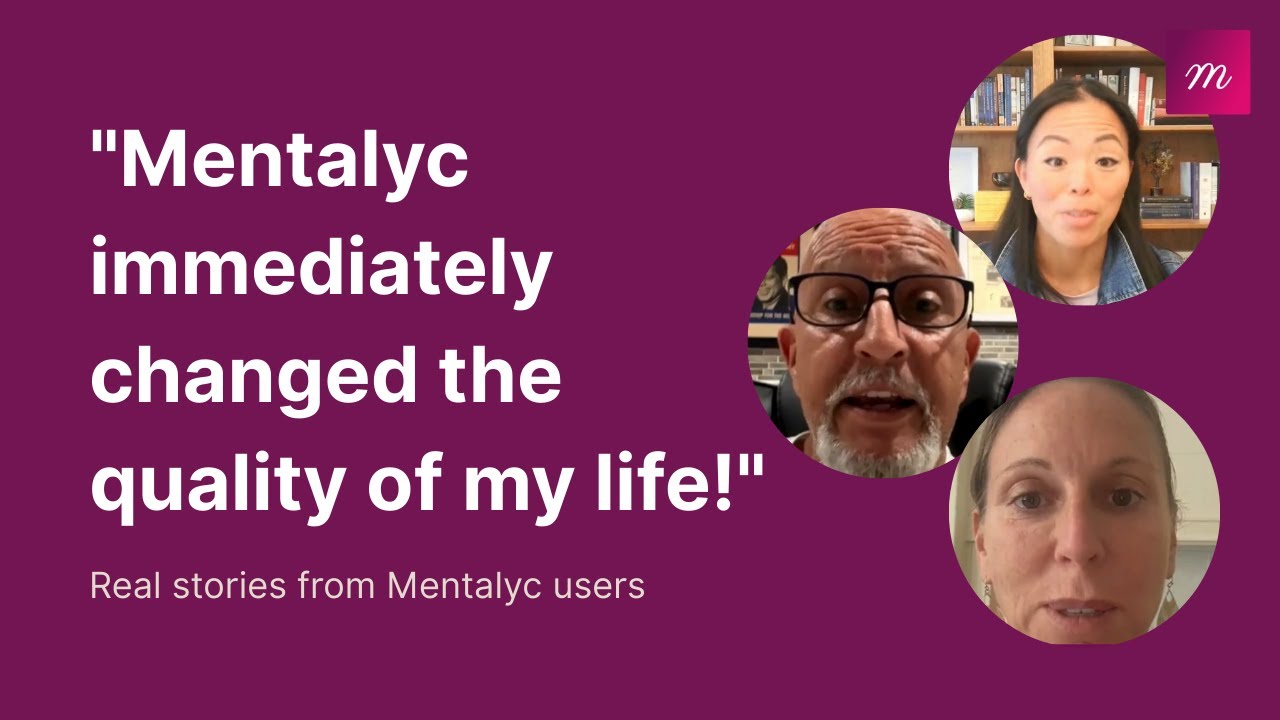
Why other mental health professionals love Mentalyc

“By the end of the day, usually by the end of the session, I have my documentation done. I have a thorough, comprehensive note … It’s just saving me hours every week.”
CDCII

“A lot of my clients love the functionality where I can send them a summary of what we addressed during the session, and they find it very helpful and enlightening.”
Therapist

“It’s so quick and easy to do notes now … I used to stay late two hours to finish my notes. Now it’s a breeze.”
Licensed Professional Counselor
“Having Mentalyc take away some of the work from me has allowed me to be more present when I’m in session with clients … it took a lot of pressure off.”
LPC