
Emotion Charades: Online Feelings Game for 1:1, Teams and Video Calls
Act out a secret feeling card in 60 seconds while the other player guesses. 1:1 or two teams, in the room or on video, with a winner and a debrief at the end.
Try another tool

Draw & Guess Feelings
One person secretly draws a feeling or coping skill on a timer, the others guess, then everyone shares when they've felt it.
Feelings Card Game
A card-shedding game where every color is a feeling family. Match by color or number, and action cards ask you to share a feeling or name a coping skill. Kids and teen decks.
Feelings Detective
Crack the case: face, body, situation and words clues appear one at a time. Guess the feeling with as few clues as you can, then say when you felt it too.How to play
 How to play
- The actor gets a secret feeling card.
- Act it out in 60 seconds: face and body only, no words.
- The others guess. A right guess scores a point for the actor's side.
- After each round, name the clue that gave it away.
- Most points after the last round wins.
About the technique
 About the technique
Emotion charades is a classic therapy game: one player silently acts out a feeling with face and body while the other guesses. It has no single originator and belongs to the family of structured games used in play therapy, where rules and turns give children a safe frame for expressing and reading feelings (Schaefer & Reid, 2001). Acting a feeling asks a child to notice how it shows from the inside; guessing asks them to read faces, posture and gesture in someone else.
Recognizing and naming emotions is a building block of social-emotional learning and many child therapies. Teaching emotion recognition has some research support, mainly in autistic children: a review of technology-based programs found promising results but also methodological limits and a need to work on generalizing skills to everyday life (Kouo & Egel, 2016). Play therapy more broadly showed a large average effect across controlled studies of mixed quality (Bratton et al., 2005). Charades itself has not been studied, so it is practice-based, and most of the learning happens in the debrief, when players link a feeling to a time they felt it and what helped.
It suits children, teens and families, individually or in groups, and works well early in treatment to build rapport and a shared feelings vocabulary. Keep the cards within the child’s range, starting younger children with a few basic feelings. Some children dislike being watched, so let them pass, act together or describe instead of performing. Avoid acting out fear or anger tied to a recent trauma in a group.

For therapists: how to run it
 For therapists: how to run it
Goal
Practice reading and showing feelings through face and body, and link each feeling to a real moment.
In session
- One screen (in the room): pick 1:1 (you take turns) or Two teams. Names are editable. Feelings level and rounds are under Settings.
- Guessers look away while the actor taps “peek” (the card hides itself after 5 seconds), then Start 60 s.
- Video call: press Play together and send the link. The client joins on their phone or in a second tab. When it's their turn, the secret card shows only on their device; your shared screen shows the timer and the guesses.
- After each round tap the clues that gave it away and ask when they last felt that feeling. At the end the result card shows the winner, feelings acted and clues that helped.
As homework
Not given as self-guided homework. Use it together in session.
With a group
- Press Play together and paste the link in the chat, or show the code. Everyone joins on their own phone or laptop with a first name or initials.
- Names are split into Team A and Team B as people join. Tap a name to move it, set the rounds, then Start.
- Each round the actor's secret card shows only on their own device. Everyone else watches the timer and taps a guess on their own device; your screen shows the guesses and keeps the score.
- After each round, tap the clues that gave it away and ask when someone last felt that feeling. Works for 3 to 12; in bigger groups, let pairs act together.
Exercises like this can lead to disclosures of abuse, neglect or risk. Know your reporting duties before you start, and pause if one comes up.
Some children find being watched hard. Let them pass, act in pairs, or be the timekeeper. Points go to the actor for clear acting; in 1:1 you alternate, so both get the same number of turns.
Worksheets that pair with this tool


Sources & credibility
- Method
- Emotion recognition and expression practice (charades)
- Developed by
- No single originator; play therapy and social-skills groups
- Approach
- Play therapy / social-emotional learning
- Evidence
- Practice-based (limited trials)Emotion-recognition training has some support, mainly from studies with autistic children, but charades as a game has not been studied.
- Read more
- 42 Best Group Therapy Activities
References
- Kouo J. L. & Egel A. L. (2016). The effectiveness of interventions in teaching emotion recognition to children with autism spectrum disorder. Review Journal of Autism and Developmental Disorders, 3(3), 254–265. Source
- Schaefer C. E. & Reid S. E. (Eds.) (2001). Game Play: Therapeutic Use of Childhood Games (2nd ed.). Wiley.
- Bratton, S. C., Ray, D., Rhine, T., & Jones, L. (2005). The efficacy of play therapy with children: A meta-analytic review of treatment outcomes. Professional Psychology: Research and Practice, 36(4), 376–390. Source
How it was made
Built by the Mentalyc team from the original method and the published sources listed here. Nothing you enter is stored.
Questions people ask
 Questions people ask
How do you play emotion charades?
A player draws a secret feeling card and acts it out without words while the others guess before the timer runs out. This version handles the cards, timer and scores for 1:1 or teams.
What are some good charade words for feelings?
Start with clear feelings like happy, sad, angry, scared and surprised, then add trickier ones like proud, jealous, embarrassed or bored. The deck here mixes easy and harder feelings.
Can you play emotion charades over video?
Yes. Press Play together and send the link. When it's a player's turn, the secret card shows only on their own device, and the shared screen shows the timer and the guesses. It works well for telehealth with kids, teens and families.
What skills does emotion charades build?
Acting out a feeling practices expressing emotion through the face and body, and guessing practices reading those nonverbal cues. The debrief, where players say when they felt that way, links the game to real situations.
Problem or idea? Tell us (opens in a new tab)

 How Mentalyc works
 AI Note Taking
 AI Treatment Plans
 AI Progress Tracking
 Alliance Genie™
 Worksheet Matcher
Why other mental health professionals love Mentalyc


“If I were recommending this software to a colleague, I would tell them that it is the best thing that they could do for their practice.”
 Dominique Walker
Licensed Professional Counselor
Dominique Walker
Licensed Professional Counselor
“For anyone hesitant: this is a lifesaver. It will change your life, and you have more time to be present with your patients.”
 Amber McKinney
Licensed Clinical Social Worker
Amber McKinney
Licensed Clinical Social Worker
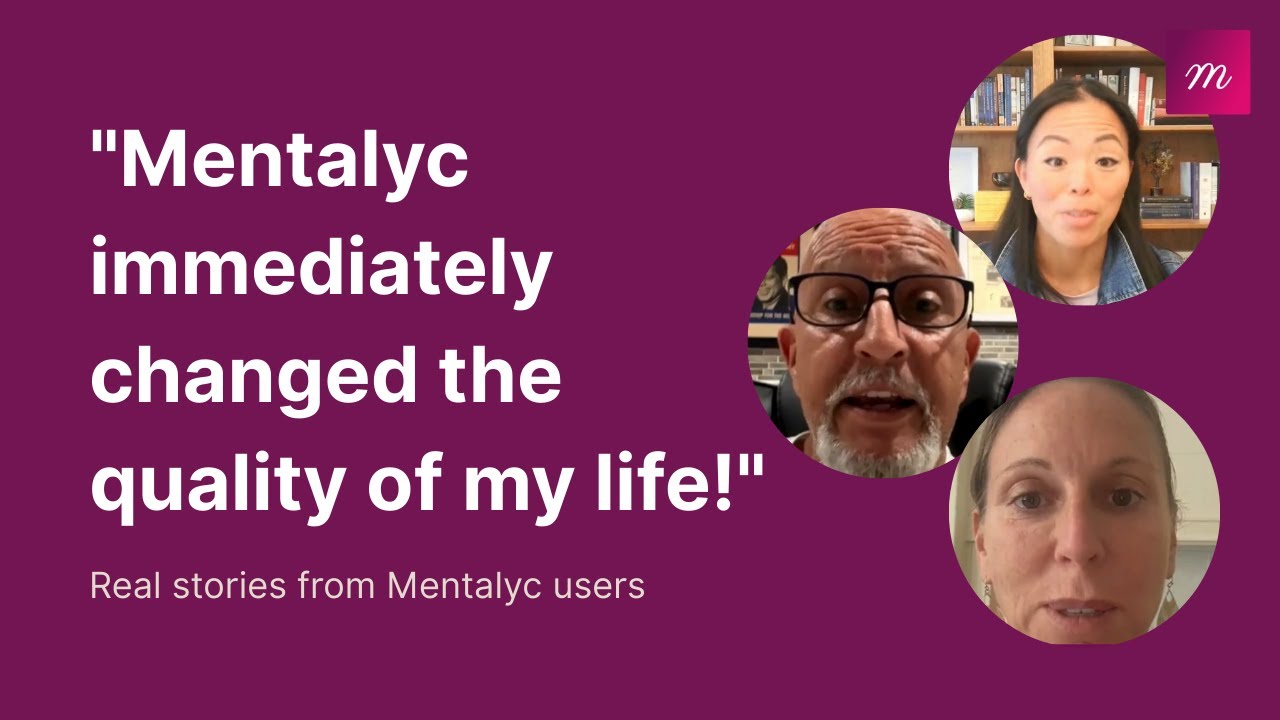
“It immediately changed my quality of life, personally and professionally.”
 Kara-Myung Jin Purves
Owner/Independently Licensed Marriage & Family Therapist (LMFT)
Kara-Myung Jin Purves
Owner/Independently Licensed Marriage & Family Therapist (LMFT)
Made for use in therapy: a licensed mental health professional decides whether a tool suits their client and guides its use.
Children should use this with a parent, therapist or teacher, not on their own.
Educational practice aid, not a medical device. Not a substitute for therapy, diagnosis or emergency care.