

Clinical assessment is rarely straightforward. Every client brings a unique mix of experiences, biology, and context that can make accurate diagnosis both challenging and deeply rewarding. That’s why combining the right tools, structure, and reflection is key to seeing the full picture.
In this article, we’ll explore practical tools and therapist assessment strategies to improve diagnostic precision, reduce bias, and strengthen the overall quality of your assessments – and how solutions like Mentalyc can bring even greater clarity to that process.
By turning rich session details into organized, data-informed documentation, Mentalyc supports your clinical judgment, document progress, and helps make every assessment clear and audit-ready.
Importance of Accurate Clinical Assessment in Mental Health
Accurate assessment allows mental health professionals to provide ethical, targeted, and effective care. According to the American Psychological Association (APA) and the DSM-5-TR, a precise assessment builds the foundation for consistent diagnosis and evidence-based interventions.
Track progress automatically from your sessions

Inaccurate or incomplete assessments can lead to ineffective treatment planning and poor outcomes – making clinical accuracy one of the most vital skills for any therapist.
8 Key Strategies to Improve Diagnostic Precision
1. Start with a Thorough Intake Process
A thoughtful intake process sets the tone for everything that follows. It’s where therapists begin piecing together a client’s story – not just their symptoms, but the experiences, history, and context that shape them.
Beyond collecting demographics, a strong intake looks at mental and physical health history, family relationships, social environment, and current stressors. Accuracy grows when clinicians gather collateral information from family or previous providers and include self-report measures to capture the client’s perspective.
This multidimensional approach helps uncover not only what the client is facing but why, laying a clear foundation for accurate diagnosis and a treatment plan that truly fits their needs.
2. Conduct a Comprehensive Biopsychosocial Assessment
A biopsychosocial assessment expands the intake by examining how biological, psychological, and social factors interact to influence the client’s mental health. This includes medical history, neurodevelopment or trauma-related considerations, cultural background, and current lifestyle patterns.
Using this model encourages clinicians to see the client beyond their symptoms – as a whole person shaped by intersecting systems – which often leads to more accurate case conceptualization and tailored interventions.
3. Utilize Structured and Semi-Structured Interviews
Structured interviews such as the SCID-5 (Structured Clinical Interview for DSM-5 Disorders) or semi-structured models allow therapists to assess key diagnostic domains systematically. These tools minimize bias and ensure consistency across clients while leaving space for clinical intuition.
They’re particularly effective when paired with open-ended exploration, allowing therapists to clarify gray areas that standardized checklists might miss.
4. Integrating Psychometric Testing and DSM-5-TR Criteria
Psychometric Testing
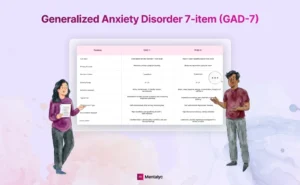
Psychometric testing offers a standardized lens for understanding complex presentations. Instruments like the Beck Depression Inventory (BDI), GAD-7, or MMPI-2 provide quantifiable data on symptom severity and personality functioning.
However, these measures should complement, not replace, clinical judgment. Interpreting scores within the client’s context – culture, language, and stressors – transforms raw data into clinically meaningful insights.
DSM-5-TR Diagnostic Criteria
The DSM-5-TR (Diagnostic and Statistical Manual of Mental Disorders) remains the gold standard for diagnostic classification. Using its structured criteria helps ensure reliability and consistency across practitioners.
Yet, experienced clinicians know that checklists alone aren’t enough; diagnostic accuracy improves when DSM-5-TR guidelines are balanced with empathic listening, cultural awareness, and real-world context.
5. Rely on Validated Assessment Tools
Only validated instruments, those supported by psychometric research and professional endorsement (e.g., APA standards), should inform diagnostic conclusions. These include structured interviews, behavioral observation scales, and self-report inventories.
Validated tools reduce subjectivity and provide a reliable framework for identifying symptom patterns aligned with evidence-based clinical assessment.
6. Document and Monitor Assessment Data Consistently
Accurate data collection is only as good as the system that organizes it. Ongoing note-taking, progress tracking, and revisiting diagnostic impressions ensure assessments evolve as new information emerges.
Modern AI-powered solutions like Mentalyc streamline this process by structuring assessment data, summarizing patterns across sessions, and aligning documentation with clinical reasoning – freeing clinicians to focus on make sense of the data, interpretation, not transcription.
7. Consider Role of Collaboration and Supervision in Clinical Accuracy
Consultation with colleagues, supervisors, or specialists adds an essential layer of reliability. When findings are cross-checked, especially in complex or high-stakes cases, diagnostic precision increases. For solo practitioners, however, consistent feedback can be harder to access.
That’s where Mentalyc’s Alliance Insights feature can offer data-informed support. By analyzing patterns in therapist–client communication and engagement, it helps clinicians reflect on relational dynamics that may affect how they interpret or document client progress. It provides an added layer of self-awareness and professional reflection.
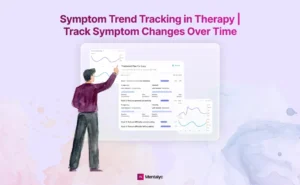
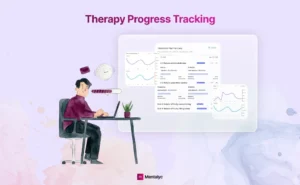
Track progress and measure outcomes automatically
- Measure progress over time
- Symptoms tracking
- Goals tracking
- DSM-5 & ICD-10 ready

8. Include Cultural and Ethical Considerations in Assessment
Accurate clinical evaluation in psychotherapy goes beyond instruments and data. It requires an understanding of the client’s lived experience, cultural identity, and ethical boundaries that protect trust in the therapeutic process. Misinterpreting cultural expressions of distress or overlooking ethical safeguards can easily lead to misdiagnosis or harm.
According to the Office of the Surgeon General (2001) and the American Psychological Association (APA), integrating both cultural and ethical awareness into assessment ensures that clinical decisions are not only accurate but also just, inclusive, and compassionate.
Essential Tools for Clinical Assessment Accuracy
Today’s clinicians have access to an expanding range of clinical assessment tools that make it more structured, data-driven, and clinically reliable. Here are the most common and validated assessment tools:
1. Digital and Clinical Resource Tools
Clinical aids like the Wiley Treatment Planners offer research-backed frameworks for selecting and documenting effective interventions. Similarly, Between Sessions Resources provides evidence-based worksheets and assessments that help therapists collect structured client feedback and evaluate progress over time.
These tools bring consistency and clarity to the assessment process, supporting therapists in maintaining a high standard of care.
2. Psychometric and Diagnostic Instruments
Validated psychometric testing tools – such as the MMPI-2, Beck Inventories, GAD-7, or PHQ-9 – remain essential for identifying patterns in symptoms and functioning. When interpreted within the context of DSM-5-TR criteria, they provide measurable data that supports diagnostic reasoning and treatment planning.
Combining psychometric data with narrative insights gives a more complete, accurate picture of the client’s mental health status.
3. Technology and AI Tools That Enhance Clinical Assessment
Modern assessment doesn’t end with data collection. It depends on how information is recorded, synthesized, and applied.
This is where Mentalyc makes a measurable impact. As an AI-powered clinical intelligent platform for therapists, Mentalyc transcribes and structures progress notes in under two minutes, capturing key details from sessions that clinicians might otherwise overlook.
Beyond speed, Mentalyc enhances clinical accuracy by helping therapists:
- Track behavioral and emotional changes over time
- Maintain compliance with HIPAA and professional ethics
By transforming raw session data into clear, structured insights, Mentalyc strengthens both diagnostic precision and continuity of care – freeing clinicians to focus more on interpretation and client connection.

The Bottom Line: Enhancing Diagnostic Accuracy in Clinical Assessment
Accurate assessment is where true healing begins. It helps therapists see the full story behind a client’s symptoms and choose interventions that truly fit their needs.
When combined with reflection, collaboration, and clear documentation, clinical tools become more than checklists – they become instruments of understanding. With Mentalyc, therapists can bring that understanding to life, turning session insights into clear, clinically aligned notes that reflect both precision and care.
FAQs about Tools and Strategies for Accurate Clinical Assessment
Why other mental health professionals love Mentalyc

“It improves the quality of my work as I review my sessions … I bring a sense of continuity from session to session because of the really good summary and progress notes that Mentalyc gives me.”
Licensed Marriage and Family Therapist

“I benefit tremendously every time I wrap up a session and then a few minutes later, I have this AI note. It makes me a better clinician in a variety of ways.”
LPC

“I go back and can read the notes, and it really helps me for the next session. It has made me a much better counselor.”
Licensed Professional Counselor

“It helps align the note and the plan for moving forward with sessions … it’s been a really good aid in giving me direction.”
LPC