

A psychoeducational group is a structured therapy format that combines education and emotional support – helping clients understand their challenges, build coping skills, and grow through shared experience.
They can be incredibly rewarding to lead, but keeping up with each client’s progress and notes can quickly become a lot to manage. Without a good documentation system built for group settings, details can slip through the cracks and make it harder to see real change over time.
In this guide, you’ll find simple, practical ways to organize, lead, and document psychoeducational groups effectively with help from one of the most trusted clinical documentation companions, Mentalyc. It supports you in the background by offering progress notes for group sessions so you can stay fully present, connected, and confident in your facilitation.
What Is a Psychoeducational Group?
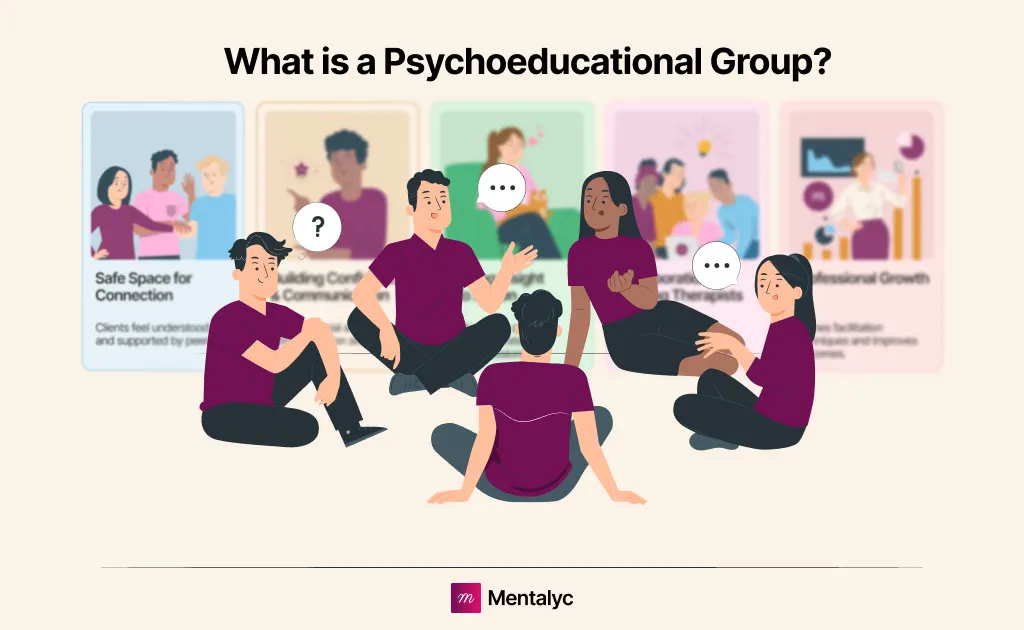
Led by a therapist, psychoeducational sessions mix teaching, discussion, and guided exercises – giving participants space to share experiences, try tools, and apply new insights for coping skills and mental health education. Therapist-led psychoeducational sessions can helps client with conditions like:
Turn documentation into insights with Mentalyc

Anxiety disorders: Discuss coping strategies, challenge negative thoughts, and relaxation techniques.
Chronic illnesses: Share diagnosis experiences, treatment options, lifestyle changes, and dealing with side effects or complications.
Addiction: Explore triggers, coping mechanisms, relapse prevention, and managing cravings. Build motivation and accountability.
Five Key Benefits of Psychoeducational Groups for Clients and Therapists
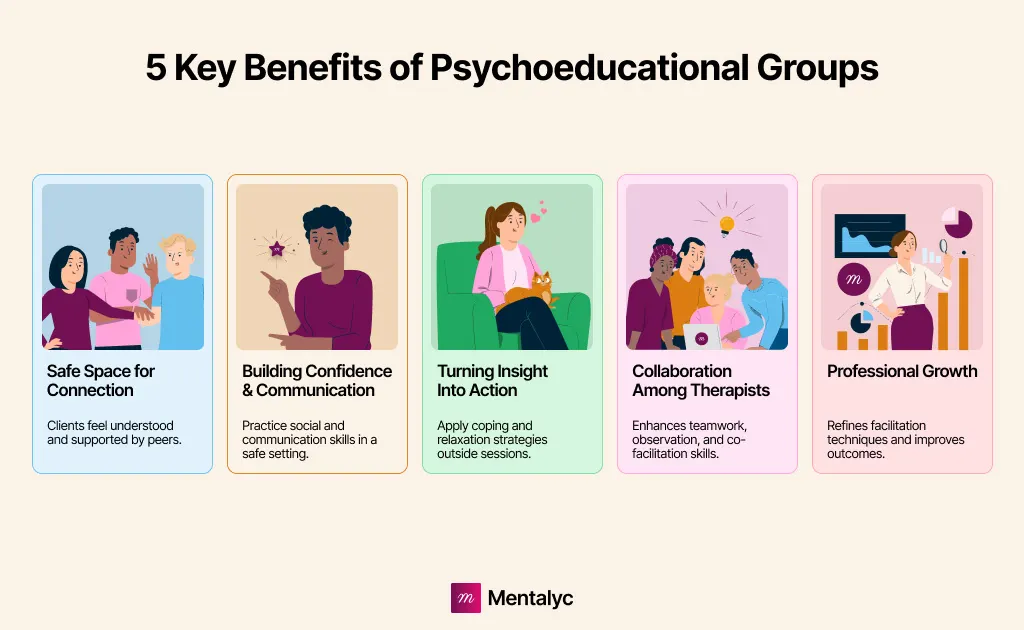
1. A Safe Space for Connection
Psychoeducational groups give clients a supportive place to connect with others who share similar struggles. Being surrounded by people who “get it” helps reduce feelings of isolation and builds a sense of belonging that one-on-one therapy can’t always provide.
2. Building Confidence and Communication Skills
Sharing experiences, receiving feedback, and learning together boosts self-esteem and social confidence. Clients can practice communication skills in real time – which is especially helpful for those managing social anxiety.
3. Turning Insight Into Action
These groups focus on learning and doing, not just talking. Clients gain coping strategies, relaxation techniques, and self-management tools they can use outside the therapy room to support lasting growth.
5. Collaboration and Professional Growth
Co-leading groups allows therapists to exchange ideas, observe client dynamics together, and strengthen teamwork skills. It’s an effective way to learn from peers, refine group facilitation techniques, and ultimately improve client outcomes.
Common Psychoeducational Group Topics in Mental Health
Psychoeducation groups are an excellent resource for people who want to learn more about a particular mental illness or life experience. With so many options available, there is something for everyone in psychoeducation groups.
Some examples of common psychoeducational group topics and goals include:
| Topic | Focus / Learning Goals |
|---|---|
| Stress Management | Teach relaxation techniques, coping skills, and lifestyle habits to help participants recognize stress triggers and respond more calmly in daily life. |
| Healthy Relationships | Identify unhealthy relationship patterns, set healthy boundaries, and strengthen communication skills – especially helpful for those with codependency or trauma histories. |
| Anxiety Management | Provide education about anxiety disorders and practical strategies such as cognitive restructuring, exposure practice, and mindfulness to reduce worry and avoidance. |
| Depression Management | Increase awareness of signs and symptoms, explore treatment options, and introduce self-help tools that boost motivation and mood. |
| Grief and Loss | Support members through the grieving process by discussing stages of grief, emotional expression, and healthy coping strategies within a compassionate group setting. |
| Parenting Skills | Teach positive discipline, child-development basics, and behavior-management tools that help parents strengthen connection and consistency at home. |
| Healthy Communication | Build listening, emotional expression, and conflict-resolution skills to foster open, respectful dialogue – useful for couples, families, and interpersonal growth in general. |
Therapist Tips for Running Effective Psychoeducational Groups
Psychoeducational groups cover a wide range of subjects and offer a variety of topics that cater to everyone’s needs. Here are some tips on how to run psychoeducational groups:
| Tips | Activities | Impact |
|---|---|---|
| Discuss Common Symptoms | Explain the symptoms of specific conditions (e.g., depression, anxiety). Encourage members to share how these symptoms show up for them. | Normalizes experiences, reduces stigma, and helps clients realize they’re not alone. |
| Teach Coping Strategies | Introduce simple tools like deep breathing, meditation, journaling, or exercise. Practice them together in sessions. | Builds self-efficacy, boosts accountability, and reinforces learning through shared practice. |
| Address Misconceptions | Gently correct common myths about mental health (e.g., anxiety disorders are medical conditions, not personality flaws). | Promotes accurate understanding, reduces shame, and encourages open discussion. |
| Share Treatment Options | Educate clients about therapy, medication, and lifestyle changes. Invite members to share personal insights or experiences. | Decreases fear of the unknown and builds realistic expectations about recovery paths. |
| Discuss Communication | Role-play how to talk with loved ones about mental health or treatment plans. Focus on boundary-setting and expressing needs. | Improves social confidence, strengthens relationships, and normalizes conversations about mental health. |
How to Facilitate a Psychoeducational Group Effectively
Facilitating a psychoeducational group is about more than sharing information – it’s about creating a space where people feel safe to learn, connect, and grow together.
As the facilitator, your role is to guide discussion, keep sessions organized, and make the learning experience engaging and practical.
1. Set Clear Goals and Expectations
Start by clarifying what the group aims to accomplish. Emphasize that the purpose is education and support, not therapy.
Share the learning goals, outline how sessions will run, and establish ground rules around respect, confidentiality, and participation.
This helps members understand what to expect and builds a sense of safety from day one.
2. Create a Welcoming Environment
Begin each session with a brief check-in or icebreaker to help participants relax. Simple introductions – sharing names, reasons for joining, and what they hope to gain – can ease anxiety and foster connection early on.
Automate documentation and session analytics with Mentalyc
- HIPAA, PHIPA & SOC2 Compliant
- SOAP, DAP, BIRP, EMDR & more formats
- AI Treatment Planner
- AI Progress Tracker for goals & symptoms tracking
- Alliance insights

3. Structure Each Session
An organized format keeps learning smooth and predictable. A typical session might include:
- Opening: Brief recap or check-in (5 minutes)
- Teaching segment: Short educational talk or video (10–15 minutes)
- Group activity: Discussion, role-play, or reflection exercise
- Wrap-up: Review takeaways and assign small “homework” or practice task
This rhythm maintains engagement without overwhelming participants.
4. Keep Learning Interactive
Avoid long lectures – instead, mix up your methods. Use open-ended questions to invite reflection and sharing. Pair participants for short discussions, or form small breakout groups for problem-solving.
Interactive learning helps clients connect the material to their own lives and encourages mutual support.
5. Encourage Practice and Follow-Up
Ask participants to try out one new skill or insight between sessions and share how it went next time. This builds accountability and helps clients see real-world progress. At the end of each session, summarize key points and preview the next topic to keep momentum going.
6. Reflect and Adjust
Check in regularly with group members about what’s working and what could be improved. Their feedback helps you refine your approach and make sessions more relevant and supportive for everyone.
Challenges and Considerations in Group Therapy
Running psychoeducational groups can be deeply rewarding, but it also comes with unique challenges. Facilitators must balance structure with flexibility, maintain a supportive tone, and adapt to each group’s dynamics and needs. Common challenges include participant resistance, cultural differences, and maintaining consistent documentation.
Maintaining Consistent Documentation
With multiple clients participating at once, keeping accurate and organized notes for each member can be time-consuming. Group leaders often struggle to document progress, insights, and follow-ups without losing detail or consistency.
That’s where solutions like Mentalyc’s progress tracking and AI notetaker feature can help – streamlining group documentation and allowing therapists to review each participant’s progress securely and efficiently. It ensures clinical accuracy while freeing up more time to focus on facilitation and connection.
Dealing with Resistance
Some participants may feel anxious or hesitant about opening up in a group setting. It’s important to acknowledge this early and create an atmosphere of safety and respect. Emphasize confidentiality and remind members that everyone’s voice matters. When resistance arises, listen actively, validate concerns, and model openness. By responding calmly and compassionately, you help build trust and make it easier for participants to engage fully.
Cultural Sensitivity
Every participant brings a unique background, identity, and worldview. Approach each member with curiosity and respect, using psychoeducational therapy examples and language that feel inclusive and relevant. Take time to learn about cultural differences that may influence communication or comfort levels. A culturally sensitive approach ensures all participants feel seen, valued, and supported.
Adapting to Change
No two groups are alike – and even within one, needs can shift over time. Stay flexible with your session structure and responsive to feedback. Adjust topics, pacing, or activities to better fit where participants are in their journey. Flexibility shows attunement and helps sustain engagement as the group grows together.
Example: Psychoeducational Group for Phobias
Imagine leading a six-week psychoeducational group for adults with specific phobias, such as fear of heights, flying, or animals. Each session combines education, discussion, and skill-building in a safe, supportive environment.
Session focus: The group begins by learning about how phobias develop and how avoidance strengthens fear over time. Members share their own experiences to normalize these reactions and build a sense of connection.
Skill practice: The facilitator introduces coping techniques – like breathing exercises, visualization, and cognitive restructuring – and guides members to apply them to their specific fears. For example, participants might write down anxious thoughts that appear before exposure and practice reframing them together.

Group discussion: To encourage reflection, the therapist might ask, “What thoughts come up when you face your fear?” or “What has made it difficult to approach this situation before?” These questions help uncover barriers and set the stage for gradual exposure.
Outcome: Over time, members begin to test small exposure goals – such as watching a video of their phobic trigger or imagining facing it in real life. Sharing progress with the group reinforces learning, boosts confidence, and helps participants realize they’re capable of managing their fear.
Why Psychoeducational Groups Matter in Modern Mental Health Practice
Psychoeducational groups bridge the gap between insight and action. It helps clients understand their challenges, build coping skills, and feel supported through shared experience. As a facilitator, you’re not just teaching; you’re creating a space for growth, connection, and confidence.
However, to do that effectively, you need documentation tools that work quietly in the background, allowing you to stay fully engaged with your group.
Mentalyc makes this easier by automatically creating notes and progress summaries for group work – accurately and securely, with the help of AI. It captures what matters from each session – ethically and in your own clinical voice so you can focus on leading the group, not worrying if you miss any important details or each client’s progress.
FAQs About Psychoeducational Groups
Resources:
Anew Treatment Center. 2022, August 7). What Are Psychoeducational Groups?https://anewtreatmentcenter.com/psychoeducational-groups/
Belmont, J., & LPC. n.d.). Strategies for Running an Efflife’s Psycho-Educational Group. Psych Central. https://psychcentral.com/pro/psychoeducation/2017/06/strategies-for-running-an-effective-psycho-educational-group#1
Karl, T. (2019, February 12). Ingredients for Effective Psychoeducation Group Rooms – Can You Add These In? 1 Learning. https://r1learning.com/blog/2019/2/12/7-ingredients-for-effective-psychoeducational-group-rooms-wmlwl
Sarkhel, S., Singh, O. P., & Arora, M. (2020, January 17). Clinical Practice Guidelines for Psychoeducation in Psychiatric Disorders General Principles of Psychoeducation. PubMed Central (PMC). https://www.ncbi.nlm.nih.gov/pmc/articles/PMC7001357/
Why other mental health professionals love Mentalyc

“If I were recommending this software to a colleague, I would tell them that it is the best thing that they could do for their practice.”
Licensed Professional Counselor

“It immediately changed my quality of life, personally and professionally.”
Owner/Independently Licensed Marriage & Family Therapist (LMFT)

“For anyone hesitant: this is a lifesaver. It will change your life, and you have more time to be present with your patients.”
Licensed Clinical Social Worker

“Do yourself a favor, make your life easier. I found Mentalyc to be one of the best tools that I’ve ever used.”
Licensed Marriage and Family Therapist