
The Montgomery-Asberg Depression Rating Scale (MADRS) is a widely used clinician-administered tool for assessing the severity of depression. Developed in 1979 by Stuart Montgomery and Marie Asberg, the scale was designed to be more sensitive to changes in depressive symptoms than earlier instruments, such as the Hamilton Depression Rating Scale (HDRS). It consists of 10 items, each rated on a 0-6 scale, for a total score ranging from 0 to 60, with higher scores indicating more severe depression. It measures symptom severity and change over treatment; it does not provide a diagnosis.
Depression assessment tools have come a long way since the early days of psychiatry, and one that has stood the test of time is the Montgomery-Asberg Depression Rating Scale (MADRS). As therapists, having reliable measurement tools in our clinical arsenal is not only helpful but essential for tracking progress, making treatment decisions, and communicating effectively with colleagues and patients.
Why I Started Using MADRS
I had a client, Jen (not her real name), who wasn’t responding to therapy the way I expected. My supervisor suggested trying the MADRS to get a clearer picture of what was happening. I was like, “Great, another form to fill out,” but I was wrong. The MADRS actually showed that while Jen’s sadness was improving, her concentration issues and inner tension were barely budging. This completely changed our approach, and within a month, she started making real progress.
This got me curious about where this scale came from. Turns out, Montgomery and Asberg created it back in 1979 specifically because they felt the existing scales (like Hamilton’s) weren’t sensitive enough to measure changes during treatment. They started with a massive 65-item assessment on 106 patients (a mix of English and Swedish people) and narrowed it down to the 10 items that were most responsive to treatment changes. That’s what makes MADRS different: it was built from the ground up to detect when someone’s getting better or worse.
Track progress automatically from your sessions

Purpose and Significance of the Montgomery-Asberg Depression Rating Scale
The MADRS forms an important instrument in clinical and research contexts: assessing the level of severity in depression, measuring changes that have occurred during treatment, or describing the progress or regression resulting from treatment interventions. It especially allows monitoring the course of a patient’s response to antidepressant medication in a more standardized fashion for mood disorders. Because of its emphasis on the core symptoms of depression, it finds wide application in psychiatric assessments, pharmaceutical trials, and treatment planning. Clinicians appreciate that it is able to detect even subtle changes in the severity of depression; thus, it is reliable and widely accepted in psychiatry.
Who Is MADRS Meant For?
The Montgomery-Asberg Depression Rating Scale is designed for adults only (+18) and is administered through a clinical interview, so you can use your clinical judgment to achieve a meaningful assessment. It is designed for use by clinicians, including psychiatrists, psychologists, and clinical researchers. It most often finds its application in a hospital setup, outpatient mental health clinics, and pharmaceutical trials. It is especially applicable in conditions involving Major Depressive Disorder but may also be applied in bipolar depression and other mood disorders.
The 10 MADRS Items: What We’re Actually Measuring
The Montgomery-Asberg Depression Rating Scale focuses on 10 core symptoms of depression:
- Apparent Sadness: The visible manifestations of depression observed in the patient’s facial expressions, posture, and speech
- Reported Sadness: The patient’s subjective experience of depression, regardless of outward appearance
- Inner Tension: Feelings of ill-defined discomfort, edginess, or mental tension that may escalate to panic or anguish
- Reduced Sleep: Changes in sleep patterns compared to the patient’s normal experience
- Reduced Appetite: Loss of desire for food or the need to force oneself to eat
- Concentration Difficulties: Problems collecting one’s thoughts that may impair daily functioning
- Lassitude: Difficulty initiating activities or general slowness in performing everyday tasks
- Inability to Feel: Reduced interest in surroundings or decreased capacity to experience pleasure or appropriate emotions
- Pessimistic Thoughts: Feelings of guilt, inferiority, self-reproach, or hopelessness
- Suicidal Thoughts: Thoughts that life isn’t worth living, ranging from passive death wishes to active suicide plans
Structure and Scoring
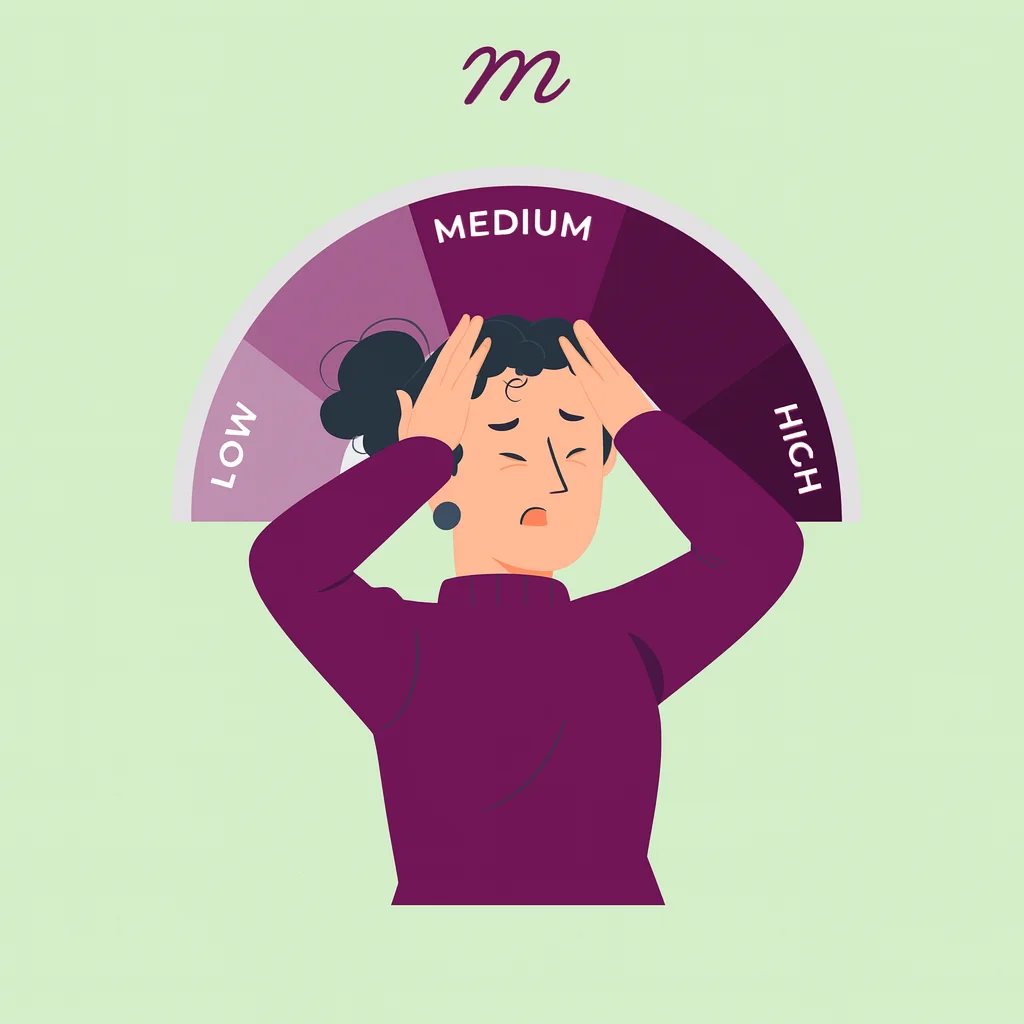
Each item is scored on a 0-6 scale, with defined anchor points at 0, 2, 4, and 6. Intermediate scores (1, 3, 5) represent gradations between these defined points. The total score ranges from 0 to 60, with higher scores indicating more severe depression.
Scoring interpretation:
| Total score | Severity |
|---|---|
| 0-6 | No or minimal depression |
| 7-19 | Mild depression |
| 20-34 | Moderate depression |
| 35-60 | Severe depression |
How to Use the Montgomery-Asberg Depression Rating Scale in Sessions
I’ll be honest, the first few times I administered the MADRS, it felt awkward. I had “Mark” come in last fall, a construction worker, mid-30s, going through a divorce, and recently diagnosed with major depressive disorder. He slouched in my office chair, barely able to make eye contact. When I started with “I’d like to ask you some specific questions about your mood,” he just nodded. “Sure.”
The MADRS question about sadness was telling. I observed him more than relied on his answers. When asked directly how he felt, he said “Fine,” but his voice was flat, his shoulders hunched. I marked him at a 4, noting “Patient appears distinctly sad and downcast, minimal facial expression variation during 50-min session.”
For the question about sleep, he actually opened up more. “I’m up at 3am most nights. Stare at the ceiling. Sometimes I don’t even try to sleep anymore. Last night I slept two hours.” Clear 6 on that item.
The most revealing moment came with the “concentration difficulties” question. He described forgetting basic things at work as something that had never happened before. “Nearly lost my job last week when I messed up an order. My colleague thinks I’m struggling, but I’m not sure.” That’s when I noticed he was tearing up.
In a later session, his total score had only dropped from 55 to 53 despite starting meds and psychological treatment. I was concerned, but when I mentioned this, he actually seemed relieved. “So it’s not just in my head. There’s something actually wrong.” That validation was motivating for him, and we were able to steer in the right direction.
Pro tip I learned with Mark: For concrete thinkers, using specific examples helps. Not “Have you lost interest in things you used to enjoy?” but “You mentioned you used to fish on weekends, have you gone lately? How was it compared to before?”
The scale is moderately quick to administer, taking about 10-15 minutes, and it’s very reliable across different clinicians when those are well trained.
A Deep Dive into MADRS Features
What MADRS Misses
No assessment tool catches everything. Unlike the Hamilton scale, MADRS doesn’t cover:
- Sexual functioning (which can be a huge issue with depression and meds)
- Time-of-day symptom changes
- Feelings of unreality
- Various physical symptoms
I had a client with chronic pain whose depression scores on other scales were inflated because of their physical symptoms. MADRS gave us a clearer picture of their actual mood. It is also very important to note that the scale does not provide a diagnosis of major depressive disorder, but rather helps to assess the severity of depressive symptoms.
Track progress and measure outcomes automatically
- Measure progress over time
- Symptoms tracking
- Goals tracking
- DSM-5 & ICD-10 ready

Advantages of MADRS
MADRS gained a great reputation for high sensitivity to variation, especially related to depressive symptoms. It follows then that a time course of treatment is measured or calculated. Attention, in general, is taken out on major mood symptoms but not on the somatic symptoms since some have connections with multiple medical diagnoses. The scale is moderately quick to administer, taking about 10-15 minutes, and it’s very reliable across different clinicians when those are well trained. Its scientific validation and wide usage in psychiatric research and clinical practice further consolidate it as one of the widely accepted measures for the severity of depression.
Limitations and Criticism
Despite the advantages, MADRS will always be a subject of variability in scoring by clinicians, impacting its consistency across assessors. It does not cover atypical depression symptoms comprehensively, such as hypersomnia, increased appetite, or leaden paralysis. The scale’s emphasis on mood symptoms can also lead to an underestimation of somatic symptoms common in depression. Besides that, MADRS does not measure directly the functional impairments caused by depression in daily life, and since it is not a self-report tool, its administration is by a trained clinician, which further limits its availability for routine primary care.
Does It Actually Work? (The Research Part)
Research on the Montgomery-Asberg Depression Rating Scale (MADRS) highlights its effectiveness across diverse groups. Studies confirm its accuracy in identifying depression, both in general populations and psychiatric patients. What’s particularly striking is how MADRS compares to other well-known depression assessment tools: in some cases, it even outperforms classics like the Hamilton Depression Rating Scale in measuring treatment progress.
One of the most valuable aspects of MADRS is its reliability. Unlike some assessment tools that produce varying results depending on the clinician, MADRS has shown strong consistency across different healthcare providers. This means that no matter who administers it, the findings tend to be similar, ensuring more dependable assessments.
Its reliability extends to specialized populations as well. For instance, in patients with Alzheimer’s disease, MADRS has been found to correlate strongly with dementia-specific depression scales. This makes it a versatile tool that clinicians can trust when assessing and tracking depression in different patient groups.
The scale has been extensively validated in clinical research and is considered an evidence-based tool for assessing depression. It has shown very high internal consistency, strong inter-rater reliabilities, and excellent sensitivity to treatment effects. It is widely being used in many clinical trials regarding the efficacy testing of antidepressants, and their scores correlate fairly well with those from other standardized depression scales: the Hamilton Rating Scale for Depression and Beck Depression Inventory. For mental health professionals, having an assessment tool that is both accurate and consistent is crucial. MADRS provides a structured way to measure progress, helping clinicians make more informed treatment decisions with confidence.
Uses of MADRS in Clinical Research and Practice
- Clinical Trials: To evaluate the efficacy of antidepressants.
- Routine Psychiatric Assessments: To gauge treatment response in patients with Major Depressive Disorder (MDD).
- Neuroscientific Research: Studies on depression biomarkers often include MADRS scores.
- Telemedicine & Digital Psychiatry: Modified versions have been used in remote psychiatric assessments.
After using MADRS for a while, I’ve found it particularly helpful in these situations:
- Treatment monitoring: I use it every 3-4 sessions with clients on medication or trying new therapy approaches. The concentration and lassitude items often improve first, in my experience.
- Insurance justification: Having objective scores showing improvement (or lack thereof) has saved me tons of time when justifying continued treatment.
- Clients with physical health issues: Since MADRS focuses less on physical symptoms, it gives a clearer picture of mood in clients with chronic pain, autoimmune conditions, etc.
- Clients who struggle to express themselves: The structured format helps some clients articulate what they’re experiencing when open-ended questions overwhelm them.
Because the MADRS is built to be re-administered over time, it works best when scores are captured session after session rather than as a one-off. Tracking MADRS scores automatically across sessions makes it far easier to see whether treatment is actually moving the needle.


Comparison with Other Depression Scales
By comparison with HDRS and PHQ-9, MADRS focuses more on core depressive symptoms and is less influenced by somatic symptoms. In contrast, the HDRS has a longer list of physical symptoms, including weight changes and gastrointestinal complaints, and can be especially useful in cases with co-occurring medical conditions. On the other hand, PHQ-9 is a self-reported measure that is generally used for screening purposes in primary care settings. Whereas in psychiatric research and clinical trials, MADRS is preferred because it shows greater sensitivity to changes in symptom severity.
| Scale | Format | Symptom focus | Best used for |
|---|---|---|---|
| MADRS | Clinician-administered, 10 items | Core mood symptoms; light on somatic | Tracking change over treatment; clinical trials |
| HDRS (Hamilton) | Clinician-administered | Broader, more physical symptoms | Cases with co-occurring medical conditions |
| PHQ-9 | Self-report, 9 items | Screening-level symptom check | Quick screening in primary care |
Making Scores Meaningful to Clients
This might be the most important part! Numbers alone does not help people feel better. I’ve started sharing MADRS results with clients as part of our work together:
“Your score dropped from 50 to 36 since last month. That’s still in the depression range, but it’s real progress. What changes have you noticed?”
Or sometimes: “I notice your score on inner tension is still high, but your sadness has improved a lot. Does that match how you’ve been feeling?”
These conversations have led to some breakthrough moments. One client felt so relieved when I showed her that her scores had improved, saying, “I thought I was still as bad as when I started.” The objective measure helped her recognize her progress when her depression was still coloring her self-perception.
Final Thoughts: The MADRS in Context
After working with depression scales for years, I’ve come to realize the MADRS is incredibly useful, but it’s definitely not the whole story. Depression is just too complicated for any single scale to capture completely.
What I appreciate about the MADRS is how it helps track the core symptoms when seeing someone over multiple sessions. I have noticed that the most helpful approach is combining what the MADRS tells me with my own clinical experience and (this is crucial) actually listening to what my patients say. The numbers help, sure, but they only make sense when I consider the unique person I’m working with.
That’s why I believe so strongly in the relationship aspect of therapy. It’s through our conversations that those scores become meaningful information rather than just data points. Understanding both the strengths and limitations of tools like the MADRS helps me use them effectively without letting them dictate how I approach someone’s care. It is best used alongside other assessment tools and a treatment plan for depression, with clinical judgment guiding the whole picture. Future research may further refine MADRS by incorporating digital applications and machine learning techniques for more objective assessments.
Frequently Asked Questions
References
- Montgomery, S. A., & Asberg, M. (1979). A new depression scale designed to be sensitive to change. British Journal of Psychiatry, 134, 382-389. Cambridge Core
- Williams, J. B. W., & Kobak, K. A. (2008). Development and reliability of a structured interview guide for the Montgomery-Asberg Depression Rating Scale (SIGMA). British Journal of Psychiatry, 192(1), 52-58. Cambridge Core
- American Psychological Association. Montgomery and Asberg (MADRS) Depression Rating Scale. APA Depression Guideline
Why other mental health professionals love Mentalyc

“I go back and can read the notes, and it really helps me for the next session. It has made me a much better counselor.”
Licensed Professional Counselor

“It improves the quality of my work as I review my sessions … I bring a sense of continuity from session to session because of the really good summary and progress notes that Mentalyc gives me.”
Licensed Marriage and Family Therapist

“I benefit tremendously every time I wrap up a session and then a few minutes later, I have this AI note. It makes me a better clinician in a variety of ways.”
LPC

“It helps align the note and the plan for moving forward with sessions … it’s been a really good aid in giving me direction.”
LPC