
If you’re searching for “Mentalyc reviews”, “Is Mentalyc worth it?” or “Is Mentalyc legit?”, here is the short answer up front: as of June 2026, clinicians rate Mentalyc 4.5/5 “Excellent” on Trustpilot (70 reviews), 4.5/5 on Capterra (59 reviews) and 4.8/5 on G2: more than 130 reviews across three independent platforms, written by mental health professionals of every kind, from LCSWs and LMFTs to psychologists, psychiatrists, counselors, and art therapists. This page collects those reviews, real case studies, and video testimonials in one place, alongside an honest look at pricing, note accuracy, and HIPAA compliance.
How This Review Was Sourced
A review published on a vendor’s own blog deserves skepticism, so this one is built on sources Mentalyc cannot edit. Every rating below links to the platform it lives on, every quote is reproduced word for word with the reviewer’s name and credentials, and the case studies name real clinicians and real practices. As a licensed clinician, I have written documentation at 9 pm after a full caseload day; that experience, not marketing copy, is the lens for everything below. Read the reviews, watch the videos, and judge for yourself.
Mentalyc Ratings Across Review Platforms
Mentalyc holds a 4.5/5 “Excellent” score on Trustpilot, 4.5/5 on Capterra and 4.8/5 on G2 as of June 2026. Combined, that is more than 130 reviews across three independent platforms, overwhelmingly from different clinicians (a few reviewers shared their experience on more than one platform). No single platform tells the whole story, so here are all of them:
Spend less time writing, more time with clients.

| Platform | Rating | Reviews | Detail |
|---|---|---|---|
| Trustpilot | 4.5 / 5 “Excellent” | 70 | Claimed profile since August 2022 |
| Capterra | 4.5 / 5 | 59 | Ease of use 4.5, customer service 4.5 |
| G2 | 4.8 / 5 | 5 | Note-Taking Software category |
The reviewers span the whole mental health field: licensed clinical social workers, marriage and family therapists, professional counselors, psychologists, psychiatric providers, addiction counselors, art therapists, and group practice owners. What the reviewers actually say, in their own words:
“Mentalyc has shaved about two-thirds off my time writing notes and treatment plans. Its ability to capture the session accurately is phenomenal.”
Robin M. Mathy, Trustpilot, May 2025
“I have been a subscriber for almost a year, and Mentalyc has made the difference between building a thriving practice, and complete failure.”
Dave Falck, Trustpilot, May 2025
“I went from taking weeks to hours to complete my notes. I now usually complete my notes the same day of the session.”
Sylvia Dorsey, Trustpilot, May 2025
“My documentation time has been cut by 85%. Definitely recommend to other professionals.”
Jade Robinson, Trustpilot, April 2025
“I am at least 30% more engaged with the patient because I am relieved of the burden of sketching notes and trying to remember what was said. In conclusion, my session note time has been reduced by approximately 30 to 40 hours per month.”
Jack W., Licensed Professional Counselor, Capterra, March 2025
“I have tried other AI programs for session notes and find this to be more accurate and clinically appropriate. I have already recommended it to colleagues.”
Maggie M., Licensed Mental Health Counselor, Capterra, November 2024
“The accuracy and reliability of the note-taking is excellent and the Customer Service is among the best I’ve ever seen: Quick, thorough, supportive, patient, and kind.”
Lynn O., Psychologist, G2, April 2026
“What stands out most is how it allows me to stay focused during sessions rather than thinking ahead to note-writing. For anyone managing a full caseload, it is a meaningful time-saver.”
Nichole G., Licensed Clinical Social Worker, G2, April 2026
To be fair: not every review is glowing. A few Trustpilot reviewers reported app freezes or a service outage, and some Capterra reviewers wished treatment plans were stronger or pricing lower. The overall pattern across 130+ reviews, though, is consistent: large documentation time savings, accurate clinically worded notes, and more presence in session.
Where Mentalyc Fits in the AI Note-Taking Landscape
AI note-taking software has exploded in the past few years, but much of it has been built around speed, not around therapy itself. Mentalyc stands out because it was clearly designed by a team that understands that therapy is not a series of isolated sessions, but a continuous clinical journey.
Most AI note-taking tools focus on efficiency. Tools like UpHeal or general AI scribes emphasize transcription speed and quick summaries. That can be helpful, but many therapists eventually realize that speed alone doesn’t solve the deeper problems of clinical work. Progress still feels hard to track across months, treatment plans drift away from what’s actually happening with the client, and notes may exist without clearly telling the story of care. Over time, the clinical narrative becomes fragmented, and alliance-related nuances are difficult to reflect on after the fact.
Mentalyc positions itself differently. It is more than an AI note taker; it was built as a clinical intelligence platform, one that treats notes as meaningful clinical data rather than administrative output or a compliance checkbox. Notes are structured around symptoms, interventions, goals, and change over time, so documentation quality and clinical coherence come first, with compliance and audit readiness emerging as a natural byproduct.
Mentalyc Case Studies: Real Therapists, Real Results
Reviews tell you what therapists think. Case studies show what actually changed in a real practice week. Here, in their own words, are four clinicians across different specialties:
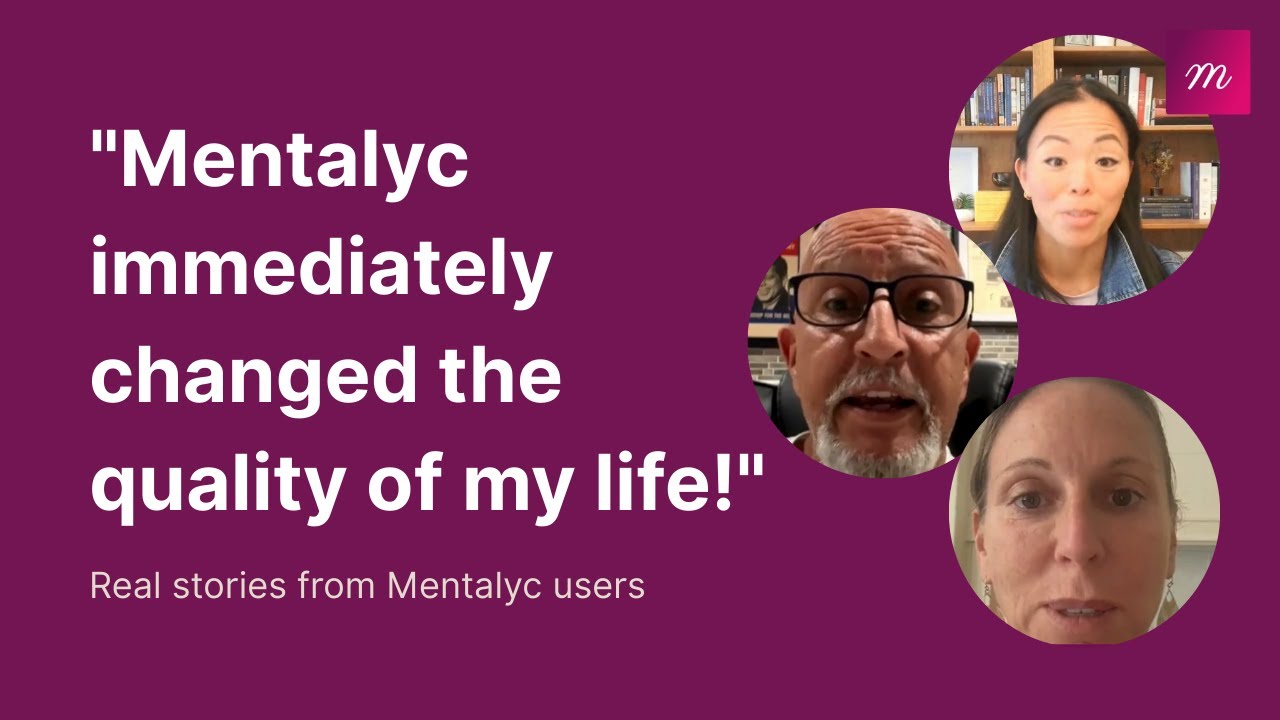
“Mentalyc immediately changed the quality of my life.” Clinicians on what changed after switching.
How Thomas Hanna Eliminated Note-Taking From His Routine
Being a therapist can be a demanding job, requiring long hours of sessions, followed by an even longer process of writing progress notes. However, Thomas Hanna (LMHC, NCC, CCTP, CCATP), a licensed therapist from Tempest Counseling in Tampa, Florida, found a way to streamline his note-taking process, freeing up time and energy to focus on his clients.

Thomas faced a common challenge among therapists: the time-consuming process of creating therapy progress notes. Despite being an excellent therapist, he struggled with keeping up with his notes due to the amount of time it took and the difficulty of maintaining consistent quality.
“Administration has always been really time-consuming and I would be inconsistent with the quality I manage to maintain in terms of my notes.”
Thomas discovered Mentalyc, a platform that streamlines the note-taking process, providing high-quality notes in almost no time. The solution is simple: all Thomas has to do is make an audio recording of his session with the client and upload it to Mentalyc. The recording is then instantly converted into progress notes, saving Thomas hours of time and ensuring consistent, high-quality results.
“I have a session and at the end of the session, I save the audio file into a secure location on my personal computer and then go into Mentalyc to upload and leave it alone. I then move on to my next session, and I do the same thing. At the end of my day, I can go back in [to Mentalyc] and each of the sessions is already laid out in the notes.”
With the support of Mentalyc’s therapy resource plan for teams, Thomas is confident that he and his other clinicians will be able to rapidly grow their practice. Mentalyc’s commitment to providing fast and high-quality services gives Thomas peace of mind and a competitive edge in the industry.
How an Art Therapist Documents Creative Work Without Losing Its Meaning
Creative and expressive modalities are some of the hardest to document. Sessions include quiet stretches, symbolic expression, and process-based interventions that don’t fit neatly into standard templates. Suzi Humbert, an MHRS certificate art therapist, uses Mentalyc to bridge the gap between creative work in-session and the clinical documentation payers require.
“Mentalyc is a huge help in capturing what I do without having to translate my brain into the clinical speak that insurance companies require.”
Suzi Humbert, MHRS certificate art therapist
How Thrive Family Therapy Boosted Productivity and Revenue as a Group Practice
Solo clinicians are not the only ones documented here. Thrive Family Therapy, a group practice, describes in its own case-study video how moving the whole team’s documentation to Mentalyc increased productivity and revenue across clinicians:
How Mentalyc Helped Thrive Family Therapy Boost Productivity & Revenue | Case Study
How a Licensed Mental Health Counselor Cut Note Time From 30 Minutes to 5
Cynthia Christine Ridgway, a Licensed Mental Health Counselor, experienced one of the most pronounced documentation shifts we’ve heard from Mentalyc users: from approximately 30 minutes of note-writing per session to about 5. For a therapist carrying a full caseload, that difference compounds into hours reclaimed every week, time that flows back into clinical work, client care, or simply leaving the office on time.
Cynthia Christine Ridgway, LMHC, on how Mentalyc transformed her documentation workflow.
Honest Mentalyc Reviews by Therapists
Why other mental health professionals love Mentalyc
These testimonials were given directly to Mentalyc by named, credentialed clinicians, with their photos. Notice the range: social workers, family therapists, counselors, addiction specialists. Mentalyc is tailored to everyone working with mental health, which is why the voices vary this much.

“My notes get finished after every single session now because Mentalyc makes it so easy. I’m not stressed out about notes and I feel like my notes are of much higher quality.”
Sasha Kendall Licensed Clinical Social Worker (LCSW), IN
Write less, focus more
- SOAP, DAP, BIRP, EMDR notes and more
- AI Treatment Planner
- AI Progress Tracker
- Alliance signals
- HIPAA & PHIPA compliant


“For anyone hesitant: this is a lifesaver. It will change your life, and you have more time to be present with your patients.”
Amber McKinney Licensed Clinical Social Worker (LCSW), CA

“Do yourself a favor, make your life easier. I found Mentalyc to be one of the best tools that I’ve ever used.”
Stanley LeMelle Licensed Marriage and Family Therapist (LMFT), CA

“If I were recommending this software to a colleague, I would tell them that it is the best thing that they could do for their practice.”
Dominique Walker Licensed Professional Counselor (LPC), TN

“It immediately changed my quality of life, personally and professionally. I went from 3-4 hours a week of notes to 1 hour at most … that alone is invaluable personally and professionally.”
Kara-Myung Jin Purves Owner/Independently Licensed Marriage & Family Therapist (LMFT), OH
From Wellness, Coaching, and Addiction Settings
Mentalyc is equally at home beyond traditional therapy. These clinicians work across wellness coaching, addiction counseling, and professional counseling, and describe the same core shift: more presence with clients, less time on paperwork.

“It takes me less than 5 minutes to complete notes … it’s a huge time saver, a huge stress reliever.”
Ileana Oxley Licensed Marriage and Family Therapist (LMFT), FL

“By the end of the day, usually by the end of the session, I have my documentation done. I have a thorough, comprehensive note … It’s just saving me hours every week.”
Jack Marchant CDCII
“Having Mentalyc take away some of the work from me has allowed me to be more present when I’m in session with clients … it took a lot of pressure off.”
Karen Martin Licensed Professional Counselor (LPC), TX
All counted together: 130+ reviews on Trustpilot, Capterra and G2, plus the 8 named, photographed clinician testimonials above and 4 named case studies (Thomas Hanna, Suzi Humbert, Cynthia Christine Ridgway, Thrive Family Therapy). Allowing for the few clinicians who appear in more than one place, that is well over 140 verifiable accounts of how mental health professionals use Mentalyc.
Mentalyc Note Quality Review: Why Therapists Trust the Notes Enough to Switch
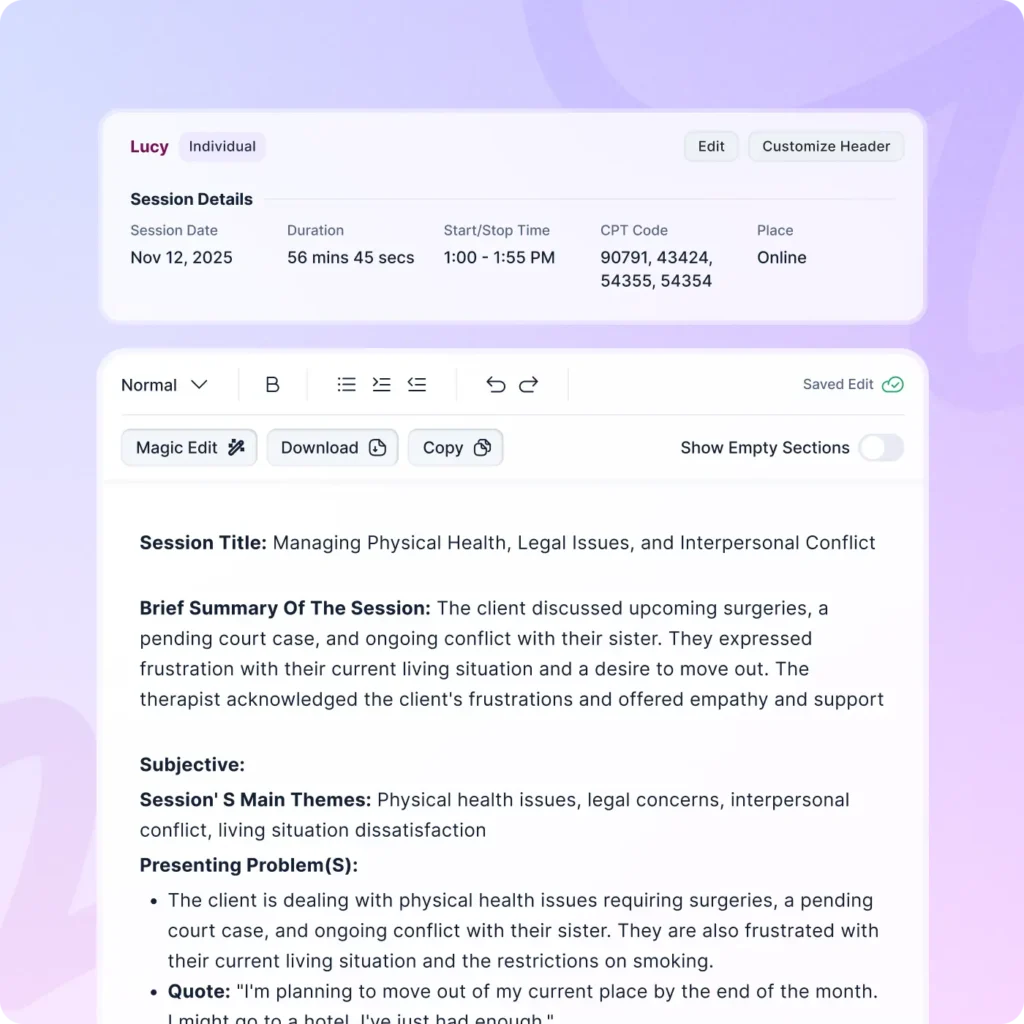
Across many AI note-taking software reviews, note quality is where tools either build long-term trust or lose it. A consistent theme among therapists who choose Mentalyc is that they often arrive after trying other AI note-taking tools and feeling dissatisfied with how the notes turned out. In those cases, the issue is rarely speed. It’s that the notes feel too generic, too surface-level, or disconnected from the clinician’s actual intent in session.
Mentalyc’s note quality stands out because the notes tend to reflect clinical thinking rather than simple transcription. Interventions are captured with appropriate context, client language feels recognizable, and the overall structure reads like documentation a therapist would reasonably stand behind. Over time, therapists often describe the shift as moving from heavily rewriting AI-generated text to simply reviewing and refining, which is why note quality is one of the most common reasons clinicians decide to transition to Mentalyc after experimenting with other tools.
Just as importantly, this level of note quality supports audit-ready documentation by default. Because notes are structured around symptoms, interventions, and clinical rationale, they naturally align with insurance and compliance expectations without requiring therapists to document defensively or retroactively justify care. In practice, this means clinicians are not just saving time, but also gaining confidence that their documentation accurately reflects both the work done in session and the standards required outside of it.
Mentalyc Treatment Plan Review: SMART Goal Suggestions Built From Real Session Notes
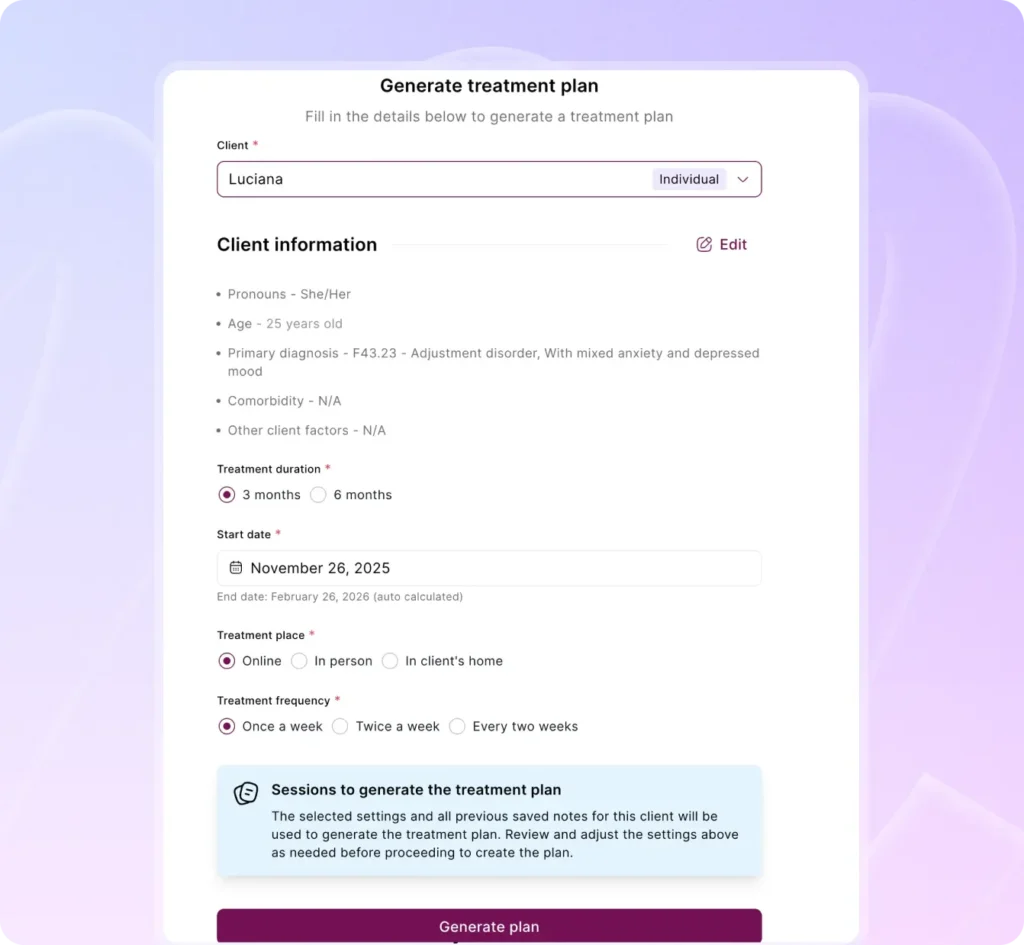
One of the most clinically thoughtful aspects of Mentalyc is how it approaches treatment planning. Rather than asking therapists to start from a blank template or rely on generic, diagnosis-driven goals, Mentalyc’s AI treatment planner analyzes intake and progress notes to suggest SMART, symptom-linked treatment goals grounded in what is actually happening in session. These goal suggestions are derived from real clinical material, which helps treatment plans feel relevant, individualized, and defensible rather than procedural.
This design directly addresses a common breakdown in therapy workflows. After the first few sessions, treatment plans often stop evolving as clients change. Goals become outdated, documentation drifts away from clinical reality, and articulating progress, especially for insurance reviews or audits, becomes more difficult.
Mentalyc was built around the idea that treatment plans should remain living clinical documents, not static paperwork. As sessions continue, progress toward each goal is tracked automatically, making it easier to evaluate whether treatment direction still fits the client’s current needs. For therapists who value conceptual clarity and audit-ready documentation, this approach meaningfully changes how treatment planning fits into everyday practice.

Mentalyc Progress Tracking Review: Seeing Client Progress Without Surveys or Extra Forms
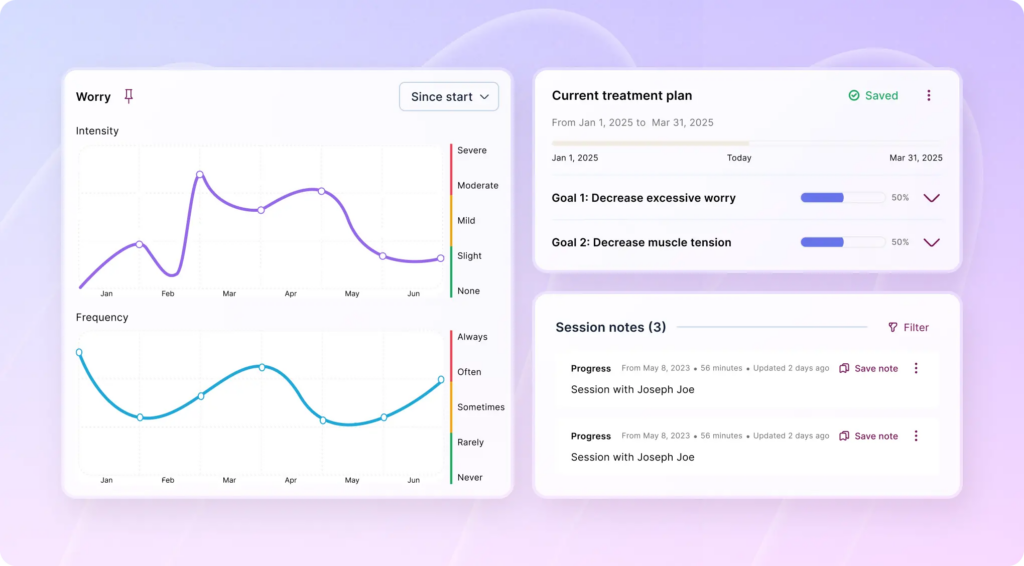
Many therapists use questionnaires for progress tracking because they’re familiar and easy to document, not because they fully reflect the work happening in session. But questionnaires are often skipped, rushed, or out of sync with clinical observations. Mentalyc was built to capture progress directly from the therapy session, so clinicians can track change without adding surveys or extra steps for clients.
Instead of adding surveys or forms, Mentalyc analyzes session content over time to surface symptom trends and goal attainment directly from therapy notes. This supports a more nuanced understanding of client change, helping therapists notice gradual improvements, plateaus, or emerging concerns that might otherwise be missed, particularly in long-term or complex cases. By aligning progress tracking with how therapists already conceptualize their work, Mentalyc makes outcomes easier to see, communicate, and document without disrupting the therapeutic process.
A Key Differentiator: Alliance Insights Tracking Via Alliance Genie™
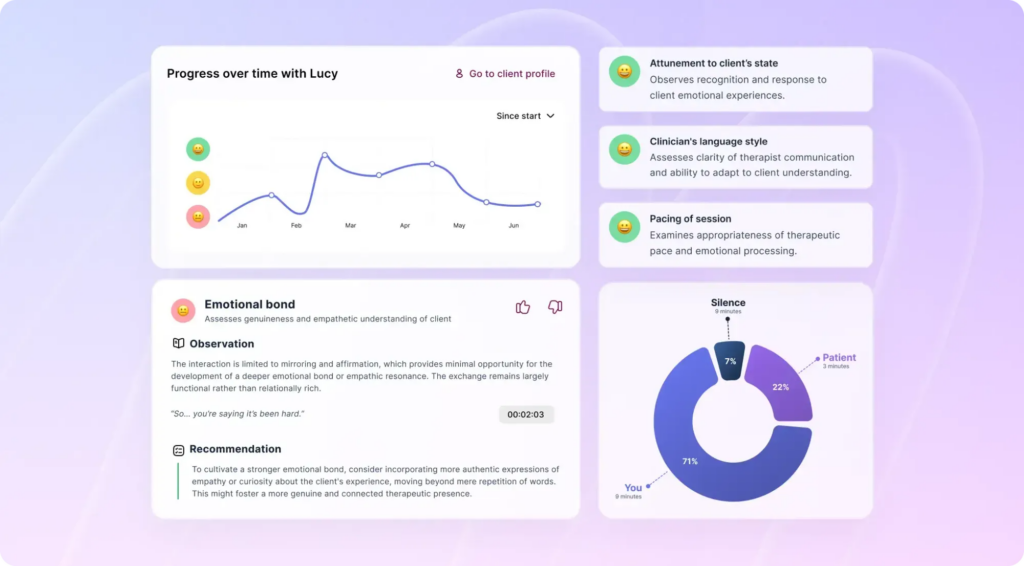
One reason Mentalyc often appears in therapists’ discussions of AI note takers is a feature many competitors don’t offer at all: Alliance Genie™.
Therapeutic alliance is widely recognized as one of the strongest predictors of outcomes, yet it’s notoriously difficult to reflect on systematically. That’s why Mentalyc’s Alliance Genie is designed to highlight moments related to pacing, attunement, collaboration, and engagement. For therapists who care deeply about the relational side of therapy, this is often the feature that changes how they think about AI altogether. It surfaces patterns you might want to reflect on, and leaves the interpretation to you.
Mentalyc HIPAA Compliance Review
From a compliance standpoint, Mentalyc stands out as one of the safest options among AI tools used in therapy settings. HIPAA compliance and SOC 2 Type II certification are foundational to the platform’s architecture rather than positioned as surface-level assurances. This signals a design approach that treats privacy, security, and regulatory responsibility as integral to clinical practice, not as afterthoughts layered onto technology.
Equally important is the platform’s clarity around what it does not do: session recordings are automatically deleted within 3 days of processing, and client data is never used to train AI models. For therapists navigating increasing scrutiny around audits, data privacy, and ethical AI use, this transparency reduces uncertainty and risk. It allows clinicians to adopt technology without feeling that they are compromising professional standards or client trust.
Mentalyc Pricing Review: Is It Worth the Cost?
Mentalyc’s pricing is structured to be accessible while still supporting a full clinical workflow. Plans start at $14.99 per month, with a free trial available, allowing therapists to explore the platform without an upfront commitment. As clinicians look to use the platform’s full capabilities, many choose the Pro plan, which unlocks advanced features such as progress tracking, Alliance Genie™, and deeper clinical insights, regardless of caseload size.
Beyond time saved, therapists often describe a reduction in cognitive load: documentation feels more coherent, progress narratives are easier to follow, and treatment decisions are supported by clearer context over time. Instead of juggling disconnected tools or revisiting notes defensively, everything stays aligned in one place.
Mentalyc isn’t positioned as a premium add-on or a narrowly defined AI note-taking tool. It’s priced to grow with clinical needs. For therapists who want documentation that supports the entire arc of clinical care, the cost is often experienced as reasonable and proportional to the value it delivers. As Capterra reviewer Jasmin J., a CEO and psychotherapist, put it: “It has saved my private practice time and money, as I can see more clients and keep up with their notes in a structured and uniform way.”
Is Mentalyc Legit?
Yes, and legitimacy is one of Mentalyc’s strongest points. Mentalyc is built specifically for mental health professionals, not retrofitted from generic AI tooling. It is HIPAA and SOC 2 Type II compliant, with session recordings automatically deleted within 3 days of processing and client data never used to train AI models. Clinicians retain full control over edits, diagnoses, and treatment decisions. For a full breakdown of data handling and compliance certifications, see the HIPAA Compliance section above.
Just as important: Mentalyc supports clinical judgment, but does not replace it. It handles documentation and reflection; it doesn’t substitute professional reasoning. For therapists wary of AI overreach, this clinician-first design is the core reason Mentalyc earns trust.
Mentalyc Pros and Cons
Mentalyc’s strengths are deeply tied to its clinical focus. The platform is built around how therapy actually unfolds over time, not around generic documentation workflows. It respects therapist judgment by supporting clinical decision-making, and it consistently reinforces the golden thread, the clinical narrative connecting a client’s goals, interventions, and outcomes across the arc of treatment, between sessions.
Notes are treated as a living clinical record that evolves alongside the client, which helps documentation feel integrated into care rather than an administrative task completed after the fact. For many therapists, this translates into clearer clinical narratives, stronger continuity, and greater confidence that their documentation truly reflects the work being done.
That same focus also explains Mentalyc’s primary limitation, and it is an intentional one. Mentalyc is designed exclusively for psychotherapy and behavioral health. Clinicians working in general medical settings, multidisciplinary practices, or non-mental-health specialties may find the platform less applicable to their needs, as it is optimized for therapeutic dialogue, relational dynamics, and longitudinal change rather than broad medical charting. It does not attempt to be a universal documentation tool, and it does not dilute its design to accommodate every clinical use case.
Who Should Choose Mentalyc?
Mentalyc is a strong choice if you want documentation that reflects and supports your clinical judgment while also getting meaningful insights you can stand behind. It is built for everyone working in mental health: therapists, psychologists, social workers, professional counselors, psychiatrists and PMHNPs, addiction counselors, art therapists, wellness coaches, and group practices. That breadth is why the reviews and case studies on this page come from such a variety of credentials and settings.
It is especially well suited for therapists who care about seeing progress, patterns, and continuity across sessions, not just producing a note at the end of the hour. If you prefer AI that supports your thinking rather than making decisions for you, and you’re cautious about privacy and compliance, Mentalyc’s clinician-first design will likely resonate.
Mentalyc’s notes are generated directly from session content, documented symptoms, interventions, and treatment goals, so every note maintains consistent structure and clinical continuity over time. For clinicians who need documentation that holds up across insurance reviews, continuity of care, and ethical scrutiny, Mentalyc offers one of the most reliable long-term solutions available.
So, Is Mentalyc Worth It?
For most therapists, the answer is yes.
Mentalyc is worth considering if you want documentation that reflects and supports your clinical judgment, progress that becomes visible without relying heavily on questionnaires, and AI support that remains firmly in the background rather than steering the work. It is particularly well-suited for clinicians who value both quality and fast notes on top of wanting notes, treatment plans, and progress tracking to remain aligned over time.
It may not be the best fit if your primary priority is the cheapest transcription tool. But for therapists evaluating AI note-taking software reviews with an eye toward long-term clinical use, ethical alignment, and documentation quality, Mentalyc consistently stands out as the most therapist-centered solution available. The 4.5 to 4.8 out of 5 scores across Trustpilot, Capterra and G2 say the same thing the case studies above do: clinicians who adopt it tend to keep it.
FAQs about Mentalyc Reviews
References
1. Mentalyc reviews on Trustpilot (4.5/5, 70 reviews, accessed June 2026)
2. Mentalyc reviews on Capterra (4.5/5, 59 reviews, accessed June 2026)
3. Mentalyc reviews on G2 (4.8/5, accessed June 2026)
5. Video: How a Clinical Psychologist Reclaimed Time & Improved Client Care with Mentalyc AI
6. Video: How therapists are freeing up time and seeing more clients, hear from Robin | Mentalyc Review
7. Video: How AI Progress Notes Help Therapists Save Time & Boost Productivity | Mentalyc Testimonial
8. Mentalyc on YouTube: all clinician reviews and testimonials
Why other mental health professionals love Mentalyc
“If I were recommending this software to a colleague, I would tell them that it is the best thing that they could do for their practice.”
Licensed Professional Counselor
“For anyone hesitant: this is a lifesaver. It will change your life, and you have more time to be present with your patients.”
Licensed Clinical Social Worker
“Do yourself a favor, make your life easier. I found Mentalyc to be one of the best tools that I’ve ever used.”
Licensed Marriage and Family Therapist
“It immediately changed my quality of life, personally and professionally.”
Owner/Independently Licensed Marriage & Family Therapist (LMFT)