
As therapists, we talk about goals constantly: at intake, during treatment planning, in progress notes, and in discharge summaries. Yet goal attainment in therapy often remains one of the most misunderstood and inconsistently documented aspects of clinical work. We may feel that a client is improving, but struggle to articulate how, toward what, and to what extent that improvement has occurred.
Goal attainment is not simply about whether symptoms reduce or whether a client feels better. Clinically, it is about translating a client’s lived experience into clear, observable, and meaningful outcomes, then tracking those outcomes over time in a way that supports treatment decisions, collaboration, and accountability.
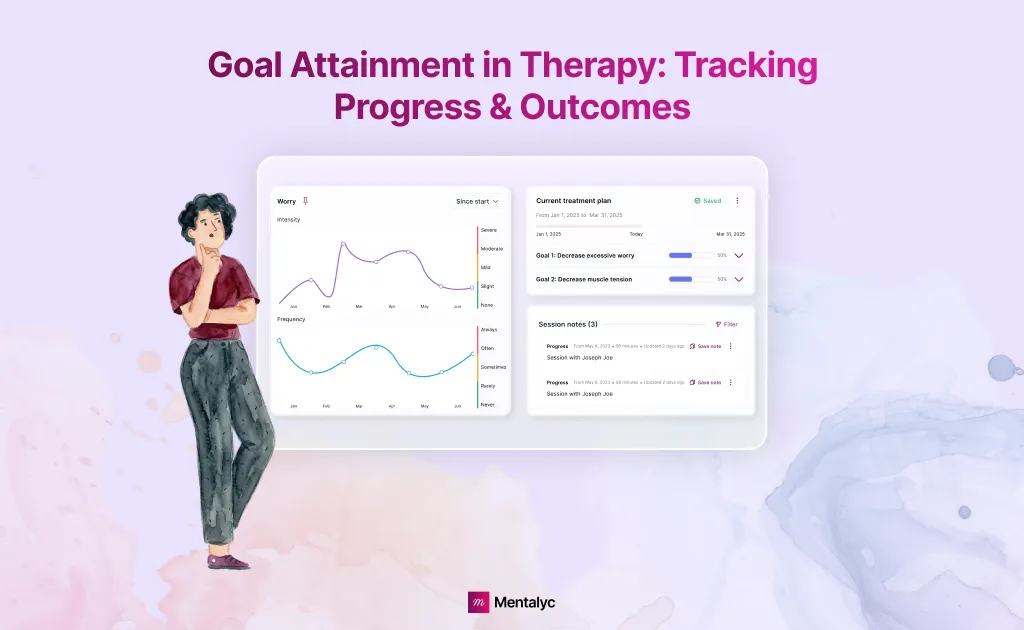
This article explores how therapists make goal attainment in therapy clear and measurable in everyday practice—and how Mentalyc’s Treatment Plan helps translate session work into trackable, goal-focused care across sessions.
What Is Goal Attainment in Therapy?
At its core, goal attainment in therapy refers to the systematic process of defining, measuring, monitoring, and evaluating progress toward therapeutic goals over time. In clinical literature, goal attainment is most commonly formalized through Goal Attainment Scaling (GAS)—a structured, patient-centered method for translating individualized treatment goals into measurable outcomes.
Automated treatment plans that reflect your approach

New! Transfer your notes to EHR with a single click. No more copy-pasting.
Rather than relying solely on symptom checklists or standardized outcome measures, goal attainment focuses on how change is measured against goals that matter to the client—what success looks like for this person, in this context, at this stage of care.
Clinically, goal attainment provides a structured way to measure treatment effectiveness, ensuring progress can be observed, evaluated, and communicated clearly across sessions. Effective goal attainment answers four essential clinical questions:
- What is the client working toward?
- How will we know progress is occurring?
- How is progress changing over time?
- What clinical decisions should follow from that information?
When these questions are answered clearly, therapy becomes more focused, collaborative, and defensible—both clinically and administratively.
Why Goal Attainment Matters Clinically
From a clinical standpoint, goal attainment is not an administrative exercise; it is a therapeutic intervention in itself.
1. It Clarifies the Direction of Therapy
Clear goals reduce drift. They help therapists prioritize interventions, structure sessions, and revisit purpose when treatment feels stuck. For clients, goals offer a shared roadmap that makes therapy feel intentional rather than exploratory without direction.
2. It Strengthens the Therapeutic Alliance
Collaboratively defined goals reinforce autonomy and respect. When clients help define what progress means, therapy goal achievement becomes a shared effort rather than a therapist-driven agenda.
3. It Supports Clinical Decision-Making
Tracking goal progress over time allows therapists to identify when an approach is working, when it needs adjustment, or when a higher level of care should be considered.
4. It Demonstrates Medical Necessity
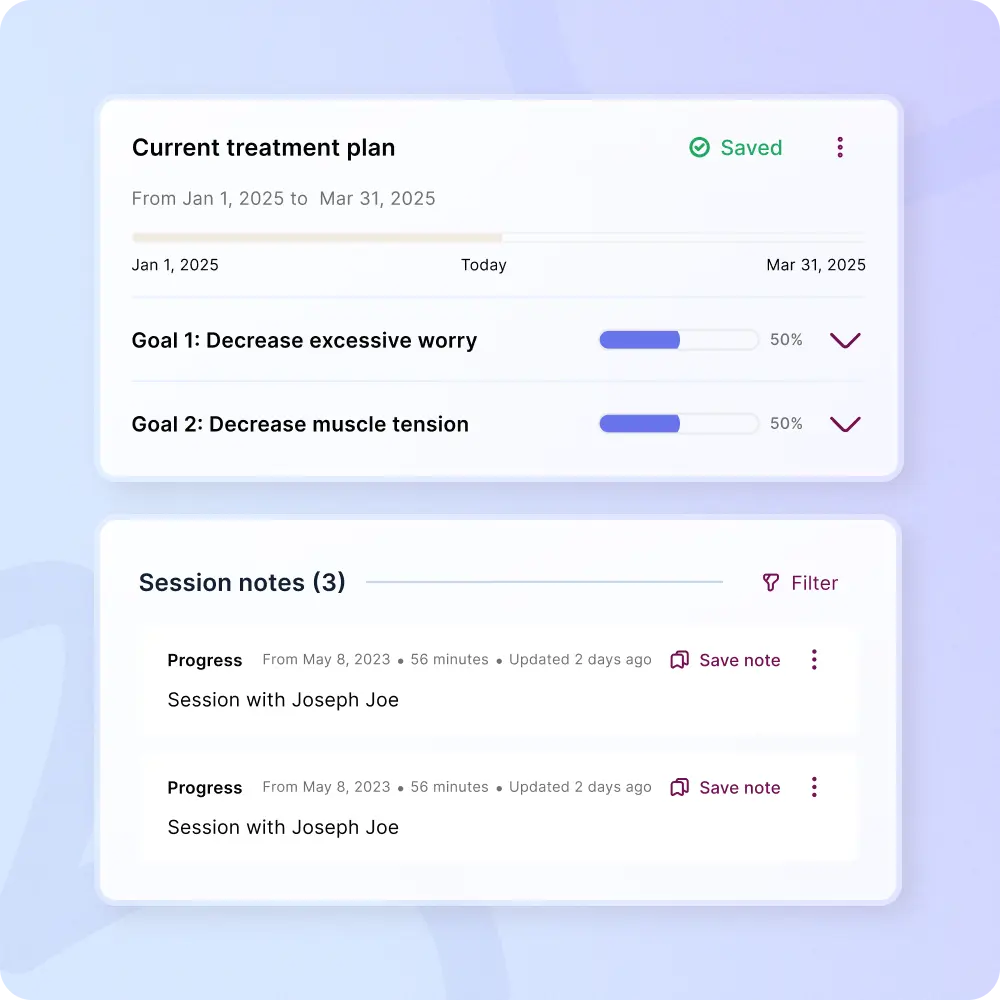
For insurance, audits, and continuity of care, measuring goal progress is essential. Goals that are observable and tracked across sessions help demonstrate treatment effectiveness and ongoing need.
Goal Attainment Scaling (GAS) and Its Role in Therapy
Goal attainment in therapy is often approached through structured frameworks such as Goal Attainment Scaling (GAS). It was developed to solve a core problem in outcome measurement: how to evaluate individualized goals in a standardized way. Rather than forcing clients into generic outcome measures, GAS allows each client’s unique goals to be translated into a quantifiable scale, typically ranging from –2 to +2.
The GAS Scale Explained
For each goal, five outcome levels are defined:
- –2: Much less than expected outcome
- –1: Less than expected outcome
- 0: Expected level of outcome after treatment
- +1: Better than expected outcome
- +2: Much better than expected outcome
The “0” point represents realistic, clinically appropriate expectations—not perfection.
This structure allows therapists to track goal progress indicators while preserving the individuality of each client’s goals.
Key Concepts of Goal Attainment Scaling (GAS)
- Patient-Centered: Goals are defined with the client, ensuring they reflect what is personally meaningful and clinically relevant.
- Individualized: Each goal is tailored to the individual rather than derived from standardized outcome measures.
- Collaborative: Therapist and client agree in advance on what different levels of progress would realistically look like.
- Consistent measurement: A structured five-point scale is used to evaluate progress in a way that allows comparison over time.
How Goal Attainment Scaling Works in Practice
- Goal Selection: Therapist and client collaboratively select a small set of realistic, priority goals for treatment.
- Scaling: Each goal is mapped across clearly described outcome levels, from significantly less progress to better-than-expected improvement.
- Intervention: Interventions are guided by the agreed-upon goals throughout therapy.
- Scoring: At follow-up, current functioning is compared against the predefined outcome levels.
- Analysis: Individual goal ratings are combined to give an overall picture of goal attainment and treatment effectiveness.
GAS Limitations and Clinical Considerations
- Time-Consuming Process: Writing detailed, five-level outcome scales for each goal can be impractical within routine sessions, especially for clinicians managing full caseloads.
- Need for Extensive Clinician Training: Reliable use of GAS requires specific training to avoid common scaling errors, which can limit consistency across clinicians and settings.
- Potential for Bias: Goals or outcome levels may be unintentionally set in ways that favor positive results rather than accurately reflecting change.
- Difficulty with Complex Goals: Abstract or relational goals—such as emotional regulation or interpersonal functioning—are difficult to define in discrete, measurable steps.
- Risk of Patient Demotivation: When expected outcomes are not fully reached, clients may experience discouragement despite meaningful partial progress.
- Methodological Inconsistencies: Variability in how GAS is applied and scored can make outcomes difficult to compare or interpret across contexts.
Measuring Goal Progress in a Sustainable Way
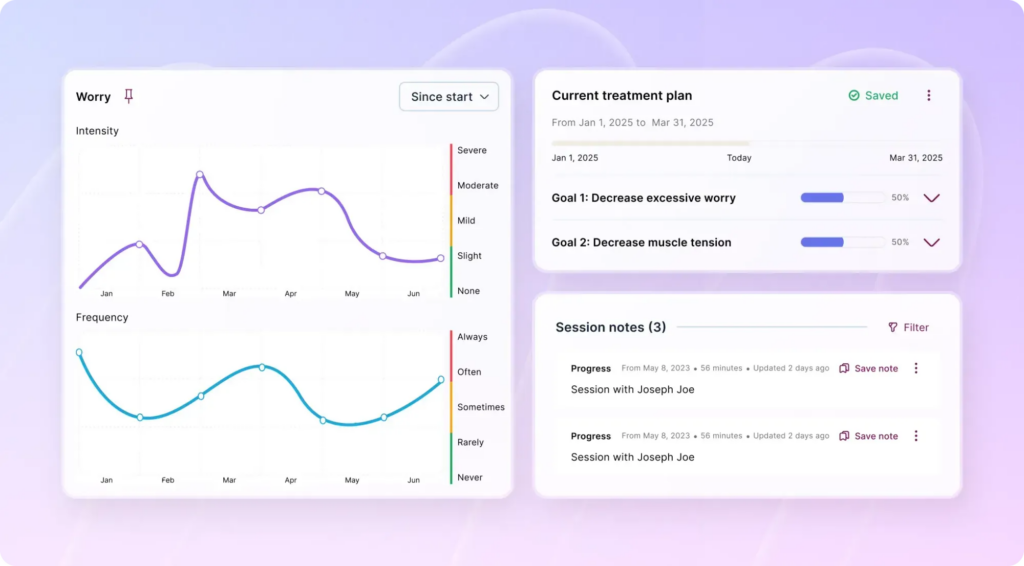
One of the biggest barriers to consistent goal tracking is workflow. Manual systems often break down under time pressure, leading to incomplete or inconsistent documentation. Tools like Mentalyc’s AI Treatment Planner do not replace Goal Attainment Scaling; instead, they operationalize the intent of GAS—continuous, individualized outcome measurement—within the realities of modern clinical workflows.
Automate Treatment planning with Mentalyc’s AI Treatment Planner
Generate treatment plans that mirror your approach, satisfy payors, and evolve with your clients.
- SMART Goals
- Insurance-ready formatting
- Track goals & outcomes
- HIPAA & PHIPA compliant
New! Transfer your notes to EHR with a single click. No more copy-pasting.

How Mentalyc Supports Goal Attainment in Therapy
While Goal Attainment Scaling provides the conceptual framework for individualized outcome measurement, Mentalyc’s AI Treatment Planner functions as the primary goal-attainment tool, with automated progress tracking serving as a continuous measurement layer.
| Feature | Goal Attainment Scaling (GAS) | Mentalyc |
|---|---|---|
| Method | Manual, clinician- and client-led process | Automated, AI-driven analysis of session content |
| Data Input | Structured interviews and manual rating using pre-defined scales | Audio recordings or transcriptions of actual therapy sessions |
| Output | Numerical T-score or raw scores on a 5-point scale | Visual charts of symptom and goal trends over time |
| Timeframe | Time-consuming to set up; scored at intervals (e.g., every few months) | Provides immediate data and continuous tracking |
| Effort | High initial effort for goal/scale definition and ongoing scoring | Minimal extra effort beyond using the core Mentalyc note-taking tool |
Mentalyc supports goal attainment in therapy by addressing the exact gap many clinicians experience between knowing what progress looks like and being able to show it clearly over time. Instead of asking therapists to adopt a separate scoring framework or manual tracking system, Mentalyc embeds goal attainment directly into the documentation workflow therapists already use—session notes.

Turning Session Work Into Clear, Measurable Goals
Mentalyc’s AI Treatment Planner generates goal-focused treatment plans directly from saved session notes. Rather than starting with a blank template, therapists receive SMART, clinically relevant goals that reflect the client’s presenting concerns, diagnosis, and modality. This ensures goals are grounded in real session content, not generic language, and aligned with insurance expectations from the start.
Crucially, therapists remain fully in control. Goals, objectives, and timelines can be edited, refined, or reframed to match clinical judgment and the client’s evolving needs. This approach preserves the core principles of GAS—client-centered goals, predefined expectations, and measurable change—while removing the manual scoring burden that often limits real-world adoption.
Automatic Goal Tracking Across Sessions
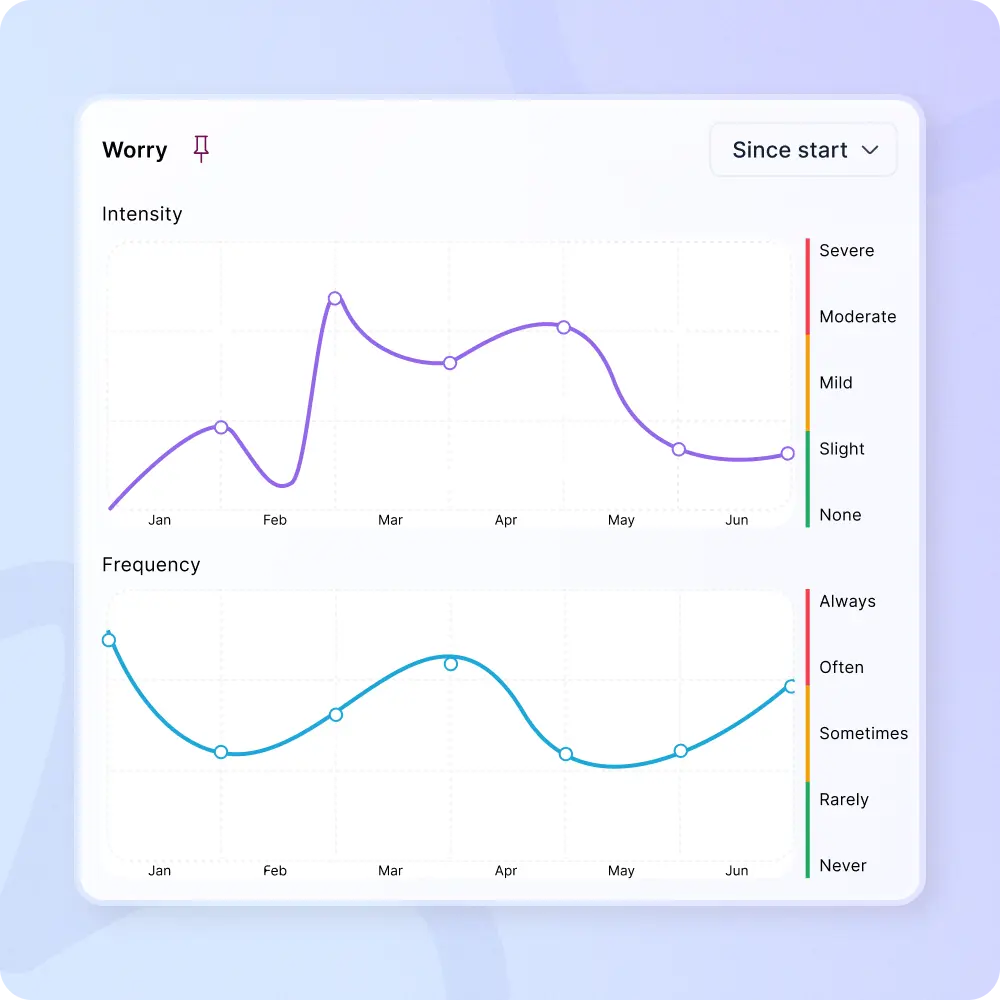
One of Mentalyc’s key differentiators is that goal progress is tracked automatically as therapists continue documenting sessions. As new notes are added, Mentalyc identifies goal-related changes, symptom shifts, and intervention patterns—allowing clinicians to see goal progress over time without manually scoring or updating separate tools.
This makes measuring goal progress continuous rather than episodic. Therapists can quickly understand whether treatment is moving forward, stalling, or needing adjustment—based on actual session data, not retrospective impressions.
Preserving the Golden Thread of Care
Mentalyc is built around maintaining the Golden Thread—the clinical continuity between assessment, goals, interventions, and outcomes. Goals generated in the Treatment Plan remain linked to progress notes and outcome indicators across sessions, reducing drift and improving coherence in long-term or complex cases.
This alignment is especially valuable during treatment reviews, supervision, and insurance audits, where therapists need to clearly demonstrate therapy goal achievement and treatment goal completion over time.
Supporting Clinical Decision-Making, Not Replacing It
Unlike rigid scoring systems, Mentalyc does not force therapists into predefined scales or numeric ratings. Instead, it surfaces goal progress indicators directly from the therapeutic work itself. This preserves clinical nuance while still making outcomes visible, defensible, and easy to communicate to clients.
Therapists can use this visibility to:
- Adjust treatment direction with confidence
- Revisit goals collaboratively with clients
- Highlight therapeutic milestones that might otherwise go unnoticed
- Reduce documentation stress without reducing clinical depth
Designed for Real-World Practice
Mentalyc’s approach reflects how therapy actually unfolds: goals evolve, progress is nonlinear, and meaningful change often appears gradually. By embedding goal attainment into session-based documentation—rather than layering on extra forms or scoring tasks—Mentalyc makes goal tracking sustainable for busy clinicians while remaining clinically rigorous.
In short, Mentalyc supports the intent behind goal attainment frameworks—clarity, collaboration, and measurable outcomes—while removing the friction that often prevents therapists from using them consistently in practice.
Try Mentalyc’s AI Treatment Planner FREE
Conclusion: Making Goal Attainment Visible and Meaningful
Goal attainment in therapy is where intention meets outcome. It transforms therapy from a series of conversations into a coherent process of change that is visible, measurable, and meaningful. Frameworks like Goal Attainment Scaling remind us that progress is not one-size-fits-all.
Modern tools like Mentalyc’s Treatment Plan ensure that this individualized progress can be tracked sustainably—without sacrificing clinical depth or therapist autonomy. When goals are clear, progress is visible, and outcomes are shared, therapy becomes not just effective but demonstrably so.
FAQs: Goal Attainment in Therapy
1. What is goal attainment in therapy, and why does it matter?
Goal attainment in therapy refers to how therapists define, track, and evaluate progress toward client-centered treatment goals over time. It matters because clear, measurable goals help guide clinical decisions, strengthen collaboration with clients, and demonstrate treatment effectiveness in documentation and insurance reviews.
2. How is goal attainment different from symptom tracking alone?
Symptom tracking focuses on changes in frequency or intensity, while goal attainment looks at whether clients are achieving meaningful functional or behavioral outcomes. Goal attainment connects symptom change to real-world improvements, such as coping skills, relational functioning, or daily activities.
3. Do I need to use Goal Attainment Scaling (GAS) to track goal attainment?
No. While GAS is a well-known framework, many therapists find it difficult to maintain alongside routine documentation. Goal attainment can be supported through clear, measurable goals and consistent session-based tracking without formal scoring systems.
4. How does Mentalyc help with tracking therapy goals?
Mentalyc’s Treatment Plan creates measurable goals directly from session notes and automatically tracks progress as new sessions are documented. This allows therapists to monitor goal progress over time without manual scoring, extra forms, or separate tracking tools.
5. Can Mentalyc track goal progress if goals change during treatment?
Yes. Goals in Mentalyc are fully editable and evolve as therapy progresses. As goals are updated, progress tracking continues to reflect the client’s current treatment focus, supporting flexible and responsive care.
6. Does Mentalyc support insurance-compliant goal documentation?
Yes. Mentalyc generates treatment plans with clear, measurable goals and documented progress that align with insurance and audit expectations. Goals, interventions, and outcomes remain connected through the Golden Thread, making medical necessity easier to demonstrate.
7. Will Mentalyc replace my clinical judgment in goal setting or evaluation?
No. Mentalyc supports clinical decision-making but does not replace it. Therapists retain full control over goal language, priorities, and interpretation of progress. The platform simply makes goal attainment clearer, more consistent, and easier to document over time.
Why other mental health professionals love Mentalyc

“If I were recommending this software to a colleague, I would tell them that it is the best thing that they could do for their practice.”
Licensed Professional Counselor

“It immediately changed my quality of life, personally and professionally.”
Owner/Independently Licensed Marriage & Family Therapist (LMFT)

“For anyone hesitant: this is a lifesaver. It will change your life, and you have more time to be present with your patients.”
Licensed Clinical Social Worker

“Do yourself a favor, make your life easier. I found Mentalyc to be one of the best tools that I’ve ever used.”
Licensed Marriage and Family Therapist