


Wellness coaches looking for note-taking tools want one thing: a reliable way to capture session insights, goals, and progress without spending hours documenting after each call. Coaching sessions often cover habits, mindset shifts, accountability, and long-term goals all at once. When notes are scattered or incomplete, it becomes harder to track progress and maintain continuity over time.
The right tool helps coaches stay present while ensuring goals, action steps, and progress are consistently documented.
Below is a ranked list of the best wellness coaching note-taking tools in 2026, evaluated based on coaching fit, ease of use, privacy, progress tracking, and real user feedback.
Ranked List: Best Wellness Coaching Note Takers (2026)
| Tool | Best For | Progress Tracking | Security | Overall Rating |
|---|---|---|---|---|
| Mentalyc | Session notes tailored for coaching | Session-based progress tracking (no questionnaires) | HIPAA + BAA & SOC 2 | A+ |
| Notion | Flexible DIY systems | Limited | Basic | A |
| Profi.io | Client management + notes | Limited | Standard | B+ |
| TheraNest | Hybrid coaching/therapy practices | Form-based | HIPAA | B+ |
| Evernote | Simple personal notes | None | Basic | B |
Features to Look for in a Digital Note Taker for Wellness Coaches
When evaluating a wellness coaching note taker, prioritize capabilities that directly reduce documentation time, keep session insights organized, and support measurable outcomes. The most impactful tools offer features that:
1. Fully Automated Session Summaries & Notes
Look for tools that can generate complete coaching notes from session audio, uploads, or brief written summaries. Rather than requiring full manual writing, these tools transform spoken or typed inputs into structured summaries that include key insights, client commitments, and action steps without heavy editing.
2. Structured Templates Across Coaching Formats
A useful wellness coach note app includes a library of templates that align with real coaching workflows. This might include:
- Standard session summaries
- Multiple coaching formats (e.g., reflective notes, progress notes, summarized goals)
Structured templates help coaches capture essential details consistently, reducing cognitive load and ensuring continuity across sessions.
3. Session-Derived Progress Tracking inside Wellness Coaching Note Taker
Effective documentation tools extract and track client progress directly from session notes. This means coaches can see trends over time without relying on separate questionnaires or external tracking systems. Coaches benefit from progress fields that reflect real session content tied to goals and action steps.
4. Goal Setting & Treatment Planning Support
Coaching success depends on clear goals and actionable next steps. Strong note takers assist coaches by identifying and structuring:
- Client goals and milestones
- Action steps linked to habit change and behavior tracking
- Treatment or coaching plans based on session discussions
This makes progress more measurable and actionable.
5. Insight Analytics from Coaching Conversations
Some advanced tools like Mentalyc identify patterns across sessions, including alliance cues, and shifts in engagement. These insights help coaches refine focus areas and support deeper engagement and accountability.
6. Secure, Privacy-Focused Data Handling
Even when coaching is non-clinical, client trust and confidentiality matter. Look for a note taker that provides:
- Encrypted processing and secure storage
- Clear policies around audio handling and retention
- Data privacy practices designed to protect sensitive information
Secure handling reinforces professional credibility and protects coaching work.
7. Flexible Input Methods
Great tools support multiple ways of creating notes:
- Live session recordings
- Uploading audio files
- Voice-to-text dictation
- Direct typing when needed
Flexible input options let coaches work in ways that fit their style and session format.
8. Minimal Setup and Easy Workflow Integration
A high-value wellness coaching documentation software should require little technical setup and work alongside existing coaching systems without forcing coaches to switch platforms. A simple workflow keeps the tool accessible and reduces administrative friction.
9. Time Savings Without Compromising Quality
Ultimately, the best tools combine efficiency and insight — significantly reducing time spent on notes while preserving clarity, accuracy, and coaching relevance. Coaches should look for systems that turn real conversations into clear, structured documentation that supports client momentum.
1# Mentalyc — Best Wellness Coaching Note Taker in 2026
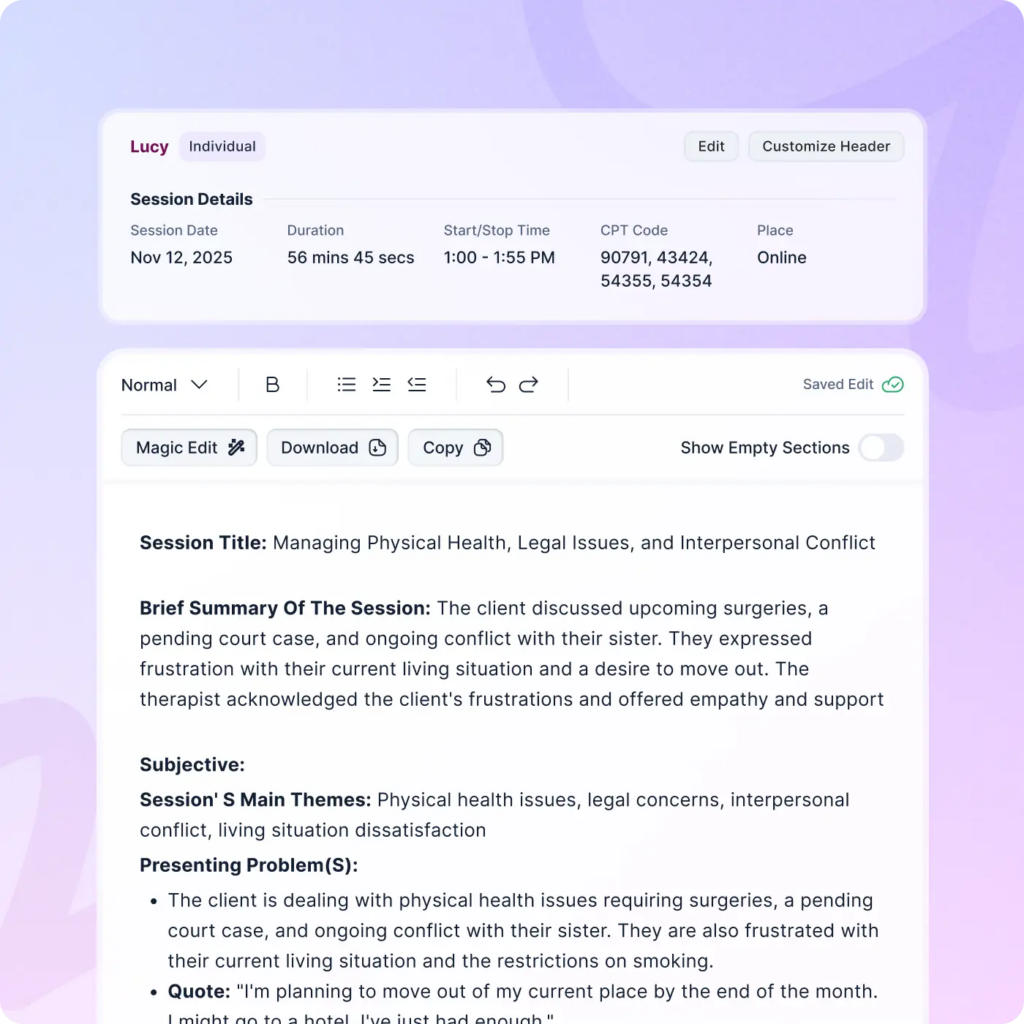
Mentalyc ranks as the best wellness coaching note taker in 2026 for coaches who want to reduce documentation time while maintaining clear session structure and long-term progress tracking.
Mentalyc also stands out for its strong privacy protections, giving wellness coaches confidence that client data is handled securely and responsibly. Unlike generic note-taking apps, Mentalyc is designed around real coaching conversations. It helps transform sessions into structured, coaching-aligned notes that reflect goals and ongoing progress tracking while keeping coaches in control of review and final edits.
Instead of writing summaries from scratch after each session, coaches can draft AI-assisted coaching notes from audio, dictation, or brief written inputs. This supports more consistent documentation across sessions without interrupting coaching flow or active listening.
Why does it work well for wellness coaching?
Coaching outcomes depend on continuity: remembering what changed, what worked, and what the client committed to. Mentalyc supports this by connecting sessions over time and surfacing meaningful insights and changes, not just storing notes.
Key Capabilities for Wellness Coaches
| Capability | How It Supports Wellness Coaching |
|---|---|
| AI Note Taker | Automatically drafts structured session notes from coaching conversations (audio, dictation, or brief summaries), capturing goals discussed, action steps, reflections, and follow-ups for coach review. |
| AI Progress Tracker | Track progress indicators directly from session notes, helping coaches see changes over time without questionnaires or manual tracking. |
| Alliance Insights (Alliance Genie™) | Highlights alliance-related dimensions including engagement, collaboration, therapist responsiveness, and session flow over time. |
| Structured Templates | Provides coaching-aligned note structures for reflection, goal tracking, and progress summaries, keeping documentation consistent. |
| Golden Thread Across Sessions | Links notes, goals, and progress across sessions to preserve continuity of care. |
| Privacy-First Design | Uses secure, encrypted handling of session data; session content is not used to train models and remains under coach control. |
Pros
- Saves time on documentation by drafting structured coaching notes from real conversations
- Keeps sessions focused and present, without interrupting coaching flow
- Tracks goals, actions, and progress over time, making long-term habit and lifestyle change easier to follow
- Maintains continuity of care across sessions by keeping session notes, goals, and progress linked
- Simple to use, with no complex setup or workflow disruption
Cons
- Designed specifically for mental health practitioners (including wellness coaches), not for general medical use or physicians.
Pricing
- Free trial available
- Flexible Monthly Plans
Best for:
Wellness coaches who want consistent session notes, clear goal tracking, and an easy way to follow client progress over time.
Mentalyc’s user feedbacks:
Why other mental health professionals love Mentalyc

“For anyone hesitant: this is a lifesaver. It will change your life, and you have more time to be present with your patients.”
Licensed Clinical Social Worker

“It takes me less than 5 minutes to complete notes … it’s a huge time saver, a huge stress reliever.”
Licensed Marriage and Family Therapist

“By the end of the day, usually by the end of the session, I have my documentation done. I have a thorough, comprehensive note … It’s just saving me hours every week.”
CDCII

“Having Mentalyc take away some of the work from me has allowed me to be more present when I’m in session with clients … it took a lot of pressure off.”
LPC
2# Notion — Flexible Wellness Coaching Notes App
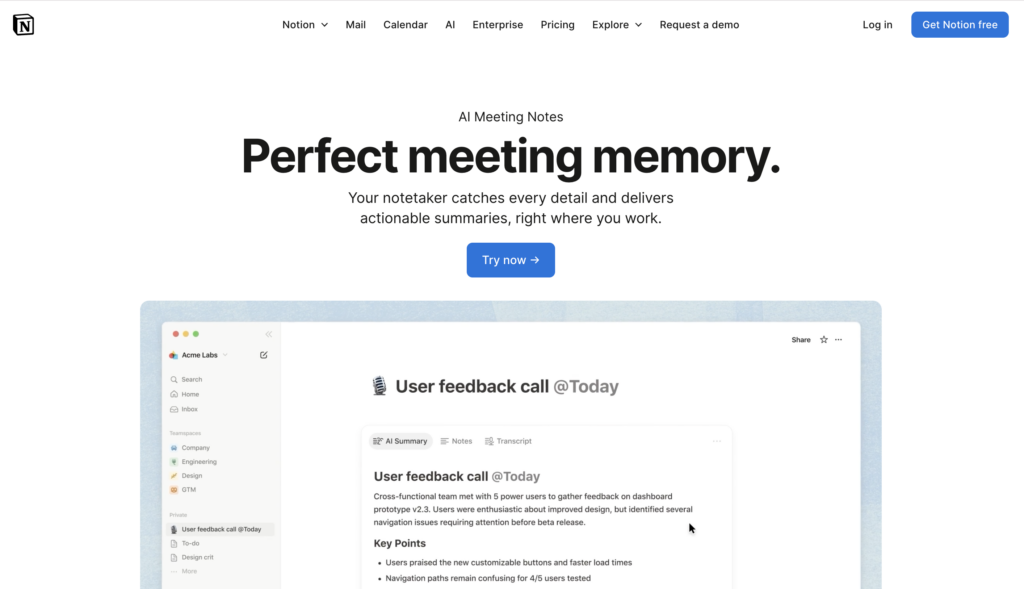
Notion is often chosen by wellness coaches who want full control over how their notes, goals, and session summaries are structured. Its flexibility allows coaches to build custom pages and databases, but many users note that this freedom comes at the cost of time, consistency, and ongoing maintenance. As one reviewer put it:
“It can be a bit of a learning curve to use it to its best potential. You can get lost in creating systems that you don’t really need and that can take a lot of time.” — Candida B. (Coach – Health, Wellness and Fitness)… Via Capterra.
Key Features for Wellness Coaches
- Custom pages for session notes and reflections
- Databases for goals, habits, and client lists
- Tagging and linking across sessions
- Cross-device access (desktop + mobile)
- Flexible templates (manual setup required)
Pricing
- Free plan available
- Paid plans: approx. $8–$15 per user/month
Pros
- Flexible and customizable
- Useful for coaches who like DIY systems
- Works well for personal organization
Cons
- No built-in progress tracking or coaching logic
- Limited privacy or compliance safeguards for client data
Best for:
Coaches who enjoy building and maintaining their own documentation system and don’t need automation.

3# Profi.io — Coaching Platform with Basic Notes

Profi.io is an all-in-one coaching platform that combines scheduling, payments, messaging, and session notes. Coaches appreciate the centralized setup, but many report that documentation capabilities are basic and not designed for deep session reflection or progress tracking. One user noted:
“Also, the record feature is quite limited, all you have for clinical notes is a notepad-like space, very minimal and client information is scattered…” — john T….Via Capterra.
Key Features for Wellness Coaches
- Session notes linked to client profiles
- Intake forms and questionnaires
- Scheduling and payments in one platform
- Program and package management
- Client messaging and file sharing
Pricing
- Starts around $49/month
- Higher tiers for programs and advanced features
Pros
- Secure note-taking
- Integration with Zoom, automated billing, scheduling, and client management.
- Integrated business management
Cons
- No habit, insight, or behavior-change tracking
- Limited flexibility for reflective coaching notes
Best for:
Coaches running packaged programs who need light notes alongside scheduling and billing.
H2: 4# TheraNest — Hybrid Coaching & Therapy Use
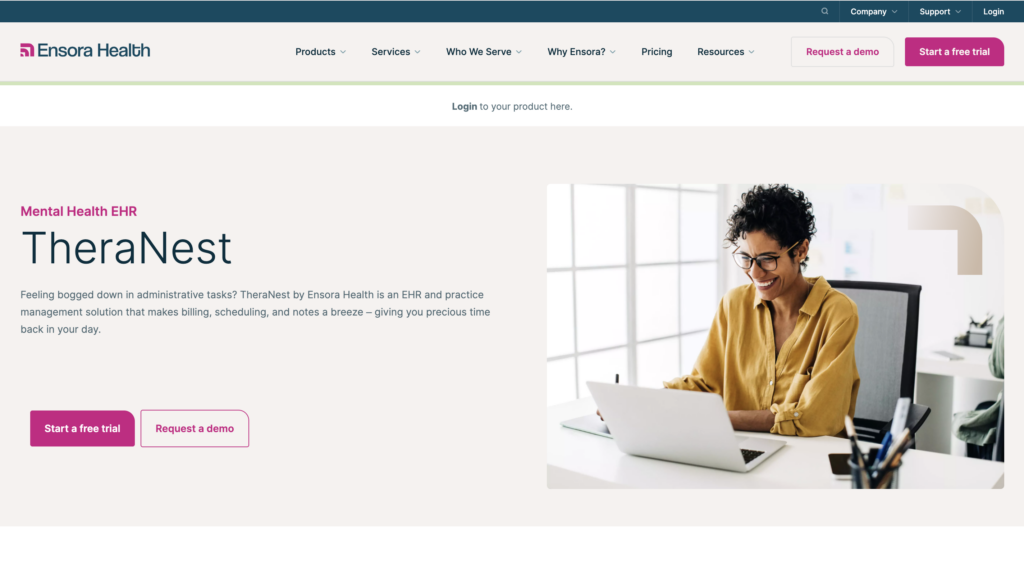
TheraNest is primarily a behavioral health EHR, but some wellness coaches use it when their work overlaps with therapy or clinical settings. While it offers structured templates and strong compliance controls, many users say it feels too complex for coaching-only workflows. A common complaint:
“It is primitive and unnecessarily complicated at times. It is always DAYS until you hear back from a representative when you have a problem or question.” — Sharon H…. via Capterra.
Key Features for Wellness Coaches
- Structured progress note templates
- Scheduling and billing tools
- Client portal and document storage
- HIPAA-aligned infrastructure
- Outcome questionnaires (therapy-focused)
Pricing
Starts around $29–$89/month per clinician
Pros
- Strong compliance posture
- Built-in structure for documentation
- Works for therapy-adjacent coaching
Cons
- Not designed around coaching models
- Rigid templates
- Steep learning curve for non-clinical users
Best for:
Coaches working closely with therapy or clinical documentation requirements.
5# Evernote — Simple but Limited

Evernote is often used by coaches who want a familiar, lightweight wellness coaching note-taking tool. While it works for basic text notes, many users report sync issues, rising costs, and limited usefulness for client-based work. One user stated:
“I use Evernote mostly for external purposes in my role of coaching as well as note-taking with other team projects…The app is pretty clunky and doesn’t seem to integrate well into other software I’m using.” — Stephanie W….Capterra.
Key Features for Wellness Coaches
- Simple text and multimedia notes
- Tags and notebooks for organization
- Cross-device syncing
- Offline access
- Searchable note history
Pricing
- Free limited plan
- Flexible Paid Plans
Pros
- Very easy to use
- Familiar interface
- Quick note capture
Cons
- No coaching-specific structure
- No progress or habit tracking
- Not designed for confidential client documentation
Best for:
Personal notes or very early-stage coaches, not professional wellness coaching workflows.
Final Recommendation: Best Wellness Coaching Note Taker in 2026
If you want the best wellness coaching note taker in 2026, Mentalyc stands out because it:
- Eliminates manual note-writing
- Tracks progress directly from sessions
- Preserves coaching insights over time
- Protects client trust with enterprise-grade security
For coaches serious about clarity, consistency, and long-term client outcomes, Mentalyc is the most complete solution available.
Try Mentalyc for free and simplify your coaching documentation.
H2: FAQs About Wellness Coaching Note Taker in 2026
H3: How to write wellness coaching notes?
Wellness coaching notes should capture the session’s core insights, goals, action steps, client reflections, and progress updates. The focus is on clarity, not volume.
H3: What is a digital note taker for wellness coaches?
A wellness coaching note taker is a system or tool that helps coaches document sessions, track habits, and record insights, goals, and action steps. It keeps coaching conversations organized and supports long term progress.
H3: How do wellness coaches document sessions?
Most coaches document sessions by recording key insights, weekly goals, client reflections, and progress updates. Many now use AI-generated notes to save time and maintain consistency. Tools like Mentalyc help coaches capture accurate summaries without typing manually.
H3: What should be included in wellness coaching progress notes?
Progress notes should include the session summary, client reflections, goals, action steps, lifestyle or habit updates, and the focus for the next session. These elements help maintain continuity and support meaningful change.
H3: Are coaching notes HIPAA compliant?
Not all tools are. Coaches should choose a system that supports HIPAA level privacy to protect client information. Mentalyc provides encrypted and secure note storage that meets these standards.
H3: What is the best template for coaching documentation?
The best template depends on the coach’s modality. Mentalyc supports session summaries and action-step–based formats, and allows coaches to create custom templates (including frameworks like GROW) with automated note generation.
H3: Can you give coaching session documentation examples?
A simple example includes a session summary, the client’s reported progress, challenges faced, insights gained, and the next action steps.
H3: What is the best note taking app for wellness coaches?
The best note taking app for wellness coaches is one that saves time, protects privacy, and organizes insights clearly. Mentalyc offers AI generated notes, encrypted storage, and structured coaching-based templates that support long-term habit change.
H3: Does Mentalyc work for wellness coaches?
Yes. Mentalyc helps wellness coaches reduce documentation time, improve consistency, and track client progress more effectively. It produces clear, complete notes that align with real coaching conversations and long term behavior change.