
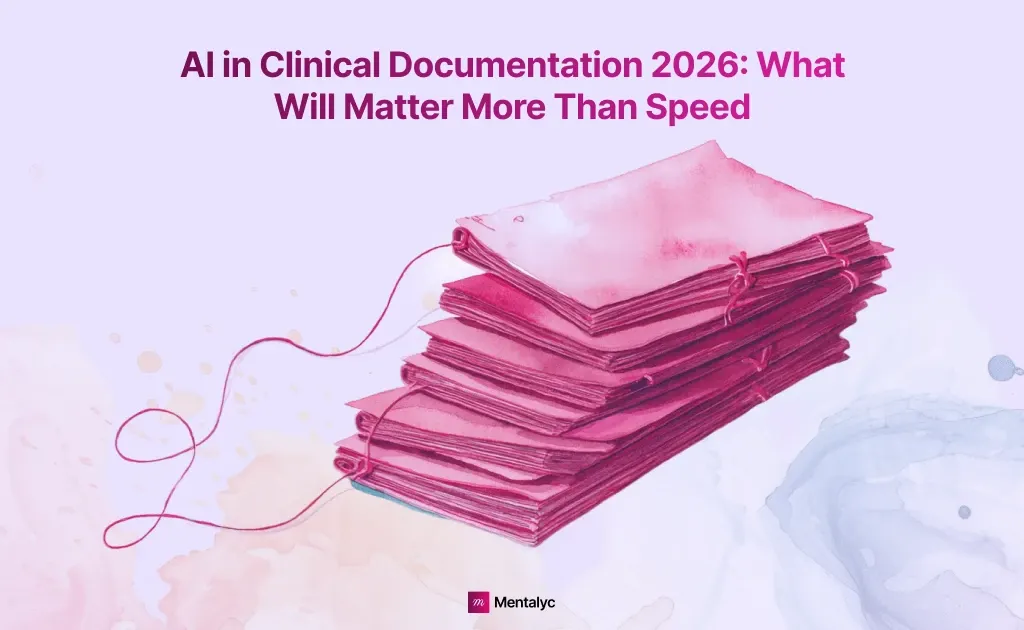
AI documentation tools are starting to deliver on their promise to reduce charting time. A clinical trial at UCLA Health found that clinicians using AI scribes spent less time writing notes and reported modest improvements in burnout and work-related stress. In a system where health professionals often spend two hours on paperwork for every hour of patient care, even small time savings matter.
But the study also highlighted an important limitation. AI-generated notes occasionally contained clinically significant inaccuracies, meaning speed alone does not guarantee safe or reliable documentation. Clinicians still need tools they can trust, not just tools that work faster.
This article explores what will matter more than speed in AI clinical documentation by 2026 – including clinical accuracy, audit readiness, workflow fit, continuity of care, and trust – and why different care settings may require different strengths from AI documentation tools.
The First Wave of AI Documentation: Speed Solved, New Gaps Exposed
The first wave of AI documentation tools focused on one urgent problem: time. Early AI scribes were designed to capture conversations quickly, transcribe accurately, and reduce typing, helping clinicians spend less time charting after sessions. For many providers, this alone made AI documentation feel transformative. But as these tools moved from pilot programs into everyday clinical use, new gaps began to surface.
Turn documentation into insights with Mentalyc

Clinicians noticed that while notes were produced faster, they often existed as isolated records. Progress notes didn’t clearly connect across sessions, making it harder to see patterns, track progress toward treatment goals, or understand how care was evolving over time. For therapists and clinicians working in longitudinal care, this fragmentation created new friction.
At the same time, audit and compliance concerns didn’t disappear. Faster notes still required careful review, and clinicians reported ongoing anxiety about omissions, inconsistencies, or language that might not fully hold up under chart review. In some cases, tools optimized for rapid output prioritized completeness over clinical coherence.
The result was a paradox: documentation became faster, but not necessarily clearer. While AI scribes reduced administrative burden, they didn’t fully address documentation quality, continuity of care, or clinical insight.
What Clinicians Will Prioritize in AI Documentation Tools in 2026
As AI documentation tools become more common, clinicians are no longer choosing between “fast” and “slow.” Instead, they are evaluating tools based on how well they support real clinical work over time. By 2026, several non-speed criteria are emerging as decisive factors in adoption and long-term use.
Clinical correctness & audit readiness
Speed is meaningless if documentation doesn’t hold up under review. Clinicians increasingly expect AI-generated notes to use accurate clinical language, reflect appropriate levels of detail, and remain consistent across sessions. Notes must stand up to payer audits, internal chart reviews, and legal scrutiny without requiring extensive rework. Tools that introduce ambiguity, omissions, or inconsistent terminology quickly lose trust, regardless of how fast they generate drafts.
Workflow fit (not workflow disruption)
Clinicians are moving away from tools that force them to adapt their practice to the software. In 2026, AI documentation tools are expected to fit naturally into existing workflows, supporting how clinicians already work rather than reshaping it. This distinction is especially important across care settings: therapy workflows differ fundamentally from medical workflows, and tools built for one often create friction when applied to the other. Poor workflow fit leads to workarounds, cognitive overload, and eventual abandonment.
Continuity of care
Isolated notes are no longer enough. Clinicians want documentation that helps them see how care evolves over time, not just what happened in a single visit. Tools that connect notes across sessions, align documentation with treatment goals, and make progress easier to interpret support better clinical decision-making. Continuity transforms documentation from a record-keeping task into a meaningful clinical resource.
Trust & explainability
No matter how advanced AI becomes, clinicians remain fully accountable for the care they deliver and the documentation they sign. In 2026, trust in AI documentation tools depends on transparency and explainability. Clinicians need to understand what the AI is producing, why it’s structured a certain way, and where their judgment is required. Tools that support clinician oversight and reinforce professional responsibility are far more likely to earn long-term trust than those that obscure decision-making behind automation.
Why Different Care Settings Need Different AI Documentation Strengths
AI documentation is often discussed as if one solution should work equally well everywhere. In practice, documentation needs vary significantly depending on the type of care being delivered, the pace of clinical work, and the risks clinicians must manage. These differences shape what “good” documentation actually means.
Therapy-focused care
In psychotherapy and other behavioral health settings, care is longitudinal and relational. Progress unfolds gradually across many sessions, often in non-linear ways. Documentation must capture patterns, shifts in symptoms, evolving treatment goals, and changes in the therapeutic relationship over time. For therapists, the value of documentation lies not just in recording what was discussed, but in maintaining continuity, supporting reflection, and making progress visible across weeks or months of care.
Medical and multi-specialty care
In contrast, medical and multi-specialty settings are often episodic and procedural. Documentation must support accurate coding, billing, and regulatory compliance, frequently under high audit pressure. Notes are expected to be precise, complete, and standardized, often across large teams and multiple care environments. In these settings, documentation quality is closely tied to clinical correctness, coding accuracy, and defensibility.
Automate documentation and session analytics with Mentalyc
- HIPAA, PHIPA & SOC2 Compliant
- SOAP, DAP, BIRP, EMDR & more formats
- AI Treatment Planner
- AI Progress Tracker for goals & symptoms tracking
- Alliance insights

Because these care settings operate under different constraints, they place different demands on AI documentation tools. Features that work well in one context may create friction in another. No single AI documentation tool is optimized for every care setting and that’s not a weakness, it’s a design reality.
Recognizing this distinction helps clinicians choose tools that align with their actual practice, and allows AI documentation platforms to specialize responsibly rather than overextend into workflows they weren’t designed to support.
Example: Therapist-First Documentation vs Cross-Specialty Medical Precision
As AI documentation matures, differences in design intent are becoming easier to spot. Some platforms are built specifically for psychotherapy workflows, while others are designed to support documentation across therapy and broader medical care. Both approaches solve real problems, just for different clinical realities.
Mentalyc – Best for therapist-first documentation and continuity of care
| Tool | Accuracy / Speed | Compliance | Templates | Ideal Use |
|---|---|---|---|---|
| AI note taker by Mentalyc | High accuracy, fast drafts | HIPAA + BAA, SOC 2 compliant | SOAP, DAP, GIRP, BIRP, PIRP, SIRP, PIE, custom | Therapists who want clinically sound AI progress notes designed for psychotherapy workflows with treatment planning and progress tracking across sessions |
Mentalyc represents a therapist-first approach to AI documentation. It is designed specifically around psychotherapy workflows, where care is longitudinal, relational, and goal-driven. In this context, documentation needs to support continuity – not just capture a single encounter.
Mentalyc generates clinically sound, insurance-ready progress notes using standard therapy formats, while also supporting treatment planning and session-based progress tracking. By connecting notes to treatment goals and progress across sessions – without requiring additional forms or outcome surveys – it helps therapists maintain a clear view of how care is evolving over time.
Best for: Therapists who need AI progress notes that align closely with psychotherapy workflows and make treatment direction and progress easy to understand across sessions.
S10.ai – Best for clinically precise documentation across medical care
S10.AI takes a cross-specialty, medical-grade approach to AI documentation. It is designed to support both therapy and broader medical documentation needs, where clinical correctness, coding accuracy, and audit readiness are critical across care settings.

As a clinician-first AI documentation platform, S10.AI delivers insurance-ready, clinically precise notes while supporting a wide range of documentation formats, including SOAP, H&P, and therapy-specific templates. With 99%+ accuracy, real-time ICD-10 and CPT coding, and true EHR-agnostic compatibility, it is built for providers who need flexibility across specialties without compromising accuracy or compliance.
Best for: Therapists and clinicians who work across therapy and medical workflows and prioritize clinical precision, audit safety, and EHR flexibility beyond speed alone.
| Tool | Accuracy / Speed | Compliance | Templates | Ideal Use |
|---|---|---|---|---|
| AI medical scribe by S10.ai | 99%+ accuracy, real-time drafts | HIPAA, GDPR, PIPEDA, ISO 27001 | SOAP, H&P, therapy and specialty-specific, custom | Clinicians who need clinically accurate documentation with medical-grade precision and EHR flexibility across care settings |
Conclusion – The Future of AI Documentation Is Clinical, Not Just Fast
As AI documentation becomes faster and more consistent, the definition of “better notes” is changing. Clinical notes are no longer just static records of what happened in a single session. They are increasingly used as inputs into clinical decision-making, shaping how clinicians understand progress, adjust treatment, and plan next steps.
What matters now is continuity. Notes need to align with treatment goals and outcomes, connect meaningfully across sessions, and tell a coherent clinical story over time. When documentation supports this alignment, it becomes more than a compliance requirement. It becomes a tool that helps clinicians stay oriented, make confident decisions, and deliver more consistent care. What will differentiate tools in 2026 is their ability to support clinical correctness, continuity of care, and trust; the elements that determine whether documentation truly helps or quietly adds risk.
FAQs about AI in Clinical Documentation
Why other mental health professionals love Mentalyc

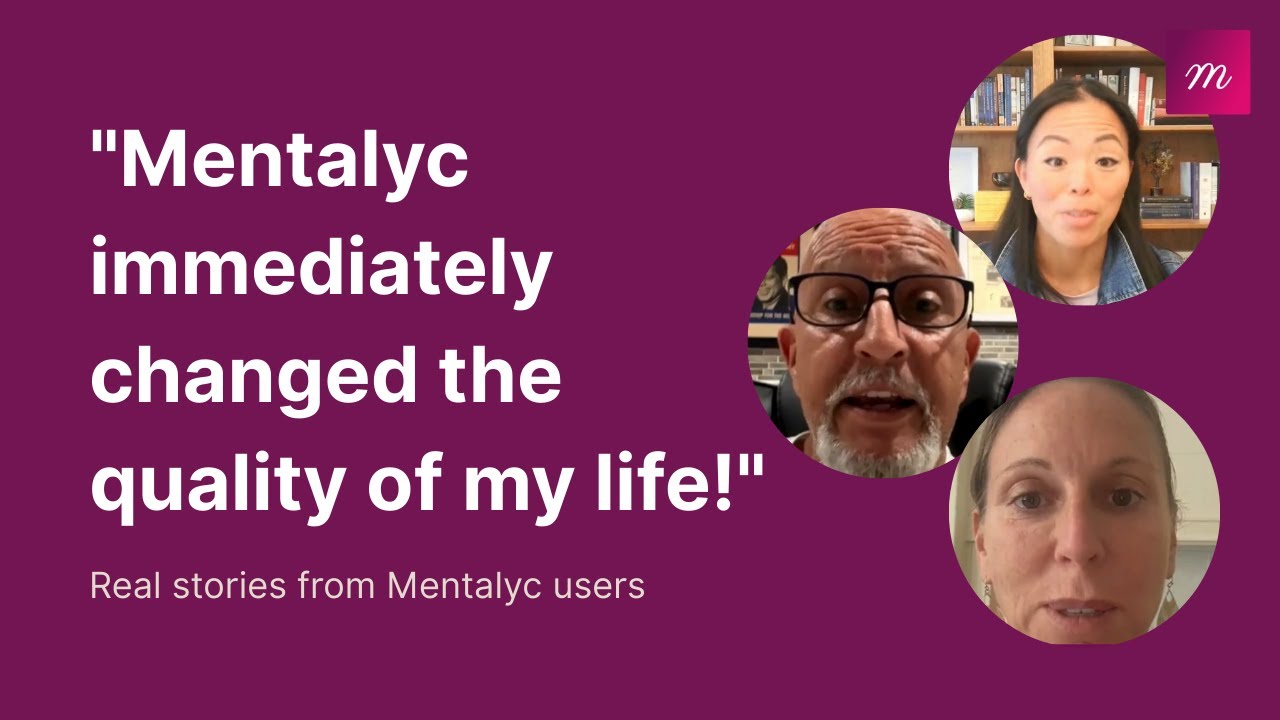
“It immediately changed my quality of life, personally and professionally.”
Owner/Independently Licensed Marriage & Family Therapist (LMFT)

“For anyone hesitant: this is a lifesaver. It will change your life, and you have more time to be present with your patients.”
Licensed Clinical Social Worker

“Do yourself a favor, make your life easier. I found Mentalyc to be one of the best tools that I’ve ever used.”
Licensed Marriage and Family Therapist

“If I were recommending this software to a colleague, I would tell them that it is the best thing that they could do for their practice.”
Licensed Professional Counselor