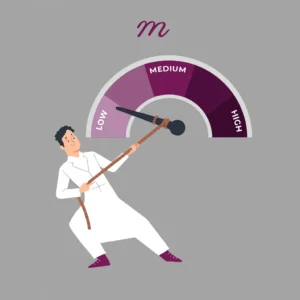


We’ve all been there. Your heart starts racing as you think about having to give a presentation in front of the class. Or maybe the idea of making small talk at a party makes you break out in a cold sweat!
Where the anxiety is generalised rather than social, a clinician-rated measure suits better. The Hamilton Anxiety Rating Scale covers both psychological and physical symptoms.
Social anxiety is something most people can relate to on some level. But for some, the fear of being negatively judged in social situations can become completely debilitating.
I remember what it was like in the worst of my social anxiety. Even a casual conversation would leave me exhausted for hours afterward as my mind replayed every word trying to find what I said wrong. Avoiding social events at all costs soon became the norm, which only made me feel more isolated. It wasn’t until I started opening up to close friends that I realized just how much this was impacting my life.

If left unchecked, occasional social anxiety can develop into a full-blown disorder such like social anxiety disorder (SAD) and avoidant personality disorder (APD).
But really, let’s make a deal first: social anxiety exists on a spectrum. We all have a natural range of confidence in social settings that can fluctuate depending on the situation or our mood.
The challenge is distinguishing a normal human fear from an abnormal one that’s negatively impacting your happiness and relationships.
For clinicians working with tools like the SIAS, documentation and structured assessment tracking are essential. Many professionals now use tools like Mentalyc’s AI Note Taker to capture assessment discussions accurately and efficiently during sessions. When SIAS results inform goal-setting, the AI Treatment Planner can help translate elevated scores into measurable, personalized treatment objectives aligned with CBT or exposure-based interventions.
As treatment progresses, tools like the AI Progress Tracker can monitor shifts in SIAS scores over time, making symptom reduction easier to visualize and discuss collaboratively.
What is the Social Interaction Anxiety Scale (SIAS)?
The SIAS was created to address a gap in tools available for psychologists and mental health professionals to evaluate social anxiety and it was designed based on the understanding that social anxiety can occur in two main types of environments:
- those involving direct interaction with others like starting a conversation
- those where one is watched or judged by others such as giving a speech.
Each scenario requires different skills and an individual may feel anxious in one or both.
The SIAS aimed to specifically measure anxiety related to social interaction. It contains 20 statements rated on a 5-point system regarding how characteristic they are of the person.
Evaluation of the scale found it demonstrated strong reliability over time, with scores remaining consistent.
Research also linked SIAS responses positively to other validated anxiety measures. Additionally, concurrent diagnoses of mood or panic disorders did not impact SIAS results among clinically socially anxious patients. The GAD-7 is the widely used general-anxiety companion for adults – seven items, one to two minutes, and a severity score that a social-interaction measure does not give you.
The SIAS has proven useful in monitoring the severity of social interaction anxiety symptoms longitudinally. Assessing individuals at multiple time points with the SIAS allows clinicians to gauge changes in social anxiety levels over the course of treatment or lack thereof. Acting on each result rather than filing it is what turns repeat administration into measurement-based care.
It can also provide valuable input as part of a thorough clinical evaluation to determine whether diagnostic criteria are met for disorders involving anxious distress. This makes it a helpful resource for clinicians in diagnosis and tracking treatment outcomes. For clients whose anxiety is not primarily social, a clinician-administered measure carries further: the Hamilton Anxiety Rating Scale (HAM-A) rates fourteen psychological and somatic items through a structured interview.
| Mattick and J.C. Clarke/Behaviour Research and Therapy 36 (1998) | |
|---|---|
| Total Number of Questions | 20 |
| Administration Method | self-report |
| Age Range | adult: 13 years and above |
| Language | English |
| Estimated Time | 5 minutes |
The Social Interaction Anxiety Scale (SIAS)
Instructions:
For each statement below, please rate the degree to which you feel it accurately describes your typical thoughts, feelings, or behaviors when interacting with others socially. Consider how characteristic each statement is of you on a scale from 1 to 5:
1 – Not at all characteristic or true of me 2 – Slightly characteristic of me 3 – Moderately characteristic of me 4 – Very characteristic of me 5 – Extremely characteristic of me
| 1. I get nervous if I have to speak with someone in authority (teacher, boss, etc.). | Score | Description |
|---|---|---|
| 0 | Not at all characteristic or true of me | |
| 1 | Slightly characteristic or true of me | |
| 2 | Moderately characteristic or true of me | |
| 3 | Very characteristic or true of me | |
| 4 | Extremely characteristic or true of me | |
| 2. I have difficulty making eye contact with others. | ||
| 0 | Not at all characteristic or true of me | |
| 1 | Slightly characteristic or true of me | |
| 2 | Moderately characteristic or true of me | |
| 3 | Very characteristic or true of me | |
| 4 | Extremely characteristic or true of me | |
| 3. I become tense if I have to talk about myself or my feelings. | ||
| 0 | Not at all characteristic or true of me | |
| 1 | Slightly characteristic or true of me | |
| 2 | Moderately characteristic or true of me | |
| 3 | Very characteristic or true of me | |
| 4 | Extremely characteristic or true of me | |
| 4. I find it difficult to mix comfortably with the people I work with. | ||
| 0 | Not at all characteristic or true of me | |
| 1 | Slightly characteristic or true of me | |
| 2 | Moderately characteristic or true of me | |
| 3 | Very characteristic or true of me | |
| 4 | Extremely characteristic or true of me | |
| 5. I find it easy to make friends my own age. | ||
| 0 | Not at all characteristic or true of me | |
| 1 | Slightly characteristic or true of me | |
| 2 | Moderately characteristic or true of me | |
| 3 | Very characteristic or true of me | |
| 4 | Extremely characteristic or true of me | |
| 6. I tense up if I meet an acquaintance in the street. | ||
| 0 | Not at all characteristic or true of me | |
| 1 | Slightly characteristic or true of me | |
| 2 | Moderately characteristic or true of me | |
| 3 | Very characteristic or true of me | |
| 4 | Extremely characteristic or true of me | |
| 7. When mixing socially, I am uncomfortable. | ||
| 0 | Not at all characteristic or true of me | |
| 1 | Slightly characteristic or true of me | |
| 2 | Moderately characteristic or true of me | |
| 3 | Very characteristic or true of me | |
| 4 | Extremely characteristic or true of me | |
| 8. I feel tense if I am alone with just one other person. | ||
| 0 | Not at all characteristic or true of me | |
| 1 | Slightly characteristic or true of me | |
| 2 | Moderately characteristic or true of me | |
| 3 | Very characteristic or true of me | |
| 4 | Extremely characteristic or true of me | |
| 9. I am at ease meeting people at parties, etc. | ||
| 0 | Not at all characteristic or true of me | |
| 1 | Slightly characteristic or true of me | |
| 2 | Moderately characteristic or true of me | |
| 3 | Very characteristic or true of me | |
| 4 | Extremely characteristic or true of me | |
| 10. I have difficulty talking with other people. | ||
| 0 | Not at all characteristic or true of me | |
| 1 | Slightly characteristic or true of me | |
| 2 | Moderately characteristic or true of me | |
| 3 | Very characteristic or true of me | |
| 4 | Extremely characteristic or true of me | |
| 11. I find it easy to think of things to talk about. | ||
| 0 | Not at all characteristic or true of me | |
| 1 | Slightly characteristic or true of me | |
| 2 | Moderately characteristic or true of me | |
| 3 | Very characteristic or true of me | |
| 4 | Extremely characteristic or true of me |
| 0 | Not at all characteristic or true of me | |
| 1 | Slightly characteristic or true of me | |
| 2 | Moderately characteristic or true of me | |
| 3 | Very characteristic or true of me | |
| 4 | Extremely characteristic or true of me | |
| 13. I find it difficult to disagree with another’s point of view. | ||
| 0 | Not at all characteristic or true of me | |
| 1 | Slightly characteristic or true of me | |
| 2 | Moderately characteristic or true of me | |
| 3 | Very characteristic or true of me | |
| 4 | Extremely characteristic or true of me | |
| 14. I have difficulty talking to attractive persons of the opposite sex. | . | |
| 0 | Not at all characteristic or true of me | |
| 1 | Slightly characteristic or true of me | |
| 2 | Moderately characteristic or true of me | |
| 3 | Very characteristic or true of me | |
| 4 | Extremely characteristic or true of me | |
| 15. I find myself worrying that I won’t know what to say in social situations. | ||
| 0 | Not at all characteristic or true of me | |
| 1 | Slightly characteristic or true of me | |
| 2 | Moderately characteristic or true of me | |
| 3 | Very characteristic or true of me | |
| 4 | Extremely characteristic or true of me | |
| 16. I am nervous mixing with people I don’t know well. | ||
| 0 | Not at all characteristic or true of me | |
| 1 | Slightly characteristic or true of me | |
| 2 | Moderately characteristic or true of me | |
| 3 | Very characteristic or true of me | |
| 4 | Extremely characteristic or true of me | |
| 17. I feel I’ll say something embarrassing when talking. | ||
| 0 | Not at all characteristic or true of me | |
| 1 | Slightly characteristic or true of me | |
| 2 | Moderately characteristic or true of me | |
| 3 | Very characteristic or true of me | |
| 4 | Extremely characteristic or true of me | |
| 18. When mixing in a group, I find myself worrying I will be ignored. | ||
| 0 | Not at all characteristic or true of me | |
| 1 | Slightly characteristic or true of me | |
| 2 | Moderately characteristic or true of me | |
| 3 | Very characteristic or true of me | |
| 4 | Extremely characteristic or true of me | |
| 19. I am tense mixing in a group. | ||
| 0 | Not at all characteristic or true of me | |
| 1 | Slightly characteristic or true of me | |
| 2 | Moderately characteristic or true of me | |
| 3 | Very characteristic or true of me | |
| 4 | Extremely characteristic or true of me | |
| 20. I am unsure whether to greet someone I know only slightly. | ||
| 0 | Not at all characteristic or true of me | |
| 1 | Slightly characteristic or true of me | |
| 2 | Moderately characteristic or true of me | |
| 3 | Very characteristic or true of me | |
| 4 | Extremely characteristic or true of me |
Scoring and Interpretation
To calculate your score:
- Measure progress over time
- Symptoms tracking
- Goals tracking
- DSM-5 & ICD-10 ready


Assign yourself 0-4 points for each of the 20 items, based on the rating you selected. For items 5, 9, and 11 only, reverse the points so that:
Other clinician-rated scales use the same severity banding. The Yale-Brown Obsessive Compulsive Scale scores OCD the same way.
- 0 points = 4
- 1 point = 3
- 2 points = 2
- 3 points = 1
- 4 points = 0
Add up all the points from the 20 items. The maximum score is 80.

In terms of interpretation:
- A score of 43 or higher indicates significant social anxiety across many situations
- A score between 34-42 suggests social anxiety specific to certain contexts
Always remember to bring your completed scale to our appointment. We can use your results along with our discussion to develop an effective treatment plan tailored to your needs and goals.
Finally, A Note from Mentalyc
Here are some important notes about using and interpreting the SIAS:
- The scale relies solely on self-reported symptoms, so it’s important to discuss responses with the client directly.
- A clinician should verify the client’s understanding of each item and response options. Some clarification may be needed depending on the individual.
- Scores alone do not constitute a formal diagnosis. The SIAS provides supplementary information to the clinical interview process.
- Other relevant factors must be considered comprehensively before determining if diagnostic criteria are fully met. This includes ruling out any misinterpretation of scale items.
- Social anxiety presentations can vary, so not all clients will neatly fit proposed cutoff scores. Clinical judgment based on the full picture is paramount.
- Revisiting the client’s experience completing the SIAS can offer insight into anxieties to target and inform the most suitable treatment approach.
References
Mattick, R., and C. Clarke. 1998. Development and Validation of Measure of Social Phobia Scrutiny Fear and Social Interaction Anxiety. Behavior Research and Therapy 36:4.

“I go back and can read the notes, and it really helps me for the next session. It has made me a much better counselor.”
Licensed Professional Counselor

“It improves the quality of my work as I review my sessions … I bring a sense of continuity from session to session because of the really good summary and progress notes that Mentalyc gives me.”
Licensed Marriage and Family Therapist

“I benefit tremendously every time I wrap up a session and then a few minutes later, I have this AI note. It makes me a better clinician in a variety of ways.”
LPC

“It helps align the note and the plan for moving forward with sessions … it’s been a really good aid in giving me direction.”
LPC