


Setting up a counseling business from home lets you build a practice that fits your life whether you’re offering telehealth sessions, seeing clients in person, or balancing both. With lower overhead and flexible hours, it’s an appealing path for many therapists starting or expanding their private practice.
In this step-by-step guide, we’ll cover everything you need to launch and manage a home-based counseling business: from legal setup and marketing to workflow tools that keep your sessions organized and compliant.
Running a therapy practice comes with a lot of small challenges especially keeping up with notes and tracking client progress. Mentalyc helps by organizing your documentation and offering helpful insights through Alliance Genie™, so you can spend more time focusing on your clients instead of paperwork.
Legal and Business Setup Checklist for Home-Based Counselors
| Step | Description | Why It’s Important |
|---|---|---|
| Choose a Business Structure | Decide between sole proprietorship, LLC, partnership, or corporation. | Impacts taxes, liability, and business protection. |
| Complete Business Registration | Register your business name and entity with state authorities. | Establishes legal recognition and protects your brand. |
| Obtain Counselor License | Verify counselor licensing requirements in your state or region. | Ensures legal compliance and professional credibility. |
| Get an Employer Identification Number (EIN) | Apply through the IRS if hiring staff or operating beyond a sole proprietorship. | Required for taxes, payroll, and business banking. |
| Secure Necessary Permits and Certifications | Check local and state requirements for home-based therapy practices. | Avoids fines and maintains ethical standards. |
| Open a Business Bank Account | Separate personal and business finances. | Improves record-keeping and financial transparency. |
| Review Legal and Ethical Obligations | Follow confidentiality, HIPAA compliance checklist, and professional codes. | Protects client data and maintains trust. |
| Draft a Counseling Practice Business Plan | Outline goals, marketing, and operations. | Provides direction for sustainable practice growth. |
| Set Up Accounting and Tax Systems | Use accounting software or hire a professional. | Ensures compliance and simplifies tax filing. |
| Create a Professional Online Presence | Build a website, and list services clearly. | Essential for attracting clients and online visibility. |
Create a Business Plan for Your Counseling Practice
Your business plan is essentially an outline for your counseling practice. It should include all the details of your business, such as:
Turn documentation into insights with Mentalyc

New! Transfer your notes to EHR with a single click. No more copy-pasting.
- your mission statement.
- your ideal client.
- a summary of the services you offer.
- your marketing plan.
- financial, legal, and other logistical practice concerns.
To understand the regulations within your state, meet with an attorney to discuss the regulatory requirements that may affect your home-based counseling practice.
Legally Set Up Your Business
Registering your business is an important step in establishing your practice and ensuring its legal and professional status. Consult with an attorney or seek guidance from professional counseling associations or regulatory bodies to ensure you fulfill all the necessary legal requirements for counseling practice specific to your business.
Consider the following:
Business Structure and Registration
Determine the appropriate legal structure for your counseling business, such as a sole proprietorship, partnership, limited liability company (LLC), or corporation. Each structure has its own legal and tax implications, so consult with an attorney or a tax professional to understand the best option. Business registration for therapists may involve filing registration documents, paying fees, and obtaining permits or licenses.
Employer Identification Number (EIN)
If you plan to have employees or operate your counseling practice as anything other than a sole proprietorship, request an Employer Identification Number (EIN) from the Internal Revenue Service (IRS).
Register Your Business Name
Choose a distinctive name for your practice, and check whether the name is available in your state by reviewing your state’s business directory or conducting a name search through the Secretary of State’s office.
Insurance Provider Considerations
If you plan to accept insurance, request a National Provider Identifier (NPI) from the National Plan and Provider Enumeration System (NPPES). This unique identification number is used for billing and claims purposes, and it allows your clients to submit insurance claims for reimbursement.
Additionally, decide whether you want to become an in-network provider with specific insurance companies or operate as an out-of-network provider. Paneling with insurance companies involves additional paperwork and contracts, while being an out-of-network provider allows you to set your own fees.
Legal and Regulatory Compliance
Understand and adhere to the ethical guidelines and standards of your profession, maintain client confidentiality, and keep accurate and secure records.
Open a Business Bank Account
When choosing a bank for your practice, consider fees, accessibility, online banking capabilities, and the availability of additional financial services, such as lines of credit. A business bank account is beneficial for the following reasons:
Financial Separation
By opening a dedicated business bank account, you create a clear separation between your personal and business finances – essential for accurate record-keeping and financial management.
Professional Image
Maintaining a separate business bank account adds credibility and professionalism to your practice. It reinforces the legitimacy and integrity of your services.
Tax Compliance
Your tax obligations are streamlined when you have a clear record of your business income and expenses.
Get the Right Insurance for Your Counseling Business
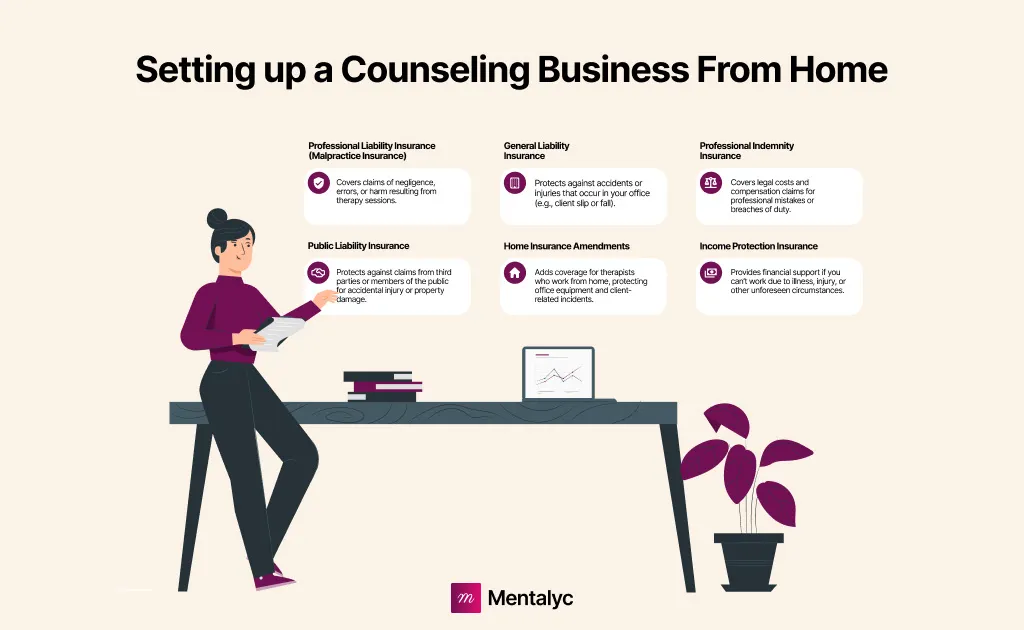
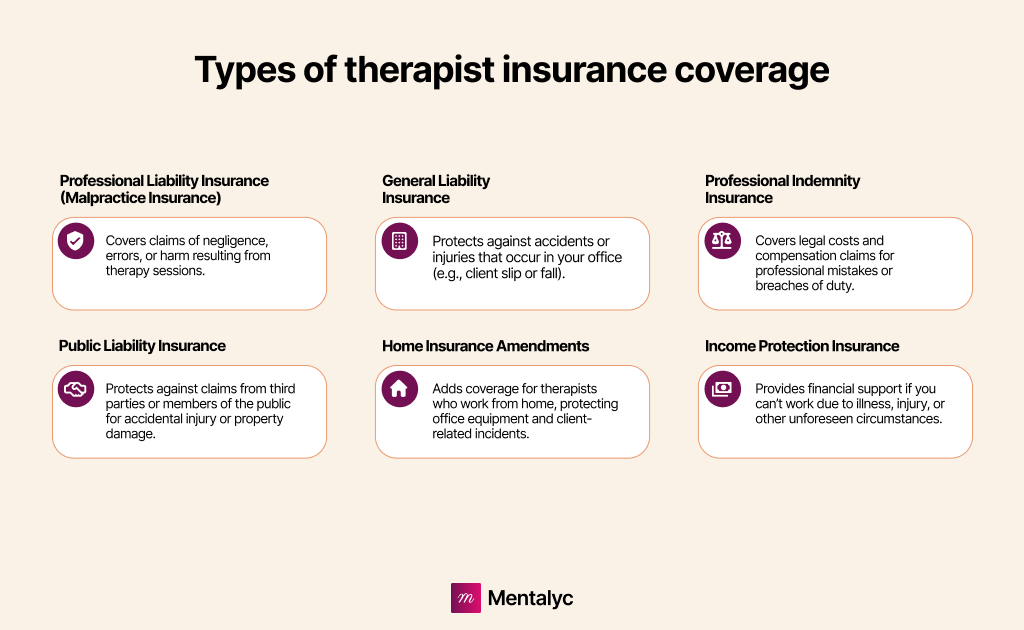
It’s essential to protect yourself and your home-based practice from potential risks and liabilities. Obtaining the appropriate insurance coverage helps safeguard your practice and provides peace of mind. Here are the different types of insurance you may consider:
Automate documentation and session analytics with Mentalyc
From intake to progress and treatment planning — automated, and aligned with your clinical style.
- HIPAA, PHIPA & SOC2 Compliant
- SOAP, DAP, BIRP, EMDR & more formats
- AI Treatment Planner
- AI Progress Tracker for goals & symptoms tracking
- Alliance insights
New! Transfer your notes to EHR with a single click. No more copy-pasting.

| Type of Insurance | What It Covers | Why It’s Essential |
|---|---|---|
| Professional Liability Insurance (Malpractice Insurance) | Covers claims of negligence, errors, or omissions in therapy. | Protects your Therapy Business from legal costs related to professional disputes. |
| General Liability Insurance | Covers bodily injury or property damage on your premises. | Protects against lawsuits from accidents or client injuries at your home office. |
| Professional Indemnity Insurance | Covers financial losses or claims arising from professional advice. | Useful if offering coaching, consultation, or expert services. |
| Public Liability Insurance | Covers claims arising from off-site client interactions | Ideal for those offering in-home or community-based therapy. |
| Home Insurance Amendments | Protects home office equipment and workspace. | Ensures your insurance covers business-related activities. |
| Income Protection Insurance | Provides income if illness or injury prevents you from working. | Maintains financial stability during unexpected downtime. |
Set Up a Professional Home Office for Counseling
Creating a dedicated and comfortable workspace within your home is crucial for a successful home-based counseling business. Here are some important aspects to consider:
Choose the Appropriate Space
Ideally, your home office space is a quiet area that provides privacy and minimal distractions. Consider dedicating a specific room solely for your practice. Choose a room with a door that can be closed during sessions.
Create a Calming Atmosphere
Choose soft, neutral colors to create a calming environment. Incorporate artwork, plants, or soothing lighting to enhance the atmosphere. Additionally, ensure that the room is well-ventilated and at a comfortable temperature.
a) Invest in Quality Furniture. Invest in comfortable and ergonomic furniture. Start with a desk and chair that promote good posture and provide adequate support. Look for adjustable options that can accommodate clients of different heights and body types.
b) Ensure Adequate Lighting. Proper lighting creates a welcoming and uplifting environment. Natural light is ideal, so, if possible, choose a room in your home that allows ample sunlight. If natural light is limited, supplement it with soft, warm-toned artificial lighting. Avoid harsh fluorescent lights, as they create a clinical and unwelcoming atmosphere.
c) Acoustics and Soundproofing. Ensure your office has minimal noise interference. Thick curtains, carpets, or soundproofing materials can help absorb excess noise and create a more serene environment.
d) Privacy and Confidentiality. Ensure that your home office provides a secure space for your sessions. Install a lock on your office door to prevent unwanted interruptions. Use a white noise machine or play soft background music so conversations cannot be overheard. Make sure shared living spaces, such as kitchen or bathroom areas, are located away from your office.
f) Ensure Accessibility: To comply with the Americans with Disabilities Act (ADA), remove barriers that would prevent clients with disabilities from accessing your home office. Private counseling practices, including telemental health businesses, must apply ADA compliance to websites, making them accessible to clients with visual and hearing impairments.
g) Acquire Necessary Software and Equipment: Invest in a reliable computer or laptop, a high-quality webcam, a headset with a microphone, and a stable internet connection. Consider using secure, HIPAA compliant telehealth platforms that prioritize client privacy and confidentiality. Explore electronic record-keeping systems and counseling documentation tools to efficiently manage client files and maintain confidentiality.

h) Consider using generative AI tools such as Mentalyc: Mentalyc can significantly reduce the administrative load of running a home-based counseling practice. Beyond automating progress notes in under two minutes from your session recordings, Mentalyc also provides Alliance Genie insights – feedback that highlights engagement patterns, communication balance, and therapeutic alliance strength. This helps solo practitioners deliver high-quality care while staying organized, efficient, and clinically aligned. You can try Mentalyc by signing up here.
Following these suggestions as you set up your home-based counseling business allows you to create an environment that promotes trust, relaxation, and confidentiality for your clients. By following these suggestions, you can establish a successful and thriving counseling practice that meets the needs of your clients while maintaining a flexible work environment.
What Helps Your Counseling Business Stand Out?
Running a home-based counseling practice isn’t just about meeting legal requirements, it’s about offering consistent, high-quality care that clients can trust. Defining your counseling niche and building a strong professional network help you attract the right clients that match your expertise and strengthen your reputation.
Tools like Alliance Genie can also set your practice apart by giving you deeper insight into your therapeutic relationships. Alliance Genie analyzes your session notes and highlights patterns in collaboration, communication balance, and client engagement which offering supervisor-like feedback without requiring any extra work.
These insights create opportunities for ongoing clinical growth, helping you refine your communication style, strengthen collaboration, and continually improve the client experience — all of which directly support a thriving counseling business.
Define Your Counseling Niche
Your niche is where your passion, expertise, and client needs meet. Knowing who you serve helps you focus your energy and communicate your value clearly.
- Identify your strengths and passions: Reflect on the issues, populations, and approaches you enjoy most.
- Research the market: Explore demand, competition, and service gaps to tailor your services effectively.
- Define your ideal client: Clarify their goals, challenges, and preferences to attract better-fit clients.
- Pursue specialized training: Invest in continuing education and certifications to strengthen your credibility.
- Stay flexible: Let your niche evolve as your skills and interests grow.
Build Your Professional Network
A strong network keeps you connected, supported, and visible — especially when working from home. Networking is a two-way street. Once you start offering value, share support, and watch your home-based practice thrive.
- Peer collaboration: Share insights, get feedback, and prevent professional isolation.
- Referral partnerships: Exchange referrals and collaborate with colleagues to expand your reach.
- Mentorship: Learn from experienced professionals who can guide your growth.
- Professional visibility: Participate in associations, forums, or local events to enhance credibility.
- Emotional well-being: Connection with peers fosters balance and belonging.
The Bottom Line: Building a Successful Counseling Practice at Home
Launching a home-based counseling practice gives therapists the freedom to create a business that fits their lifestyle — whether through telehealth, in-person sessions, or a hybrid model. Beyond lower overhead, it offers autonomy, flexibility, and a deeper connection to the clients you choose to serve.
Success comes from more than logistics. It’s about clarity, structure, and clinical confidence. Define your niche, plan intentionally, and use tools that support both your growth and your clients’ progress.
With Mentalyc, you can simplify documentation, stay organized, and gain supervisor-like insights through Alliance Genie™ – helping you grow your practice with confidence, not burnout.
Disclaimer
All examples of mental health documentation are fictional and for informational purposes only.
Frequently Asked Questions (FAQs) About Setting Up a Counseling Business From Home
Why other mental health professionals love Mentalyc

“If I were recommending this software to a colleague, I would tell them that it is the best thing that they could do for their practice.”
Licensed Professional Counselor

“For those who have hesitations … It is a lifesaver. It will change your life and you have more time to be present with your patients.”
Licensed Clinical Social Worker

“Do yourself a favor, make your life easier. Use the tools that are readily available … I found Mentalyc to be one of the best tools that I’ve ever used.”
Licensed Marriage and Family Therapist

“It immediately changed my quality of life, personally and professionally. I went from 3–4 hours a week of notes to 1 hour at most … that alone is invaluable personally and professionally.”
Owner/Independently Licensed Marriage & Family Therapist (IMFT)