
What is my mental health counselor scribbling on that paper? Did I say or do something wrong?
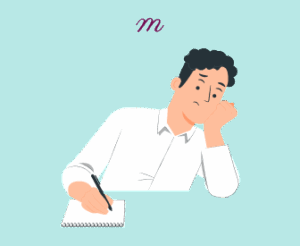
Imagine that you’re in a session, and your client makes a little joke to relieve some tension that they are feeling, and instead of laughing, you make some notes. Jokes apart, patients have indicated a greater willingness to use the services of those mental health professionals that did not take notes during the sessions (Miller, 1992).
Let’s explore the dynamics of note-taking in counseling
It can be stressful for both the counselor and the patient.
Do you feel the stress of multitasking during a counseling session? A recent research has found that it can cause cognitive stress for the mental health counselor to scribble notes during the session, as it needs a constant engagement of the working memory (Bernardi & Francesco, 2015).
It is possible that the mental health counselor might miss out on some things that the patient is saying while they scribble and simultaneously debate whether they made a spelling error or scribbled something unintelligible.

New! Transfer your notes to EHR with a single click. No more copy-pasting.
A potential obstacle to establishing rapport
Write less, focus more
Automate notes, treatment plans and progress tracking while keeping your clinical style and the Golden Thread.
- SOAP, DAP, BIRP, EMDR notes and more
- AI Treatment Planner
- AI Progress Tracker
- Alliance signals
- HIPAA & PHIPA compliant
New! Transfer your notes to EHR with a single click. No more copy-pasting.


The first session between a patient and a mental health counselor is incredibly important. As you seek to establish a rapport with them, you are basically holding out the space to help them talk about their distress, which can be truly personal in nature.
According to Franklin (2003), taking notes might not be a good idea initially, as it might not help to form a good therapeutic relationship between the patient and the counselor. The patient may feel judged and evaluated instead of being heard and validated.
How does Mentalyc help?
Mentalyc is an AI-enabled note-generating solution for mental health counselors and psychology professionals. It will help you to extract information from a therapy session and create transcripts for you, which will eliminate the need for note-taking during the sessions, leaving you to fully focus on the clients.
In this digital age, we take your security very seriously, and Mentalyc is 100% HIPAA compliant and uses 256-bit encryption. Besides the mental health professional, only the qualified and authorized team of Mentalyc would have access to these records.
Want to learn more about the amazing AI note-taking software for mental health professionals that can take notes for you during your session?
Reviewed by: Brittainy Lindsey
Disclaimer
All examples of mental health documentation are fictional and for informational purposes only.
Why other mental health professionals love Mentalyc

“By the end of the day, usually by the end of the session, I have my documentation done. I have a thorough, comprehensive note … It’s just saving me hours every week.”
CDCII
“Having Mentalyc take away some of the work from me has allowed me to be more present when I’m in session with clients … it took a lot of pressure off.”
LPC

“It takes me less than 5 minutes to complete notes … it’s a huge time saver, a huge stress reliever.”
Licensed Marriage and Family Therapist

“A lot of my clients love the functionality where I can send them a summary of what we addressed during the session, and they find it very helpful and enlightening.”
Therapist