


If you’re searching for “Is Mentalyc worth it?” or “Is Mentalyc legit?”, you’re likely already familiar with AI note-taking tools for therapists – and you’re probably cautious.
AI note-taking software has exploded in the past few years, but much of it has been built around speed – not around therapy itself. Mentalyc stands out because it was clearly designed by a team that understands that therapy is not a series of isolated sessions, but a continuous clinical journey. This review looks at Mentalyc through accuracy, trust, real-world usability, and long-term value based on real therapists’ opinions.
Who Should Choose Mentalyc?
Mentalyc is a strong choice if you want documentation that reflects and supports your clinical judgment while also getting meaningful insights you can stand behind.
It’s especially well suited for therapists who care about seeing progress, patterns, and continuity across sessions – not just producing a note at the end of the hour. If you prefer AI that supports your thinking rather than making decisions for you, and you’re cautious about privacy, compliance, Mentalyc’s clinician-first design will likely resonate.
Spend less time writing, more time with clients.

New! Transfer your notes to EHR with a single click. No more copy-pasting.
Because Mentalyc’s notes are generated directly from session content, including documented symptoms, interventions, and treatment goals. As a result, every note maintains consistent structure and clinical continuity over time. This makes them naturally audit-ready, without requiring therapists to edit notes later. For clinicians who need documentation that holds up across insurance reviews, continuity of care, and ethical scrutiny, Mentalyc offers one of the most reliable long-term solutions available.
Where Mentalyc Fits in the AI Note-Taking Landscape
Most AI note-taking software focuses on efficiency. Tools like UpHeal or general AI scribes emphasize transcription speed and quick summaries. That can be helpful, but many therapists eventually realize that speed alone doesn’t solve the deeper problems of clinical work. Progress still feels hard to track across months, treatment plans drift away from what’s actually happening with the client, and notes may exist without clearly telling the story of care. Over time, the clinical narrative becomes fragmented, and alliance-related nuances are difficult to reflect on after the fact.
Mentalyc positions itself differently. It isn’t just an AI note taker; it was built as a clinical intelligence platform – one that treats notes as meaningful clinical data rather than administrative output or a compliance checkbox. Because notes are structured around symptoms, interventions, goals, and change over time, they naturally support audit-ready documentation without therapists having to write defensively or retroactively justify care.
In other words, Mentalyc focuses on producing notes that are clinically coherent first, with compliance and audit readiness emerging as a byproduct of that clarity rather than an added burden.
Is Mentalyc Legit?
Yes, and legitimacy is one of Mentalyc’s strongest points. Mentalyc is built specifically for mental health professionals, not retrofitted from generic AI tooling. It is HIPAA compliant, SOC 2 Type II compliant, and transparent about how data is handled. Session recordings are used only to generate anonymized transcripts and are not stored. Client data is not used for AI training, and clinicians retain full control over edits, diagnoses, and treatment decisions.
Just as important: Mentalyc supports clinical judgement and diagnosis, but not replace it. It supports documentation and reflection; it doesn’t replace professional reasoning. For therapists wary of AI overreach, this clinician-first design is a major reason Mentalyc is trustworthy.
Honest Mentalyc Reviews by Therapists
Why other mental health professionals love Mentalyc

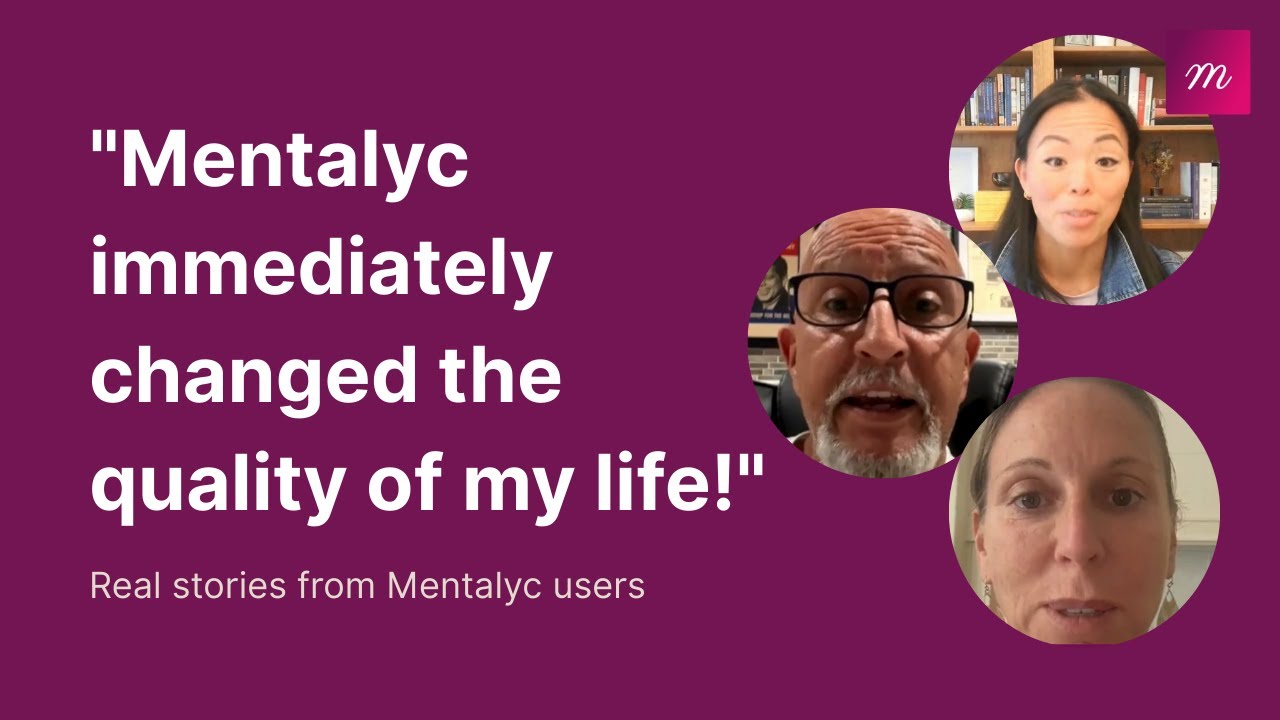
“If I were recommending this software to a colleague, I would tell them that it is the best thing that they could do for their practice.”
Licensed Professional Counselor

“For anyone hesitant: this is a lifesaver. It will change your life, and you have more time to be present with your patients.”
Licensed Clinical Social Worker

“Do yourself a favor, make your life easier. I found Mentalyc to be one of the best tools that I’ve ever used.”
Licensed Marriage and Family Therapist

“It immediately changed my quality of life, personally and professionally.”
Owner/Independently Licensed Marriage & Family Therapist (LMFT)
Mentalyc Note Quality Review: Why Therapists Trust the Notes Enough to Switch
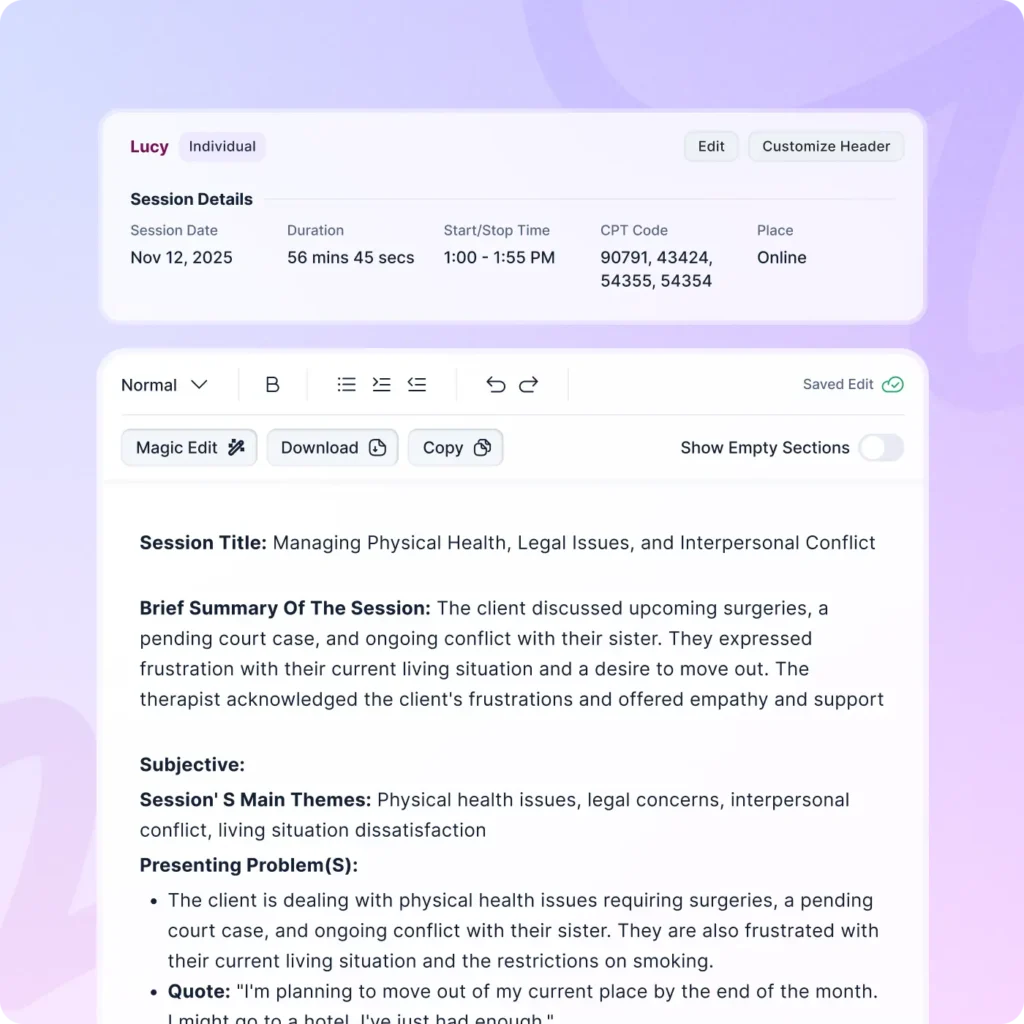
Across many AI note-taking software reviews, note quality is where tools either build long-term trust or lose it. A consistent theme among therapists who choose Mentalyc is that they often arrive after trying other AI note-taking tools and feeling dissatisfied with how the notes turned out. In those cases, the issue is rarely speed. It’s that the notes feel too generic, too surface-level, or disconnected from the clinician’s actual intent in session.
Mentalyc’s note quality stands out because the notes tend to reflect clinical thinking rather than simple transcription. Interventions are captured with appropriate context, client language feels recognizable, and the overall structure reads like documentation a therapist would reasonably stand behind. Over time, therapists often describe the shift as moving from heavily rewriting AI-generated text to simply reviewing and refining, which is why note quality is one of the most common reasons clinicians decide to transition to Mentalyc after experimenting with other tools.
Just as importantly, this level of note quality supports audit-ready documentation by default. Because notes are structured around symptoms, interventions, and clinical rationale. Rather than vague summaries, they naturally align with insurance and compliance expectations without requiring therapists to document defensively or retroactively justify care. In practice, this means clinicians are not just saving time, but also gaining confidence that their documentation accurately reflects both the work done in session and the standards required outside of it.
Mentalyc Treatment Plan Review: SMART Goal Suggestions Built From Real Session Notes
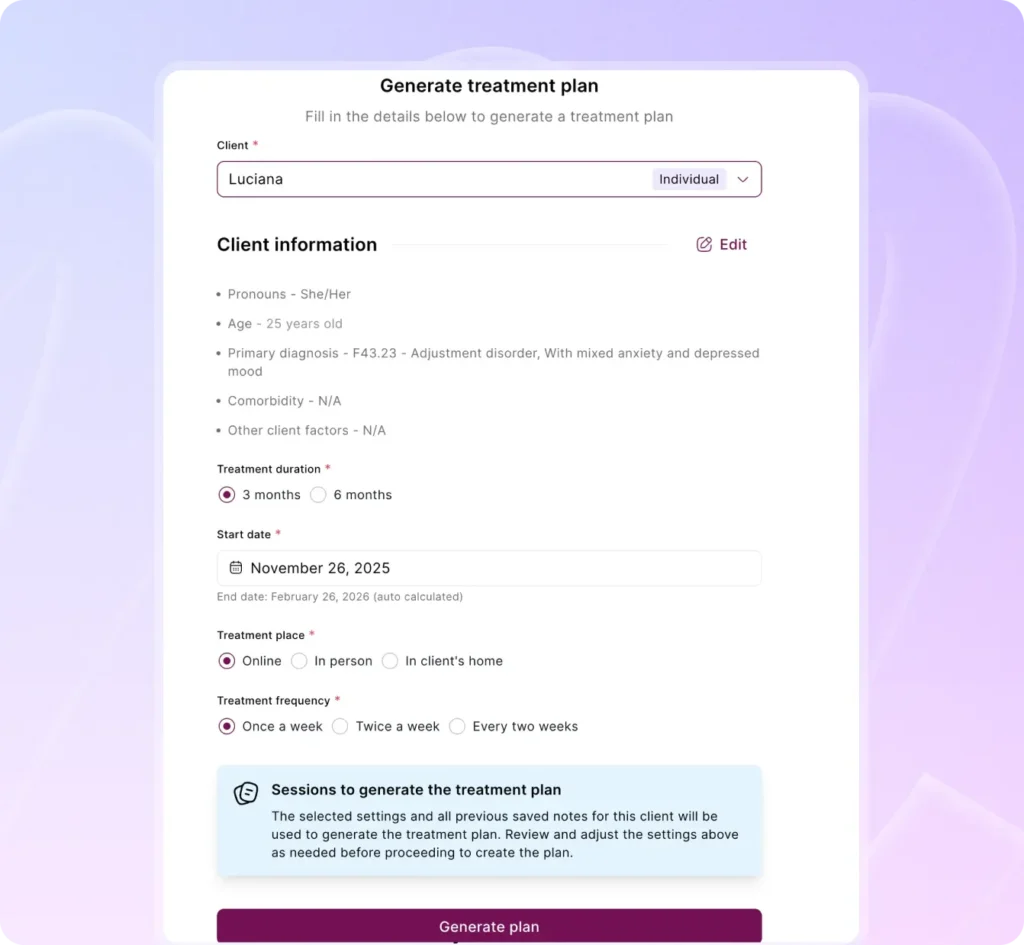
One of the most clinically thoughtful aspects of Mentalyc is how it approaches treatment planning. Rather than asking therapists to start from a blank template or rely on generic, diagnosis-driven goals, Mentalyc’s AI treatment planner analyzes intake and progress notes to suggest SMART, symptom-linked treatment goals grounded in what is actually happening in session. These goal suggestions are derived from real clinical material, which helps treatment plans feel relevant, individualized, and defensible rather than procedural.
This design directly addresses a common breakdown in therapy workflows. After the first few sessions, treatment plans often stop evolving as clients change. Goals become outdated, documentation drifts away from clinical reality, and articulating progress, especially for insurance reviews or audits, becomes more difficult.
Mentalyc was built around the idea that treatment plans should remain living clinical documents, not static paperwork. As sessions continue, progress toward each goal is tracked automatically, making it easier to evaluate whether treatment direction still fits the client’s current needs. For therapists who value conceptual clarity and audit-ready documentation, this approach meaningfully changes how treatment planning fits into everyday practice.
Write less, focus more
Automate notes, treatment plans and progress tracking while keeping your clinical style and the Golden Thread.
- SOAP, DAP, BIRP, EMDR notes and more
- AI Treatment Planner
- AI Progress Tracker
- Alliance signals
- HIPAA & PHIPA compliant
New! Transfer your notes to EHR with a single click. No more copy-pasting.

Mentalyc Progress Tracking Review: Seeing Client Progress Without Surveys or Extra Forms
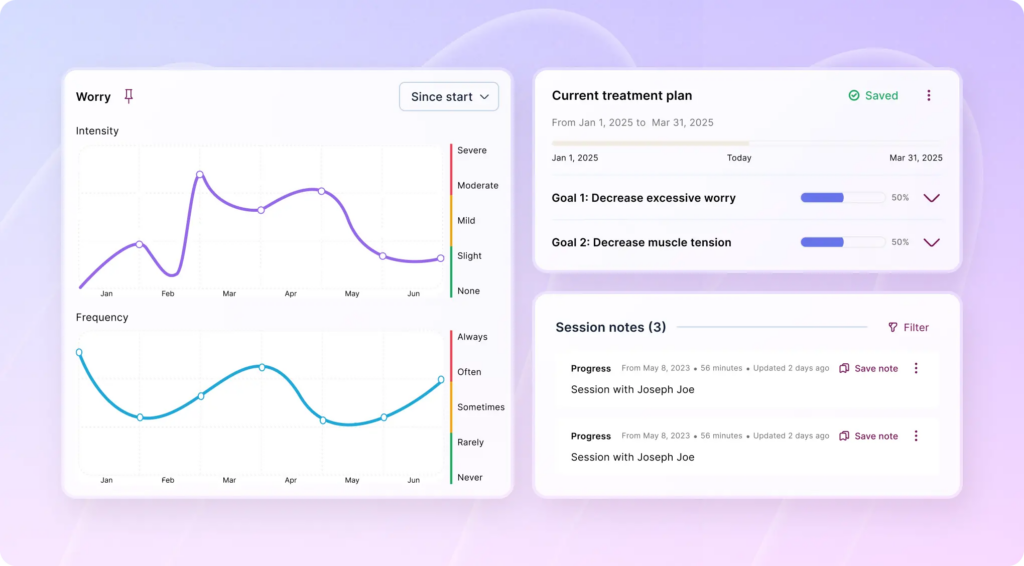
Many therapists use questionnaires for progress tracking because they’re familiar and easy to document – not because they fully reflect the work happening in session. But questionnaires are often skipped, rushed, or out of sync with clinical observations. Mentalyc was built to capture progress directly from the therapy session, so clinicians can track change without adding surveys or extra steps for clients.
Instead of adding surveys or forms, Mentalyc analyzes session content over time to surface symptom trends and goal attainment directly from therapy notes. This supports a more nuanced understanding of client change, helping therapists notice gradual improvements, plateaus, or emerging concerns that might otherwise be missed, particularly in long-term or complex cases. By aligning progress tracking with how therapists already conceptualize their work, Mentalyc makes outcomes easier to see, communicate, and document without disrupting the therapeutic process.
A Key Differentiator: Alliance Insights Tracking Via Alliance Genie™
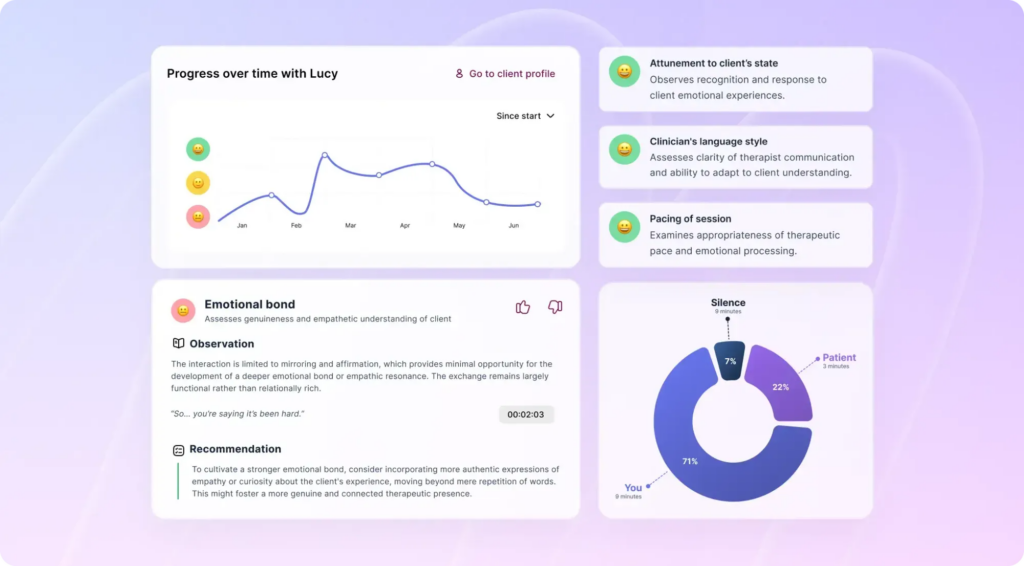
One reason Mentalyc often appears in discussions of the best AI note taker for therapists is a feature many competitors don’t offer at all: Alliance Genie™.
Therapeutic alliance is widely recognized as one of the strongest predictors of outcomes, yet it’s notoriously difficult to reflect on systematically. That’s why Mentalyc’s Allience Genie is designed to highlight moments related to pacing, attunement, collaboration, and engagement. For therapists who care deeply about the relational side of therapy, this is often the feature that changes how they think about AI altogether. It surfaces patterns you might want to reflect on – and leaves the interpretation to you.
Mentalyc Pricing Review: Is It Worth the Cost?
Mentalyc’s pricing is structured to be accessible while still supporting a full clinical workflow. Plans start at $20 per month, with a free trial available, allowing therapists to explore the platform without an upfront commitment. As clinicians look to use the platform’s full capabilities, many choose the Pro plan, which unlocks advanced features such as progress tracking, Alliance Genie™, and deeper clinical insights – regardless of caseload size.
Beyond time saved, therapists often describe a reduction in cognitive load: documentation feels more coherent, progress narratives are easier to follow, and treatment decisions are supported by clearer context over time. Instead of juggling disconnected tools or revisiting notes defensively, everything stays aligned in one place.
Mentalyc isn’t positioned as a premium add-on or a narrowly defined AI note-taking tool. It’s priced to grow with clinical needs. For therapists who want documentation that supports the entire arc of clinical care, the cost is often experienced as reasonable and proportional to the value it delivers.

Mentalyc Pros and Cons
Mentalyc’s strengths are deeply tied to its clinical focus. The platform is built around how therapy actually unfolds over time, not around generic documentation workflows. It respects therapist judgment by supporting clinical decision-making, and it consistently reinforces the golden thread between sessions, goals, and outcomes.
Notes are treated as a living clinical record that evolves alongside the client, which helps documentation feel integrated into care rather than an administrative task completed after the fact. For many therapists, this translates into clearer clinical narratives, stronger continuity, and greater confidence that their documentation truly reflects the work being done.
That same focus also explains Mentalyc’s primary limitation – and it is an intentional one. Mentalyc is designed exclusively for psychotherapy and behavioral health. Clinicians working in general medical settings, multidisciplinary practices, or non-mental-health specialties may find the platform less applicable to their needs, as it is optimized for therapeutic dialogue, relational dynamics, and longitudinal change rather than broad medical charting. It does not attempt to be a universal documentation tool, and it does not dilute its design to accommodate every clinical use case.
Mentalyc HIPAA Compliance Review
From a compliance standpoint, Mentalyc stands out as the safest options among AI tools used in therapy settings. HIPAA + PHI compliance and SOC 2 Type II certification are foundational to the platform’s architecture rather than positioned as surface-level assurances. This signals a design approach that treats privacy, security, and regulatory responsibility as integral to clinical practice, not as afterthoughts layered onto technology.
Equally important is the platform’s clarity around boundaries. Mentalyc is explicit about what it does not do: session recordings are not stored long-term, client data is not used to train AI models. For therapists navigating increasing scrutiny around audits, data privacy, and ethical AI use, this transparency reduces uncertainty and risk. It allows clinicians to adopt technology without feeling that they are compromising professional standards or client trust.
So, Is Mentalyc Worth It?
For most therapists, the answer is yes.
Mentalyc is worth considering if you want documentation that reflects and supports your clinical judgment, progress that becomes visible without relying heavily on questionnaires, and AI support that remains firmly in the background rather than steering the work. It is particularly well-suited for clinicians who value both quality and fast notes on top of wanting notes, treatment plans, and progress tracking to remain aligned over time.
It may not be the best fit if your primary priority is the cheapest transcription tool. But for therapists evaluating AI note-taking software reviews with an eye toward long-term clinical use, ethical alignment, and documentation quality, Mentalyc consistently stands out as the most therapist-centered solution available.